Overview
Building a dedicated court changes that.Homeowners who want to build a basketball court in the backyard have more choices than they may realize. The court does not have to copy a professional arena, and it does not need to consume the entire property. It can be a compact shooting area, a well-planned half court, or a larger layout made for family games and serious practice.
Quality & Heritage Court Services builds custom backyard basketball courts for Texas homes and private estates. We help with placement, excavation, drainage, concrete, surfacing, court lines, hoop installation, fencing, lighting, and the details that make the space enjoyable to use.
Have a spot in mind? Contact our team to schedule a backyard visit and find out what kind of basketball court the property can comfortably hold.
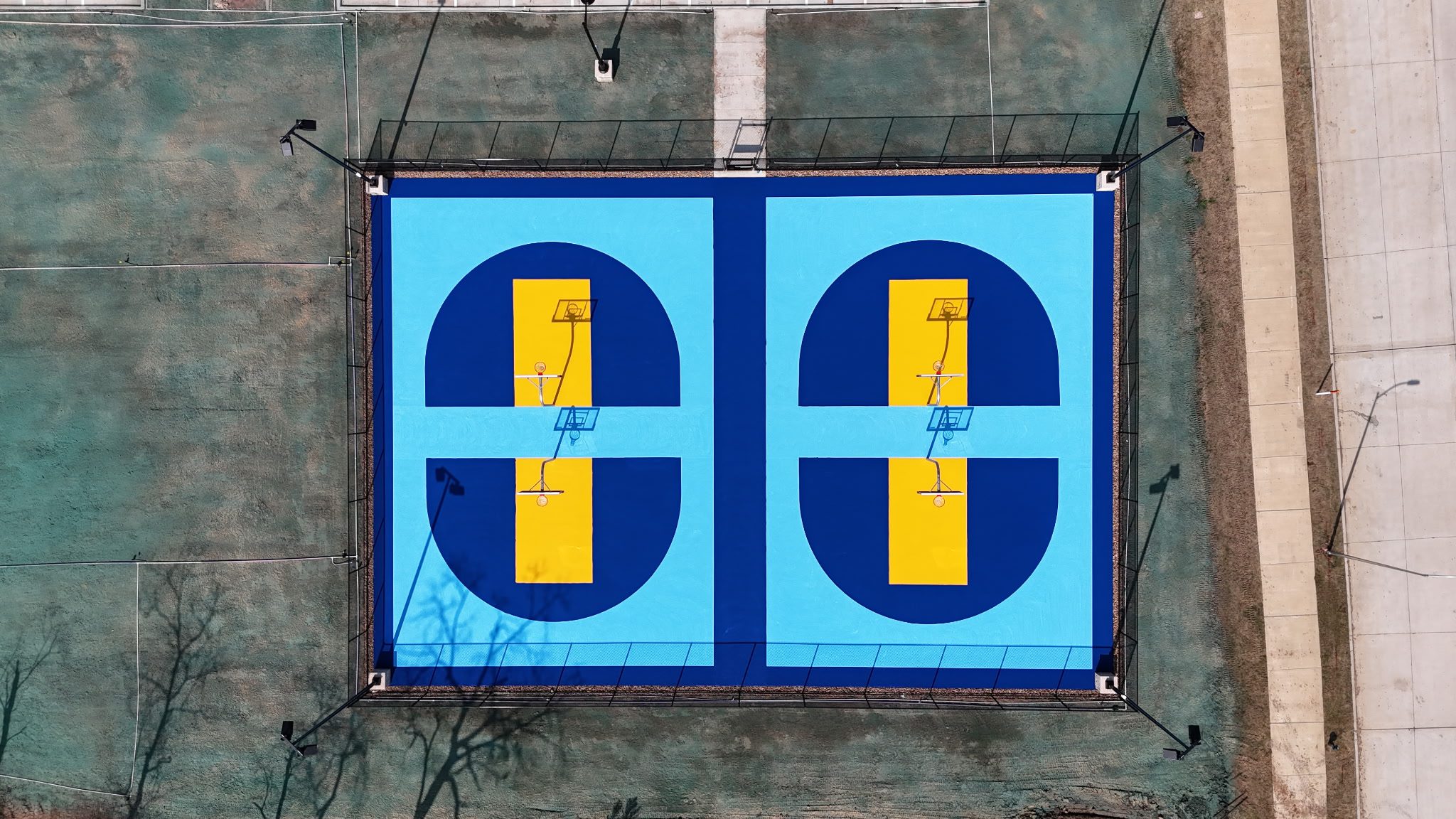
Start With How Your Family Will Use It
It is easy to begin with dimensions. Before reaching for a tape measure, think about who will actually play there.
A young child learning to dribble does not need an NBA-sized floor. A teenager working on free throws and three-pointers needs more room. If parents, friends, and neighbors join in, the court should have enough space for people to move without constantly stepping into landscaping or chasing the ball around the house.
Ask a few practical questions:
- Will the court be used mainly for shooting or for games?
- Is one basket enough?
- Do players need a high school three-point line?
- Will younger children need an adjustable hoop?
- Should the surface also include pickleball or another activity?
- Will most games happen during the day or after sunset?
- Is there room outside the painted boundary for safe movement?
- How much of the yard should remain open?
There is no prize for building the largest court that can be squeezed between two fences. A slightly smaller layout with sensible clearance often feels much better than a bigger one pressed against walls, trees, or a pool.
How Much Backyard Space Is Needed?
A full basketball court is larger than most residential properties can spare.
An NBA court measures 94 feet by 50 feet. A typical high school court is 84 feet by 50 feet. The NFHS basketball court diagram shows the markings commonly used for high school play. Those dimensions are useful references, but a backyard court does not have to match either one.A Small Shooting Court
A compact shooting area gives children and casual players a firm, level place to practice close-range shots, layups, and free throws. It works well when the yard is narrow or when the homeowner wants to preserve room for a pool, garden, lawn, or outdoor entertaining.
The layout may include the basket, part of the lane, a free-throw line, and selected shooting marks rather than a complete half-court design.
A Backyard Half Court
A half court is the most popular residential choice because it offers enough room for one-on-one games, shooting practice, drills, and small group play without requiring the footprint of a full court.
Its size can be adjusted around the property and the markings the family wants. If players need a regulation high school three-point arc, the court must extend far enough from the basket to include it, along with usable space beyond the line.
A Full Backyard Court
A full court may suit a large estate or a family that expects regular five-on-five play. It requires considerably more excavation, concrete, surfacing, fencing, lighting, and drainage work.
The court should also have clearance outside its boundary. A playing line drawn inches from a wall or fence may fit on paper, but players will not feel comfortable running toward it.
The NBA’s official court dimensions can help families understand how the markings relate to one another, even when a residential version is scaled around the available space.
Where Should the Court Go?
The obvious location is not always the best one.
A flat-looking section of lawn may carry water after heavy rain. A sunny area may become uncomfortable by late afternoon. The side of the yard with the easiest access may also sit closest to a bedroom window or neighboring home.
Before choosing the location, we look at:
- Slope and natural drainage
- Soil conditions
- Distance from the house and neighboring properties
- Trees and root systems
- Pools, patios, gardens, and retaining walls
- Underground utilities and irrigation
- Access for excavation and concrete equipment
- Sun direction
- Existing outdoor lighting
- Fencing and ball containment
- The path players will use to reach the court
A basketball striking a backboard, rim, or pavement makes noise. That may affect where the basket should face, especially on a smaller residential property.
Orientation matters in another way too. A basket placed directly against the late-afternoon sun can make shooting uncomfortable during the hours when the family is most likely to play.
Sometimes moving the proposed court a few feet improves access, drainage, light, and the relationship with the rest of the yard.
The Court Needs More Than a Concrete Rectangle
A backyard basketball court begins below the finished surface.
The ground must be cleared, excavated, graded, and compacted. Weak or unsuitable material may need to be removed. Drainage needs to be planned before concrete is poured.
Texas soil can complicate the work. Expansive clay shrinks as it dries and swells when moisture returns. That movement may eventually affect pavement built above it.
Preparation should respond to the actual property. Simply clearing the grass and pouring a thin slab may create a surface that looks usable at first but develops cracks, movement, or low areas later.
Grading and Drainage
An outdoor court cannot be perfectly flat. It needs a slight, controlled slope that allows water to leave without making the playing area feel noticeably tilted.
The surrounding yard matters just as much. During heavy rain, water may arrive from a roof, patio, driveway, slope, or neighboring property. If that runoff reaches the court, it can leave dirt across the surface or collect along the pavement edge.
Drainage planning may include:
- Directing water away from the playing surface
- Preventing runoff from entering from higher ground
- Keeping irrigation from soaking the pavement edge
- Adding drains, channels, or swales where needed
- Providing an appropriate outlet for collected water
- Protecting nearby landscaping from uncontrolled discharge
- Avoiding puddles near gates and walkways
A coating can improve the color and texture of the court. It cannot correct a badly placed slab or make water run uphill.
Building the Concrete Base
The concrete base has to support play, the hoop system, coatings, and years of outdoor exposure. Thickness, reinforcement, joints, preparation, and curing should be determined for the project rather than copied from an ordinary patio.
The goal is a stable surface with the correct slope and a smooth enough finish for the selected acrylic system.
A surface can be too rough for coating. It can also be finished too smoothly, which may affect adhesion. Concrete intended for a basketball court should be placed with its final use in mind.
Once poured, it needs time to cure. The waiting period may feel long when a new hoop is sitting nearby in boxes, but applying coatings too early can trap moisture and create problems.
Choosing a Surface for a Backyard Basketball Court
Bare concrete can be used for casual shooting, but it is not the most comfortable or finished option.
Concrete reflects glare, shows stains, and can become smooth in places. It also gives the backyard the appearance of a large unfinished slab.
Acrylic court coatings add color and playing texture. They make the line markings easier to see and help the court feel like an intentional part of the property.
Homeowners can explore finish options through our professional court painting services.
Standard Acrylic Coating
A standard acrylic system is a practical choice for many backyard courts. It gives the surface a consistent color and textured finish while allowing the owner to select a palette that works with the home.
The playing area and surrounding space can use the same shade, or separate colors can be used to define the lane, three-point area, and perimeter.
Cushioned Court Surfacing
Families who expect to spend a lot of time on the court may prefer a more forgiving surface.
A cushioned acrylic system uses resilient layers beneath the color coatings. It does not turn the court into a soft floor, but it can reduce some of the harshness players feel during repeated running, jumping, and landing.
Quality & Heritage Court Services offers Cushion X court systems for suitable residential projects.
Cushioning is best discussed before the court is built. The chosen system affects the surface preparation, application process, budget, and schedule.
Picking Colors That Belong in the Backyard
Basketball court colors cover a large area. A shade that looks modest on a sample may feel much stronger once it fills most of the yard.
Some homeowners want traditional colors. Others prefer gray, tan, muted blue, dark green, or another combination that works with the house, pool deck, landscaping, and fencing.
Dark colors can absorb more heat in direct sunlight. Very light colors may show dirt quickly or create glare. Strong contrast can make the markings easy to follow, but too many colors may leave a small court looking crowded.
A residential palette may include:
- One color across the entire surface
- A separate color inside the lane
- A contrasting three-point area
- A neutral perimeter
- Family initials or a small custom logo
- Colors that complement the home or landscape
A court can feel personal without becoming visually loud. The best design usually makes sense both from the playing surface and from the windows overlooking it.
Which Lines Should Be Painted?
A backyard court does not need every marking used in professional competition.
The right layout depends on the court size, players’ ages, and how the family practices.
A half court may include:
- Baseline
- Sidelines
- Free-throw line
- Lane and free-throw circle
- High school or custom three-point arc
- Restricted-area arc, if requested
- Selected shooting marks
- Custom logo or name
The free-throw line is traditionally positioned 15 feet from the plane of the backboard. Three-point distance varies by level of play, so families should decide whether they want a youth, high school, college, or professional reference.
On a compact court, forcing a full three-point arc into an area that cannot support it may leave little room beyond the line. A partial arc or custom practice marking may be more useful.
Lines need to be measured from the final basket position. If the hoop is moved later, the free-throw line and arc may no longer relate correctly to the rim.
Choosing the Basketball Hoop
The hoop is not an accessory to select after the slab is finished. It is part of the construction plan.
In-ground basketball systems generally provide greater stability than portable units. The pole is anchored in a dedicated foundation placed beyond or at the edge of the playing area, depending on the selected system and overhang.
The foundation should follow the equipment manufacturer’s requirements. Pole size, anchor system, backboard weight, and overhang all affect the installation.
Homeowners should consider:
- Fixed or adjustable rim height
- Backboard size and material
- Rim type
- Pole position
- Backboard overhang
- Padding
- Wind exposure
- Intended age and level of play
- Space behind the basket for servicing
An adjustable hoop may be valuable for a growing family. Children can begin at a lower height and move toward the standard 10-foot rim as they develop.
The pole must not intrude into the playing space. Padding can provide added protection, but it does not make a poorly positioned support safe.
Does a Backyard Court Need Fencing?
Not every property needs a full enclosure.
If the court sits within a large open yard, strategically placed ball-stop fencing behind the basket may be enough. A court near a pool, road, garden, steep slope, or neighboring property may need more containment.
Fencing can save a surprising amount of time. Without it, a missed shot may roll into plants, under furniture, across a driveway, or toward the street.
The layout should consider:
- Where most missed shots will travel
- Fence height behind the basket
- Visibility from the home
- Gate position
- Landscaping
- Wind exposure
- Noise and neighboring properties
- Whether windscreens will be added
Dark-coated mesh usually feels less noticeable in a residential setting than bright galvanized fencing. Partial sections may also work where the goal is ball containment rather than a complete enclosure.
Lighting Extends the Hours the Court Can Be Used
In a Texas summer, evening may be the most comfortable time to play.
Good lighting makes that possible. Bad lighting creates glare, dark corners, and complaints from next door.
Fixtures should illuminate the playing area without pointing directly into players’ eyes. They should also limit unnecessary light on windows, streets, and neighboring yards.
The lighting plan may consider:
- Court size
- Basket position
- Fixture height
- Shadows under and behind the hoop
- Glare during jump shots
- Nearby homes
- Electrical access
- Controls and timers
- Local restrictions
Electrical routes should be planned before concrete and landscaping are complete. Adding trenches after the yard has been restored can turn a clean project into another round of disruption.
How a Backyard Basketball Court Is Built
Every property changes the details, but the work generally follows a familiar order.
We Visit the Backyard
We look at the available space, slope, soil, drainage, access, landscaping, utilities, surrounding structures, and likely court orientation.
The conversation is just as important as the measurements. We want to know who will play, whether the family wants a half court or a shooting area, and which features matter most.
We Agree on the Layout
The court dimensions, basket position, markings, surface, colors, drainage, fencing, lighting, and optional features are planned together.
This is when we test the idea against the property. Can equipment reach the site? Is the basket facing the wrong sun angle? Will balls repeatedly land in the pool? Does the court leave enough room for the rest of the backyard?
A plan should solve those issues before work begins.
We Prepare the Ground
The construction area is cleared, excavated, graded, and compacted. Drainage and underground electrical work included in the project are coordinated at the appropriate stage.
Formwork and base preparation follow the approved shape and slope of the court.
We Pour and Cure the Concrete
Concrete is placed, finished, and allowed to cure. The hoop footing may be installed according to the selected equipment and construction sequence.
Weather affects this stage. Rain, temperature, and ground conditions can all change the working schedule.
We Apply the Surface
After the concrete is ready, the surface is prepared for the selected acrylic or cushioned system. Color coats are applied in suitable weather, followed by accurate game lines and approved graphics.
We Complete the Features
The hoop, fencing, lights, net systems, or other selected additions are installed and checked.
Before handover, we walk the court with the homeowner. We review the surface, lines, basket, drainage areas, and surrounding work zone.
Ready to turn part of the yard into a place your family will actually use? Request a custom backyard basketball court estimate from Quality & Heritage Court Services.
How Much Does a Backyard Basketball Court Cost?
There is no single price that covers every yard.
A small shooting court on open, level ground may be fairly straightforward. A larger half court behind a finished home may need narrow-access excavation, extensive grading, drainage, fencing, lighting, and careful protection of existing landscaping.
Cost may be affected by:
- Court dimensions
- Site access
- Excavation and grading
- Soil preparation
- Concrete specifications
- Drainage
- Standard or cushioned acrylic surfacing
- Number of colors and line layout
- Hoop system
- Fencing and gates
- Lighting and electrical work
- Logos and custom features
- Permits or local requirements
- Repair or restoration of the surrounding yard
A useful estimate should explain the work beneath the surface, not just provide a price for concrete and paint.
If two quotes are far apart, compare the preparation, drainage, concrete, coatings, equipment, and cleanup included in each. The least expensive proposal may simply be leaving several parts of the project for the homeowner to arrange separately.
How Long Will Construction Take?
The timeline depends on court size, site conditions, access, weather, concrete curing, coating requirements, and optional features.
The physical work may not happen every day from start to finish. Some stages require waiting. Concrete needs time before acrylic coatings can be safely applied. Rain may delay excavation or surfacing. Electrical work, fencing, or equipment may follow separate installation schedules.
A realistic timeline is developed after the property has been inspected and the scope agreed upon.
Rushing the curing period to use the court a few days sooner can create problems that remain much longer than the wait would have.
Caring for the Court Once It Is Finished
A backyard court is easy to care for when small tasks become routine.
Sweep or blow away leaves, soil, and loose debris. Keep drains and pavement edges open and clean spills before they stain. Check the hoop, net, fencing, and lights periodically.
Avoid dragging heavy furniture, portable equipment, or sharp metal objects across an acrylic surface. Harsh chemicals and overly aggressive pressure washing can also damage the coating.
After severe weather, look for:
- Branches or storm debris
- Standing water
- Loose fencing or windscreens
- Movement around the hoop footing
- New cracks
- Clogged drains
- Damage from fallen objects
Outdoor coatings eventually fade and wear. When the color, texture, or lines need attention, our basketball court maintenance and resurfacing services can help restore the surface.
Why Quality & Heritage Court Services?
A backyard basketball court needs to work as part of a home.
It should fit the property, support the way the family plays, and look considered from the rest of the yard.
We Build Around the Actual Space
We do not begin by forcing a fixed court size onto every property. The layout is shaped around the land, access, family needs, and the features the homeowner values.
The Work Below the Surface Matters to Us
The part everyone sees is the acrylic finish. We also pay attention to grading, drainage, concrete preparation, and curing because those stages influence how the court performs later.
We Understand Residential Projects
Working behind an occupied home requires care. Access may be narrow. Landscaping, patios, pools, fences, and driveways need protection. The project should improve the property without treating the rest of the yard as an open construction site.
You Can Choose More Than the Court Size
Surface system, colors, line layout, hoop, fencing, lighting, cushioning, and custom details can all be planned around the family.
We Can Maintain the Court Later
Acrylic surfaces eventually need cleaning, repair, repainting, or resurfacing. Quality & Heritage Court Services can continue caring for the court after construction is complete.