Overview
Quality & Heritage Court Services repairs residential and commercial basketball courts throughout Texas. We inspect the surface, foundation, drainage, lines, goals, fencing, and surrounding property before recommending the appropriate work.
Repairs may include crack treatment, low-spot correction, localized patching, coating restoration, line repair, drainage improvements, and basketball equipment service.
If your basketball court is cracked, worn, uneven, or holding water, contact Quality & Heritage Court Services to arrange an on-site inspection.
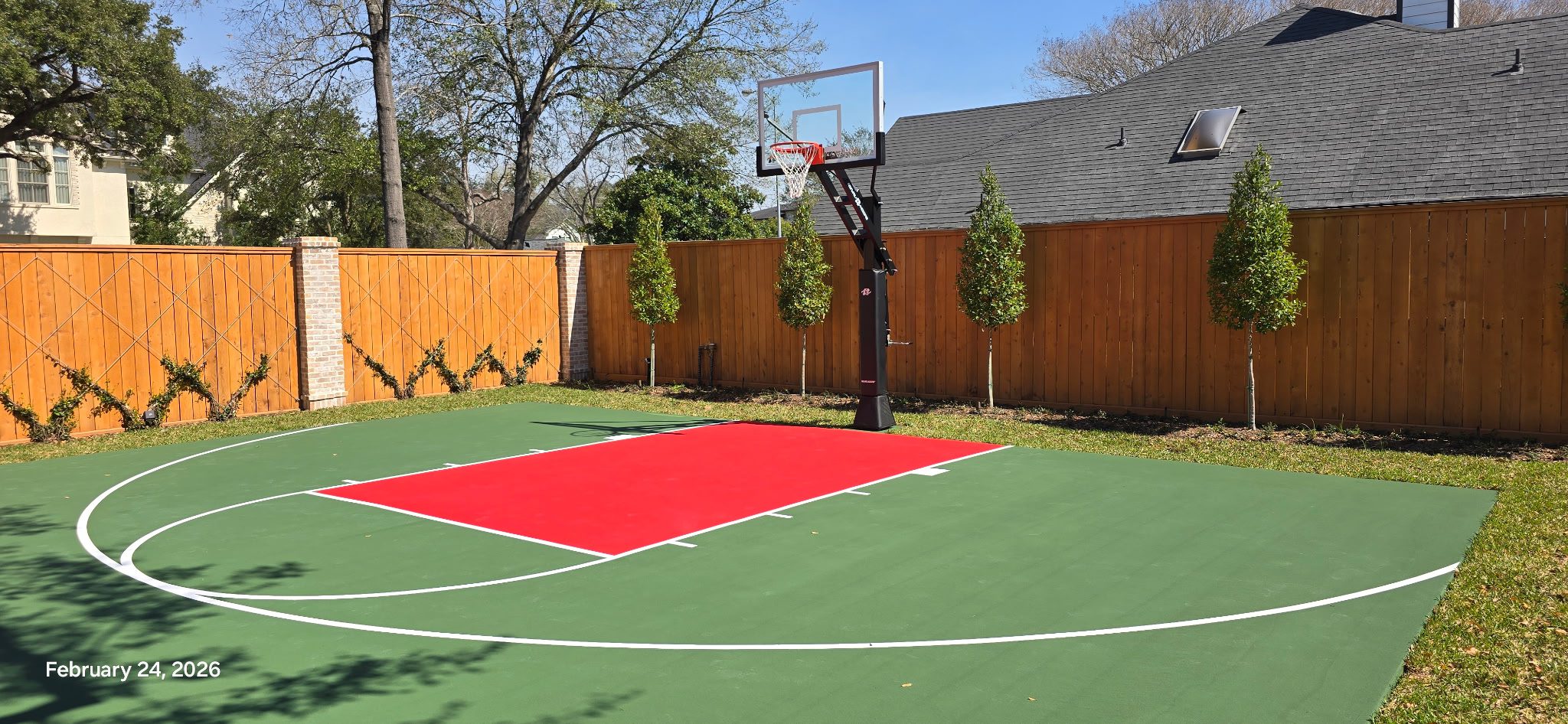
Basketball Court Damage Can Affect Safety and Performance
Basketball places repeated pressure on concentrated areas of the playing surface.
Players stop, pivot, jump, and change direction near the key, perimeter, and baselines. These movements can make worn texture, raised cracks, and uneven repairs more noticeable.
Surface damage can affect:
- Player traction
- Ball response
- Drainage
- Line visibility
- Court appearance
- Equipment stability
- Long-term pavement condition
Early repair can prevent a limited problem from spreading into a larger section of the court.
What Basketball Court Damage Can Be Repaired?
The appropriate repair depends on the type of surface, depth of damage, pavement condition, and cause of the problem.
Cracks in Concrete or Asphalt
Small, stable cracks may be cleaned, treated, and blended into the surrounding surface.
Cracks that reopen, widen, or develop height differences may indicate movement beneath the court. These areas need a closer evaluation before surface materials are applied.
Low Areas and Standing Water
Shallow depressions may sometimes be corrected with compatible patching material.
Widespread ponding can indicate settlement, incorrect slope, or drainage failure. The surrounding land should also be checked to determine whether runoff is entering the court.
Peeling or Bubbling Coatings
Acrylic coatings may separate because of moisture, poor preparation, incompatible materials, age, or pavement movement.
Loose material must be removed before a repair is applied. Covering a peeling area with new color will not restore adhesion beneath it.
Worn High-Traffic Areas
The key, free-throw lane, three-point arc, and areas beneath the goals often show wear first.
Localized coating and texture loss may be repaired when the surrounding surface remains stable. Widespread deterioration may require complete basketball court resurfacing.
Faded or Damaged Lines
Basketball lines can fade through sunlight, regular play, cleaning, and surface wear.
Individual sections may be restored after the underlying area is prepared. When most of the court has faded, repainting or resurfacing generally creates a more consistent finish.
Damaged Hoops and Court Equipment
Goals, backboards, rims, anchors, padding, and mounting hardware should remain secure and properly aligned.
Repair may include tightening hardware, replacing worn components, correcting alignment, or evaluating the foundation supporting the goal system.
How Do We Inspect a Damaged Basketball Court?
A complete inspection looks at more than the most visible crack.
We evaluate the playing surface, previous repairs, coatings, lines, goals, drainage, pavement edges, fencing, and surrounding property. This helps us determine whether the problem is limited to the finish or begins below the surface.
Surface Condition
We look for cracks, peeling material, worn texture, exposed pavement, raised patches, stains, and areas that feel different underfoot.
Damage is mapped across the court so isolated issues can be separated from widespread deterioration.
Foundation and Pavement Movement
Crack patterns and elevation changes may reveal movement in the concrete, asphalt, or supporting soil.
A surface repair can protect a stable opening. It cannot permanently stabilize soil or pavement that continues to move.
Drainage and Court Slope
We check where water enters, crosses, and leaves the playing area.
Low areas, blocked edges, soil buildup, landscape runoff, and damaged drainage outlets can all contribute to standing water.
Goals and Hardware
The goal system is checked for movement, corrosion, loose fasteners, damaged padding, rim problems, and backboard concerns.
Equipment repairs should be coordinated before final coating and line work whenever possible.
How Is a Basketball Court Repaired?
The repair process depends on the court’s condition, but the work should follow an organized sequence.
Court Evaluation
We identify visible damage and consider what may be causing it.
The inspection helps determine whether the court needs targeted repair, broader resurfacing, or deeper reconstruction.
Removal of Loose Material
Failed crack filler, peeling acrylic, dirt, vegetation, and unstable patches are removed.
The remaining surface needs clean, stable edges before new materials are installed.
Crack and Damage Preparation
Cracks are cleaned and prepared for a compatible repair product.
Raised edges, loose patches, and damaged coatings may require grinding, removal, or additional surface preparation.
Low-Area Evaluation
Areas that hold water are identified after rain or through controlled testing.
Small depressions may be patched when the surrounding slope remains functional. Larger drainage or settlement problems may require separate corrective work.
Application of Compatible Materials
Repair materials are selected based on the pavement, existing coating system, type of damage, and expected movement.
Concrete, asphalt, acrylic coatings, and cushioned surfaces do not always use the same repair products.
Color and Line Restoration
Affected color coatings and basketball markings are restored after repairs have cured.
Line placement is measured carefully so repaired sections align with the existing court layout.
Final Review
We inspect repaired areas, lines, goals, drainage, and surrounding surfaces before reopening the court.
Owners receive guidance about curing time, cleaning, maintenance, and areas that should be monitored.
Should You Repair, Resurface, or Reconstruct the Court?
These services address different levels of damage.
Repair Is Best for Localized Problems
Targeted repair may be appropriate for a stable crack, small low area, isolated coating failure, damaged line, or equipment problem.
The remaining court should still be in serviceable condition.
Resurfacing Renews the Complete Playing Area
Resurfacing is more appropriate when the entire court shows fading, texture loss, peeling, multiple cracks, or inconsistent repairs.
The court is prepared and repaired before a new coating system and playing lines are applied across the complete surface.
Reconstruction Addresses Structural Failure
Reconstruction may be necessary when the pavement has severe settlement, widespread structural cracking, major elevation changes, or extensive base failure.
Applying new coatings over an unstable court may improve its appearance temporarily without correcting the underlying condition.
The American Sports Builders Association provides technical information concerning court construction, renovation, surfacing, and maintenance.
Why Do Basketball Court Cracks Return?
A repaired crack may reopen when movement continues beneath the court.
The cause may involve:
- Expansive soil
- Pavement shrinkage
- Concrete joints
- Tree roots
- Poor drainage
- Settlement
- Insufficient base preparation
- Water entering beneath the pavement
Texas properties often contain soils that expand and contract as moisture levels change. That movement can place pressure on concrete and asphalt surfaces.
The crack pattern helps determine how the area should be treated. A narrow, stable opening is different from a crack with visible vertical displacement.
A repair contractor should explain when recurrence is possible rather than promising that every crack will disappear permanently.
Why Is Drainage Important During Court Repair?
Water can enter cracks, weaken pavement edges, contribute to coating failure, and carry supporting soil away from the court.
Standing water also affects play. A damp or dirty area may remain slippery after the rest of the court has dried.
A drainage review may include:
Surface Slope
The playing surface should direct water away without creating areas that remain wet after rain.
Perimeter Conditions
Soil, landscaping, leaves, and debris should not block water at the pavement edge.
Surrounding Runoff
Water from roofs, parking areas, walkways, and higher ground should not flow uncontrolled across the court.
Drainage Outlets
Channels, drains, and discharge areas need to remain open and direct water toward an appropriate location.
The Environmental Protection Agency’s stormwater resources provide guidance on managing runoff around developed properties.
Can Indoor Basketball Courts Be Repaired?
Yes. Indoor courts can develop scratches, loose flooring, dead spots, worn finishes, faded markings, moisture damage, or separation between flooring sections.
The repair method depends on the flooring system.
Wood Basketball Floors
Wood floors may require board replacement, sanding, finish repair, line restoration, or moisture correction.
Water intrusion should be addressed before damaged sections are replaced.
Synthetic Indoor Flooring
Synthetic flooring may develop loose seams, tears, bubbles, indentation, or worn surface layers.
Repairs need to match the installed system and preserve consistent traction across the playing area.
Indoor Acrylic Surfaces
Acrylic surfaces over concrete may experience cracks, coating separation, wear, or moisture-related problems.
The slab and existing finish should be evaluated before new material is applied.
Our guide to planning an indoor basketball court explains how flooring, moisture, clearance, lighting, and equipment affect an indoor facility.
Can Outdoor Basketball Courts Be Repaired?
Many outdoor courts can be repaired when the pavement remains structurally serviceable.
Outdoor surfaces face sunlight, rain, heat, humidity, soil movement, vegetation, and debris. Repairs should account for these conditions rather than treating the court like an indoor floor.
Particular attention should be given to:
- Cracks and open joints
- Water collection
- Pavement edges
- Fading and texture loss
- Rusting equipment
- Loose goal foundations
- Organic growth
- Irrigation overspray
- Drainage around the court
Our guide to common outdoor basketball court problems explains why these issues develop and how they may be corrected.
Can a Cushioned Basketball Court Be Repaired?
A cushioned court may be repairable, but the work needs to account for every layer within the system.
A typical cushioned surface includes resilient material beneath acrylic coatings. Damage may affect only the visible color, or it may extend into the cushion layer and base.
The repair should consider:
- Depth of the damaged area
- Condition of the cushion
- Adhesion between layers
- Moisture beneath the system
- Texture and height matching
- Movement in the pavement
- Compatibility of repair materials
Quality & Heritage Court Services provides Cushion X court services for owners who want a more comfortable playing surface.
How Long Does Basketball Court Repair Take?
A localized repair may take one or several working days. Larger projects can require more time for cleaning, preparation, material curing, coating, and line restoration.
The schedule depends on:
- Number and size of damaged areas
- Depth of repairs
- Court surface
- Weather
- Moisture
- Product curing requirements
- Equipment repairs
- Final coating and line work
Outdoor work is especially dependent on suitable temperature and moisture conditions. Each material must cure properly before another layer is installed or players return.
How Much Does Basketball Court Repair Cost?
Repair cost depends on the cause and extent of the damage.
A small crack or damaged line requires a different scope from widespread coating failure, several low areas, and an unstable goal foundation.
The estimate may be affected by:
- Surface type
- Crack quantity and movement
- Low spots
- Peeling coatings
- Drainage problems
- Line restoration
- Goal and equipment repairs
- Custom colors or graphics
- Site access
- Number of courts
- Need for broader resurfacing
An on-site inspection allows the proposal to reflect the court’s actual condition.
The written scope should explain preparation, repair materials, coatings, line work, equipment service, and any problems that require separate correction.
How Can Maintenance Reduce Future Repairs?
Regular maintenance makes it easier to identify damage before it spreads.
Leaves, soil, and debris should be removed from the playing area and pavement edges. Drainage paths should remain open. Cracks, peeling areas, loose hardware, and faded lines should be inspected periodically.
Professional basketball court maintenance can include surface cleaning, coating evaluation, drainage checks, equipment inspection, and early repair recommendations.
Maintenance cannot prevent every crack or equipment problem, but it can reduce avoidable damage and support better planning.
Why Choose Quality & Heritage Court Services?
Basketball court repair requires an understanding of pavement, coatings, drainage, equipment, and player movement.
Quality & Heritage Court Services evaluates the complete court before recommending repairs.
Repairs Based on the Actual Damage
We identify whether the problem affects the coating, pavement, foundation, drainage, or court equipment.
Residential and Commercial Experience
We repair basketball courts for homes, schools, universities, HOAs, clubs, hotels, parks, municipalities, and commercial properties.
Complete Court Evaluation
The surface, goals, lines, drainage, pavement edges, fencing, and surrounding property are considered together.
Clear Recommendations
We explain whether repair, resurfacing, or reconstruction is the appropriate next step.
Continued Court Care
Maintenance, painting, resurfacing, and other court services remain available as the surface ages.