Overview
Professional tennis court repair addresses these problems before they compromise safety, traction, drainage, or playability. Repairs may include crack treatment, low-spot correction, surface patching, coating restoration, drainage improvements, and equipment repairs.
Quality & Heritage Court Services repairs residential and commercial tennis courts throughout Texas. We inspect the complete court, identify the likely cause of the damage, and recommend work based on what the surface and foundation need.
If your tennis court has cracks, peeling coatings, standing water, worn areas, or damaged equipment, contact Quality & Heritage Court Services to arrange an on-site inspection.
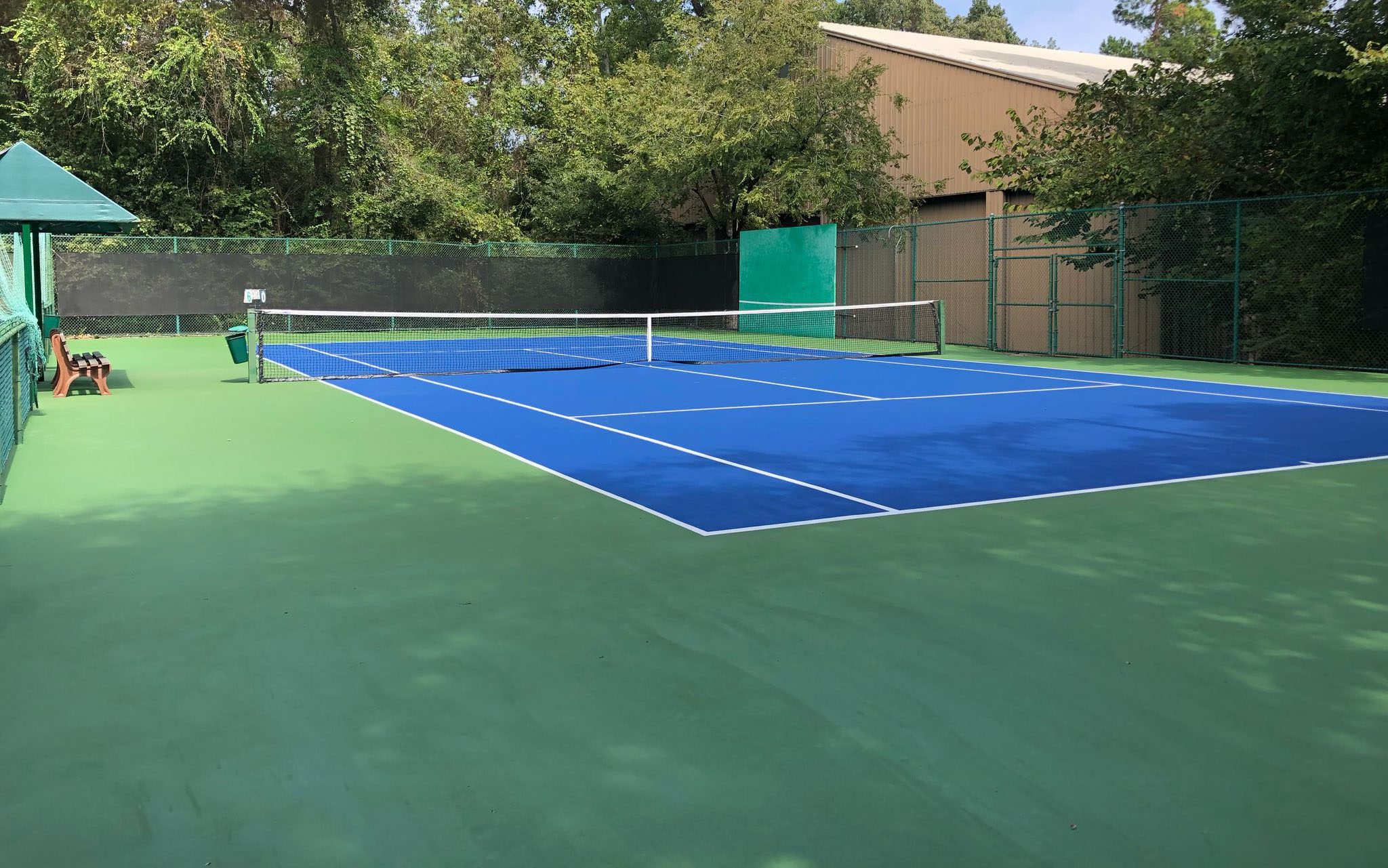
Tennis Court Damage Can Begin Above or Below the Surface
Visible damage does not always begin with the acrylic coating.
A crack may result from movement in the concrete or asphalt below it. A recurring puddle may be caused by settlement, an incorrect slope, or runoff entering from the surrounding property. Peeling material may point to poor surface preparation, trapped moisture, incompatible coatings, or age.
The repair should respond to the cause rather than simply cover the symptom.
A fresh patch may temporarily hide an opening, but it cannot stop unstable soil from moving. New color may improve the appearance, but it will not correct moisture rising through concrete. A repaired low spot may return if surrounding drainage continues directing water toward the court.
That is why tennis court repair begins with inspection.
What Types of Tennis Court Damage Can Be Repaired?
The appropriate repair depends on the court surface, extent of the damage, and condition of the underlying pavement.
Cracks in Concrete or Asphalt
Stable cracks can often be cleaned, filled, and blended into the surrounding surface. Cracks that repeatedly reopen may indicate movement in the pavement or soil and require a more detailed evaluation.
Low Spots and Standing Water
Small depressions may be corrected with compatible patching material. Widespread ponding may indicate settlement, improper slope, or drainage problems that must be addressed before surface repairs begin.
The United States Tennis Association’s tennis venue resources provide additional guidance for tennis court construction and maintenance.
Peeling or Delaminating Coatings
Loose acrylic coatings must be removed before repairs are applied. Trapped moisture, poor preparation, incompatible products, and pavement movement can all cause coatings to separate.
Worn or Slick Playing Areas
High-traffic areas, particularly around the baselines, can gradually lose texture and traction. Localized wear may be repaired, while widespread surface deterioration may require tennis court resurfacing.
Damaged Edges and Perimeter Areas
Court edges can deteriorate because of standing water, erosion, vegetation, or insufficient support. Repairs may include restoring the pavement edge, improving drainage, and correcting damage around fences, gates, or net posts.
Faded or Damaged Playing Lines
Individual line sections can sometimes be restored after the surface has been repaired. When the complete court has faded or worn unevenly, repainting or resurfacing usually creates a more consistent finish.
How Do We Inspect a Damaged Tennis Court?
A useful inspection looks beyond the most visible crack.
We walk the complete playing surface and examine the pavement, coatings, lines, net area, fence edges, gates, drains, and surrounding ground. Previous repairs are reviewed to see whether they remain stable or have reopened.
The inspection may include:
- Mapping cracks and noting their width, direction, and location
- Checking for vertical movement between the two sides of a crack
- Identifying loose, hollow, peeling, or blistered coatings
- Measuring low areas and observing where water collects
- Reviewing the slope and drainage path around the court
- Inspecting pavement around net posts, fence posts, and gates
- Looking for erosion, root pressure, soil buildup, or runoff
- Reviewing the age and general condition of the surface system
These findings help distinguish a targeted repair from a problem that requires resurfacing or reconstruction.
How Is a Tennis Court Repaired?
The repair process changes with the condition of the court, but the work should follow a clear sequence.
The Damage Is Evaluated
We identify the visible damage and investigate what may be causing it. This step determines whether the problem is limited to the coating, extends into the pavement, or begins in the surrounding site.
Loose Material Is Removed
Cracks, patches, and peeling areas need clean, stable edges. Failed filler, loose acrylic, dirt, vegetation, and debris are removed so the repair material can bond properly.
The Area Is Prepared
Preparation may include cleaning, drying, grinding raised edges, opening a crack to an appropriate profile, or removing incompatible material.
A repair is only as dependable as the surface supporting it.
Compatible Repair Materials Are Applied
The selected material depends on whether the court is asphalt or concrete, the type of damage, the expected movement, and the existing coating system.
Crack fillers, patching compounds, leveling materials, primers, and acrylic products are not interchangeable. Using the wrong product can create a hard ridge, soft patch, adhesion problem, or visible difference in texture.
The Repair Is Blended Into the Surface
The repaired section is finished to reduce noticeable height changes and rough edges.
Color and texture matching may be possible, but a localized repair can remain visible, particularly on an older or faded court. When appearance across the entire court matters, resurfacing may be the better next step.
Lines or Coatings Are Restored
Affected coatings and playing lines are reapplied after the repair material has cured. The work should remain closed until each product has reached the required stage of drying or curing.
The Court Receives a Final Review
We inspect the repaired section, surrounding coating, equipment, and work area before the court returns to use. Owners receive practical guidance about curing time, cleaning, monitoring, and future maintenance.
Should You Repair, Resurface, or Reconstruct the Court?
These services address different levels of deterioration.
Repair Addresses Specific Damage
Repair is appropriate when the problem is limited and the surrounding court remains serviceable.
Examples include one stable crack, a localized coating failure, a small low area, an isolated worn patch, or damage around a net post.
Resurfacing Renews the Complete Playing Surface
Resurfacing is usually the better option when wear extends across most of the court.
The process includes preparation and suitable repairs before a new acrylic surface system and playing lines are applied. It can restore color, texture, traction, and visual consistency when the underlying pavement remains usable.
Reconstruction Addresses Deeper Failure
Reconstruction may be required when there is widespread settlement, severe pavement failure, major elevation changes, extensive structural cracking, or a base that can no longer support the playing surface.
Covering these conditions with patching or new color may only delay the larger project.
Why Do Tennis Court Cracks Return?
Some cracks return because the movement that created them is still active.
Outdoor courts expand and contract with temperature changes. Soil moisture changes can affect the base beneath the pavement. Tree roots, erosion, poor compaction, drainage failure, and settlement can all place stress on the court.
Concrete also contains joints that allow controlled movement. If those joints are covered without an appropriate treatment strategy, movement may become visible through the finished surface.
Texas properties can present additional challenges because expansive soils change volume as moisture conditions shift. Long dry periods followed by heavy rainfall can place repeated stress on a court foundation.
A repair can close and protect the opening, but it cannot always stop movement occurring below it. The condition should be monitored, particularly after major weather changes.
Why Does Drainage Matter During Tennis Court Repair?
Water can enter openings, weaken pavement edges, carry soil away, encourage organic growth, and contribute to coating failure.
Repairing the visible damage without addressing nearby drainage can allow the same problem to return.
A drainage review may consider:
- The slope across the playing surface
- Low areas within the court
- Runoff entering from adjacent land
- Soil or landscaping blocking the pavement edge
- Roof or parking-lot water flowing toward the court
- Clogged channels, drains, or outlets
- Erosion around fencing and pavement edges
- Irrigation systems spraying onto the surface
The United States Environmental Protection Agency’s stormwater resources explain how developed properties can manage runoff and reduce uncontrolled water movement.
Drainage work may fall outside a localized surface repair, but it should still be identified before money is spent on finishes.
Can an Older Tennis Court Be Repaired?
Age alone does not determine whether repair is practical.
An older court with a stable base and a few limited problems may be an excellent repair candidate. A newer court with poor drainage or active settlement may require more extensive work.
The decision depends on:
- Pavement stability
- Crack activity
- Surface adhesion
- Drainage performance
- Number and size of low areas
- Condition of previous repairs
- Remaining life of the coating system
- Owner expectations for appearance and performance
An inspection helps establish whether targeted work will provide reasonable value or whether the court is approaching a complete resurfacing cycle.
How Can Regular Maintenance Reduce Future Repairs?
Routine care helps reveal developing problems while they are still manageable.
Leaves, soil, and organic material should not be allowed to collect along court edges. Drains and runoff paths need to remain open. Small cracks and loose coatings should be inspected before water and debris enter them.
Professional tennis court maintenance can include cleaning, surface evaluation, hardware checks, drainage review, and early identification of wear.
Maintenance cannot prevent every crack, but it can reduce avoidable deterioration and help owners plan repairs before damage spreads.
Why Choose Quality & Heritage Court Services?
Tennis court repair requires an understanding of pavement, acrylic coatings, drainage, equipment, and playing performance.
Quality & Heritage Court Services evaluates the complete court rather than treating every visible mark as a painting problem.
Practical On-Site Evaluation
We inspect the surface, previous repairs, drainage, pavement edges, equipment, and surrounding property before recommending the scope.
Clear Repair Recommendations
If a localized repair makes sense, we explain the work. If the court needs resurfacing or deeper reconstruction, we identify that before covering the damage.
Experience With Complete Court Systems
Our team works with tennis court construction, maintenance, resurfacing, coatings, fencing, equipment, and drainage. That broader experience helps us understand how one damaged component can affect another.
Service for Residential and Commercial Properties
We repair courts for private homes, schools, universities, clubs, HOAs, hotels, resorts, municipalities, parks, and commercial facilities throughout Texas.
Continued Maintenance Support
After the immediate repair is complete, we can help owners monitor the surface and plan maintenance around the court’s condition and use.