Overview
Professional pickleball court surfacing creates a consistent playing finish over a properly prepared concrete or asphalt base. The system may include acrylic resurfacer, textured color coatings, cushioned layers, accurate playing lines, and custom colors or graphics.
Quality & Heritage Court Services provides pickleball court surfacing for homes, schools, clubs, communities, resorts, municipalities, and commercial properties throughout Texas. We help owners select a surface based on the court’s condition, expected use, location, comfort requirements, and long-term maintenance needs.
Planning a new court or upgrading an existing surface? Contact Quality & Heritage Court Services to arrange an on-site evaluation.
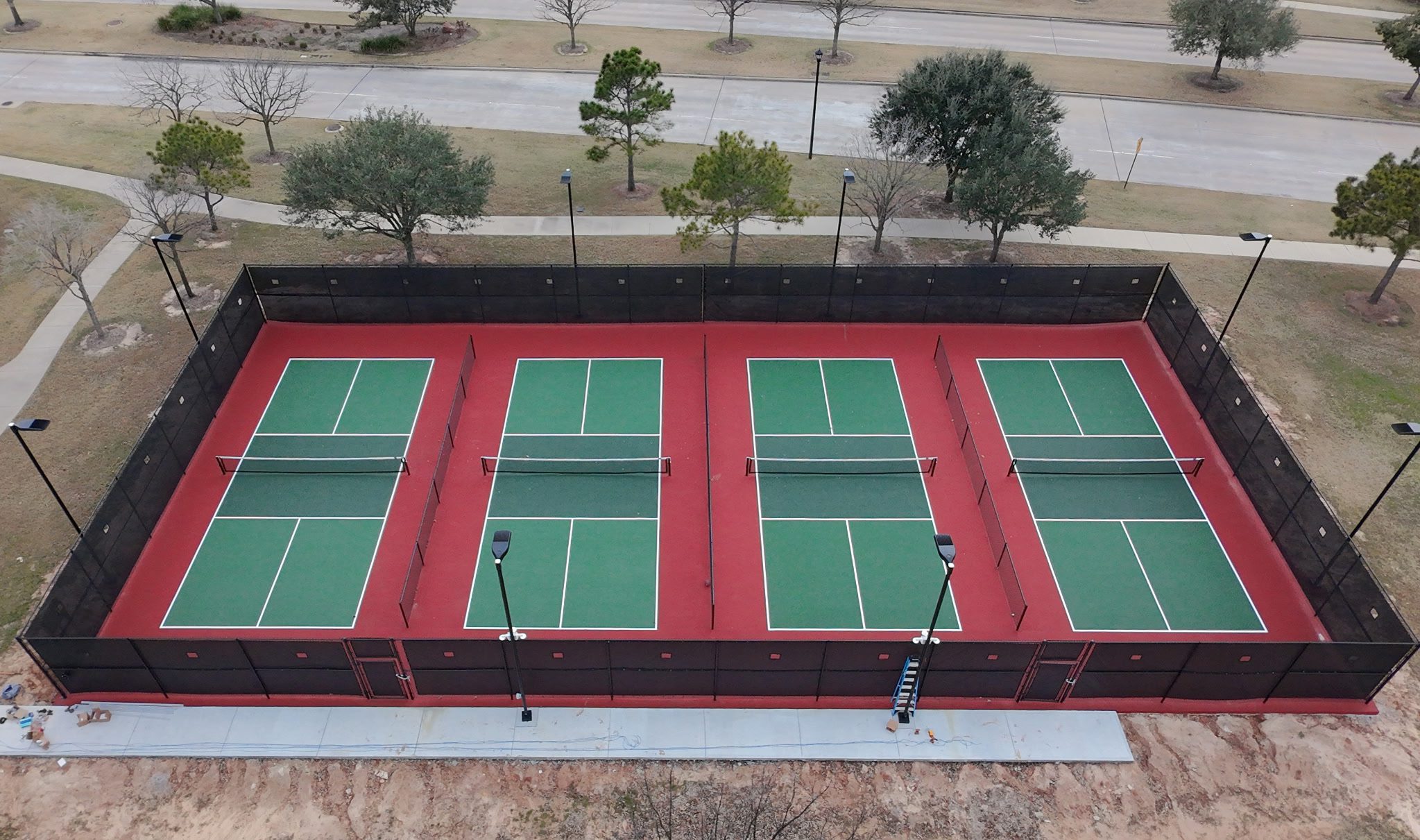
Pickleball Court Surfacing Is More Than a Color Coating
The visible color is only the final part of a complete surfacing system.
Before coatings are applied, the underlying concrete or asphalt must be stable, clean, dry, and properly prepared. Cracks, low areas, loose material, drainage problems, and incompatible coatings need attention before the new finish is installed.
A typical acrylic system may include:
- Surface cleaning and preparation
- Crack and low-spot repairs
- Compatible primers where required
- Acrylic resurfacer
- Textured color coatings
- Regulation playing lines
- Custom colors or graphics
- Final inspection and curing
Each layer has a specific purpose. The resurfacer creates a more uniform foundation for the color system. The textured coatings influence traction and ball response. The lines establish the final playing layout.
Skipping preparation can cause even a high-quality coating to peel, blister, or wear unevenly.
What Pickleball Court Surface Options Are Available?
The appropriate surface depends on the base, court location, player preferences, expected use, and available budget.
Standard Acrylic Court Surfaces
Acrylic is one of the most widely used finishes for outdoor pickleball courts.
The system is applied over a stable asphalt or concrete base. Carefully graded texture is incorporated into the coating to create traction and influence playing speed.
Acrylic surfaces offer:
• Consistent ball response
• Clear color separation
• Reliable player traction
• Custom color choices
• Compatibility with logos and graphics
• Straightforward cleaning and maintenance
• Suitability for residential and commercial properties
The texture must be balanced. Excessive aggregate can make the court feel harsh, while insufficient texture may create a slick finish.
Cushioned Acrylic Surfaces
A cushioned surface adds resilient layers beneath the acrylic color system.
These layers create a more forgiving feel underfoot while maintaining the familiar appearance and response of an acrylic court. Cushioned systems are often selected for private homes, clubs, communities, and facilities where comfort is a priority.
The amount and type of cushioning vary between systems. The underlying base must still be stable because a cushion layer cannot correct structural movement, poor drainage, or extensive pavement failure.
Owners interested in additional impact reduction can review our Cushion X court services.
Modular Tile Systems
Modular tiles are manufactured sections that connect over a suitable base.
They may provide drainage openings and a degree of separation from the concrete or asphalt below. However, tile systems produce a different sound, feel, and ball response from acrylic coatings.
The base still needs to be evaluated for slope, stability, drainage, and height transitions. Tiles should not be used simply to conceal severe cracking or settlement without addressing the underlying problem.
Indoor Pickleball Flooring
Indoor pickleball courts may use acrylic coatings, resilient synthetic flooring, wood systems, or other purpose-designed finishes.
The selection depends on the building, existing floor, moisture conditions, expected activities, and whether the space will serve pickleball exclusively or support several uses.
Indoor flooring should provide dependable traction without creating excessive grip during lateral movement. Lighting, glare, line visibility, and cleaning requirements should also be considered.
How Do We Choose the Right Surface for a Property?
A surface that works well for a private backyard may not be the best choice for a busy club or public facility.
We consider how the court will be used before recommending a system.
Frequency of Play
A residential court used several times each week faces different wear from a commercial facility with continuous lessons, bookings, and league play.
High-use courts need a durable system that can tolerate concentrated movement near the non-volley line, baselines, and service areas.
Player Comfort
Standard acrylic provides a firm, familiar playing surface. A cushioned system may be more suitable when owners want a softer feel underfoot.
Comfort can be particularly important for frequent players, older adults, training facilities, and properties serving a wide range of ages.
Indoor or Outdoor Placement
Outdoor coatings need to tolerate sunlight, rain, heat, humidity, dust, and temperature changes. Indoor surfaces face fewer weather conditions but may need to work with moisture, ventilation, lighting, and building-use requirements.
Maintenance Expectations
Every surface requires care.
Acrylic courts need appropriate cleaning and periodic inspection for cracks, peeling, fading, and texture loss. Cushioned systems require compatible repair and resurfacing methods. Modular tiles need cleaning beneath and around the system where debris or moisture collects.
The best choice is one the owner can maintain properly over time.
Why Does Surface Texture Matter?
Pickleball requires frequent starts, stops, pivots, and lateral movements within a relatively compact playing area.
The surface needs enough texture to support controlled movement without becoming excessively abrasive. Texture also affects how the ball responds after contact with the court.
A surface that is too smooth may feel slippery, especially when dust, pollen, moisture, or worn coatings are present. A surface that is too rough can increase ball wear and create a harsher playing experience.
Professional application helps distribute the texture consistently across the court. Heavy ridges, thin sections, roller marks, and uneven aggregate can produce noticeable differences during play.
The USA Pickleball Courts Construction and Maintenance Manual provides official guidance for court construction, surfacing, maintenance, and repair.
What Preparation Does a Pickleball Court Need Before Surfacing?
The final coating will only perform as well as the surface beneath it.
The Base Is Inspected
We examine the concrete or asphalt for cracks, settlement, peeling coatings, low areas, contamination, exposed pavement, and drainage concerns.
Previous patches are also reviewed. Loose or raised repairs may need to be removed or corrected before a new system is installed.
The Court Is Cleaned
Dirt, dust, mildew, oil, vegetation, loose acrylic, and other contaminants can interfere with adhesion.
Cleaning methods should remove unwanted material without damaging a serviceable base. The court must then dry sufficiently before moisture-sensitive products are applied.
Cracks and Damaged Areas Are Addressed
Repairable cracks are cleaned and treated with materials suited to the pavement and expected movement.
Small low areas may be corrected where the surrounding slope allows. Widespread settlement or structural failure may require more extensive work before surfacing can proceed.
Existing Coatings Are Tested
A court with older coatings needs to be checked for adhesion and compatibility. Applying a new system over loose or incompatible material can allow the fresh surface to separate with the layer below it.
Equipment and Edges Are Reviewed
Net-post foundations, fences, gates, drainage outlets, pavement edges, and surrounding walkways should be checked before coatings begin.
Completing structural or equipment work first reduces the risk of damaging a newly finished surface.
How Is a Pickleball Court Surface Applied?
Conditions and product requirements affect the exact process, but the work generally follows a coordinated sequence.
Evaluation and Measurement
We confirm the playing layout, base condition, surface system, colors, line placement, and any custom design requirements.
Repairs Completion
Cracks, low areas, loose coatings, and damaged sections are addressed before full-surface materials are installed.
Structural concerns are discussed separately if they extend beyond normal preparation.
Acrylic Resurfacer Application
The resurfacer helps create a more uniform base for the color system. It fills smaller surface irregularities and improves consistency across prepared areas.
The number of applications depends on the condition and texture of the existing court.
Color Coatings Installation
Textured acrylic color is applied evenly across the playing area and surrounding zones.
Each application needs suitable drying conditions before the next layer begins. Temperature, humidity, rain, and overnight moisture can influence the schedule.
Playing Lines Measurement
Pickleball lines should be straight, accurately positioned, and easy to see against the selected court colors.
USA Pickleball defines a regulation playing area of 20 feet by 44 feet. The complete court footprint requires additional space around the lines for safe player movement.
Our pickleball court dimensions guide explains the difference between playing dimensions and the total space needed around the court.
Custom Details Addition
Logos, branded graphics, secondary markings, and custom color zones are completed after the main surface is ready.
Additional lines should remain visually distinct without making the playing area difficult to follow.
Final Review
We inspect the texture, color consistency, lines, edges, repaired areas, and surrounding work.
The court remains closed until the installed materials have cured sufficiently for play.
How Does Texas Weather Affect Pickleball Court Surfacing?
Texas conditions place substantial demands on outdoor surfaces.
Strong sunlight can gradually fade color and age exposed coatings. High temperatures can influence application and curing. Heavy rain tests the slope and drainage around the court. Humidity and overnight moisture may delay installation.
Soil movement can also affect the pavement supporting the surface. Expansive soils change volume as moisture conditions shift, which may contribute to cracking or settlement.
A durable coating cannot compensate for an unstable base. Site preparation, drainage, pavement design, and repair all influence how the finished court performs.
Surfacing work should be scheduled around suitable weather. Applying coatings when the court is too hot, damp, cold, or exposed to approaching rain can affect adhesion and curing.
What Colors Work Best for a Pickleball Court?
Color selection should support ball visibility, line clarity, heat management, and the appearance of the surrounding property.
Many owners choose a contrasting color for the playing area and outer zone. This makes the court boundaries easier to recognize and creates a more finished appearance.
Consider:
- Contrast between the ball and playing surface
- Visibility of white or approved line colors
- Sun exposure across the court
- Nearby buildings and landscaping
- School, club, or community colors
- Custom logos or branded graphics
- Shared layouts with additional markings
Very dark colors may absorb more heat in direct sun. Extremely bright combinations can create glare or visual fatigue. Samples can help owners compare options under the property’s actual lighting conditions.
Professional court painting services can also restore color and lines when the existing surface remains stable and does not require a complete surfacing system.
Can an Existing Court Be Resurfaced for Pickleball?
An existing tennis, basketball, or recreational court may be converted or resurfaced for pickleball when its size, base, slope, and condition are suitable.
The existing surface should be inspected for:
- Active or recurring cracks
- Low areas that hold water
- Peeling or incompatible coatings
- Structural movement
- Drainage problems
- Pavement-edge failure
- Equipment that must be removed or relocated
- Adequate space around the playing lines
A tennis court may accommodate multiple pickleball layouts, depending on its complete dimensions and surrounding clearances.
Our guide to converting a tennis court into pickleball courts explains the planning considerations for shared and dedicated layouts.
How Long Does Pickleball Court Surfacing Take?
A straightforward project generally requires several working days, but the actual timeline depends on preparation, repairs, weather, court size, and the selected system.
Cleaning and applying coatings to a stable base is more predictable than preparing a court with multiple cracks, peeling material, or low areas.
Each layer must dry before the next application begins. Rain, humidity, overnight moisture, and unsuitable surface temperatures can extend the schedule.
Cushioned systems may require additional materials and installation stages. Custom logos, several colors, or multiple court layouts can also add time.
After inspecting the property, we can provide a schedule based on the actual work rather than a general estimate.
What Does Pickleball Court Surfacing Cost?
There is no single price for every court.
The cost depends on:
- Size and number of courts
- Concrete or asphalt condition
- Amount of crack and low-spot repair
- Existing coating removal
- Standard or cushioned surface system
- Number of material applications
- Color selection
- Logos and custom graphics
- Line configuration
- Site access
- Drainage or equipment work
- Indoor or outdoor conditions
A new, stable base requires a different scope from an older court with recurring cracks, peeling coatings, and standing water.
A written proposal should identify preparation, repair allowances, selected materials, colors, line work, custom details, and exclusions. Comparing only the final price can be misleading when the scopes are different.
How Should a Newly Surfaced Court Be Maintained?
Routine care protects the surface texture and helps owners identify developing damage early.
Keep leaves, soil, food, standing water, and abrasive debris off the playing area. Use cleaning methods suitable for acrylic coatings. Harsh chemicals and excessive pressure can damage the finish.
Inspect the court periodically for:
- Cracks or open joints
- Peeling and bubbling
- Water collection
- Faded or worn lines
- Smooth high-traffic areas
- Organic growth in shaded sections
- Damage around net posts and fences
- Blocked perimeter drainage
Professional pickleball court maintenance can help protect the surface and identify concerns before they require larger repairs.
Why Choose Quality & Heritage Court Services?
Pickleball court surfacing requires careful preparation, compatible materials, accurate texture, and precise line placement.
Quality & Heritage Court Services evaluates the complete court before recommending a surface system.
Surface Recommendations Based on Real Use
We consider the property, player volume, comfort goals, court location, maintenance expectations, and budget before recommending a system.
Careful Base Preparation
Cracks, peeling areas, low spots, drainage concerns, and previous coatings are reviewed before the new surface is applied.
Standard and Cushioned Options
We provide firm acrylic and cushioned surface choices for residential, school, community, club, resort, municipal, and commercial properties.
Custom Colors and Court Graphics
Owners can select court colors, line configurations, logos, and branded details that fit the property and remain easy to follow during play.
Continued Surface Care
Maintenance and future resurfacing support remain available as the court ages.