Overview
Padel court repair requires more than treating the visible damage. The turf, glass, steel frame, fencing, doors, net, lighting, drainage, and foundation work together as one playing system.
Quality & Heritage Court Services repairs residential and commercial padel courts throughout Texas. We inspect the complete facility, identify the likely cause of the damage, and recommend targeted work based on the condition of each component.
If your padel court has loose turf, damaged glass, unstable fencing, drainage problems, or worn equipment, contact Quality & Heritage Court Services to arrange an on-site inspection.
Padel Court Damage Can Affect More Than One Component
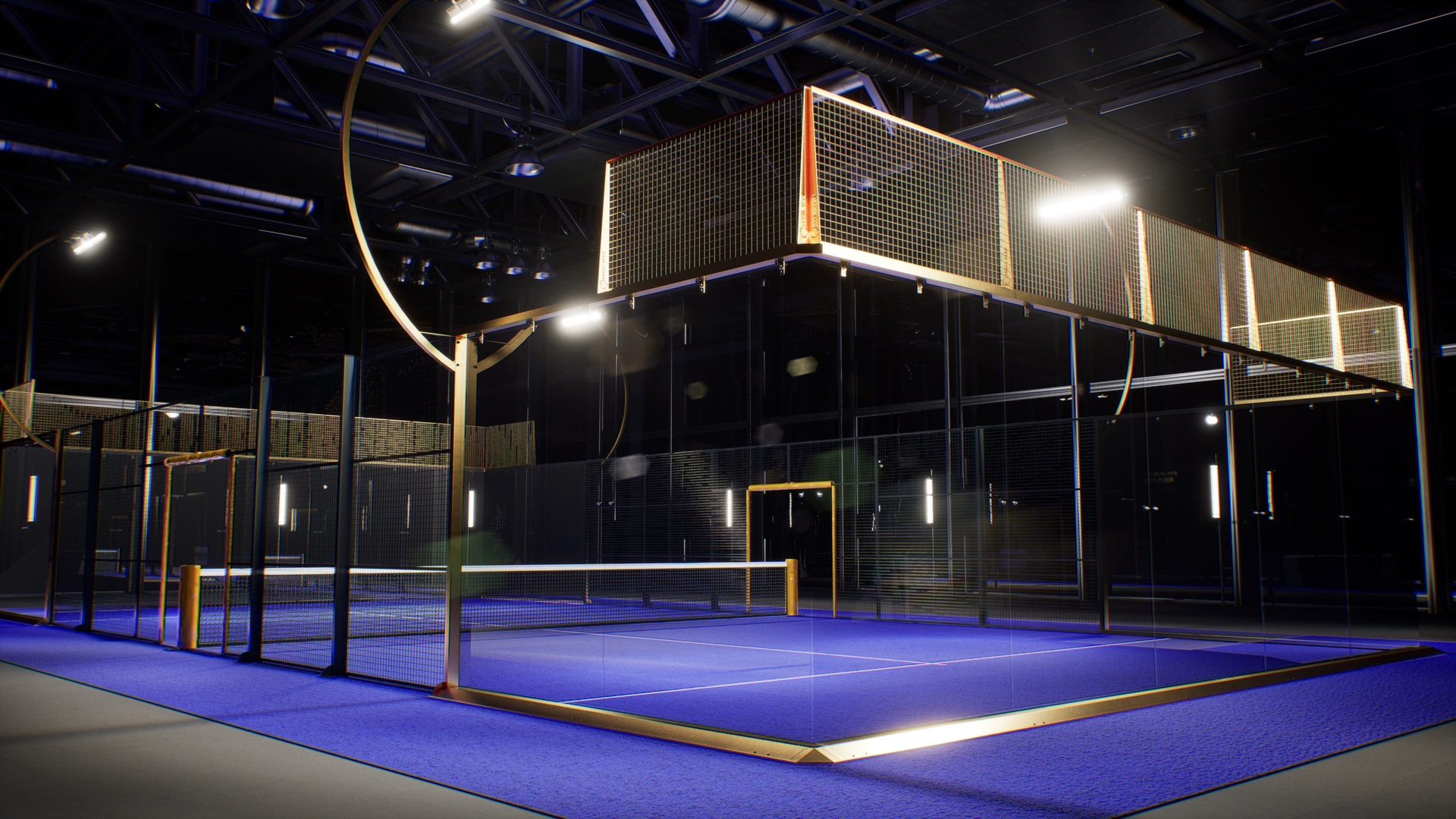
Padel courts combine a playing surface with a structural enclosure.
The ball rebounds from the glass and metal walls during play, which makes their alignment and stability essential. The turf and silica sand influence traction, movement, and ball response. Doors, nets, lights, anchors, and drainage also affect how safely and consistently the court operates.
Damage in one area can place pressure on another.
A shifting foundation can affect frame alignment. A loose frame connection can place stress on glass fittings. Poor drainage can affect the turf, base, anchors, and surrounding steel.
Repairs should account for these relationships rather than treating each visible problem in isolation.
What Types of Padel Court Damage Can Be Repaired?
The appropriate repair depends on the damaged component, cause of failure, court age, and condition of the surrounding system.
Loose or Damaged Turf
Padel turf can flatten, wrinkle, tear, or separate from the base.
Localized damage may be repaired when the remaining turf is stable and has useful life. Widespread wear, fiber loss, or backing failure may require complete padel court resurfacing.
Open or Raised Seams
Loose seams can create an uneven area underfoot and may continue opening as players move across them.
The surrounding turf, adhesive, base, moisture conditions, and infill should be evaluated before the seam is secured. Simply adding adhesive over dirt or damp material may not create a dependable repair.
Uneven Silica Sand
Silica sand supports the turf fibers and influences movement and ball response.
Heavy use can move infill toward the corners, edges, and glass. Corrective work may include decompaction, redistribution, cleaning, removal of contaminated material, or adding compatible infill.
Cracked or Damaged Glass
Padel glass is part of the playing enclosure and requires specialist evaluation.
Chipped, cracked, loose, or heavily damaged panels may need replacement rather than surface repair. The surrounding frame, fasteners, gaskets, supports, and foundation should also be checked to determine why the damage occurred.
Loose Steel Framing or Fencing
Frame sections, mesh panels, bolts, and connections can loosen through repeated play, wind, vibration, corrosion, or structural movement.
Repair may involve tightening or replacing fasteners, correcting alignment, treating corrosion, replacing damaged panels, or evaluating anchor points.
Doors and Gates That Do Not Close Correctly
A gate may drag, bind, swing unevenly, or fail to latch when hinges wear or the enclosure moves out of alignment.
Repairs can include hinge adjustment, hardware replacement, frame correction, latch service, and evaluation of the supporting structure.
Damaged Nets and Posts
Net tension, height, post alignment, and anchor stability affect play.
Worn nets, loose cables, faulty tensioning equipment, or unstable posts may be repaired or replaced depending on their condition.
Lighting and Electrical Problems
Padel lighting can develop failed fixtures, uneven output, loose mounts, corrosion, damaged wiring, or control problems.
Electrical repairs should be completed by qualified professionals using components suited to the court’s indoor or outdoor environment.
How Do We Inspect a Damaged Padel Court?
A useful inspection covers the complete playing system.
We examine the turf, seams, infill, base, drainage, enclosure, glass, doors, net, lighting, anchors, and surrounding property.
Turf and Infill Condition
We look for flattened fibers, loose edges, raised seams, worn sections, exposed backing, uneven sand, contamination, and areas that feel different underfoot.
The condition of the turf helps determine whether localized repair, deeper cleaning, or replacement is appropriate.
Glass and Enclosure Alignment
Glass panels, steel supports, mesh sections, doors, bolts, and connections are reviewed for movement, damage, and corrosion.
Gaps, unusual vibration, loose fittings, or changes in alignment may indicate a problem with the frame or foundation.
Foundation and Anchor Points
The slab, perimeter foundations, frame anchors, and net-post supports are checked for cracks, movement, settlement, or damage.
Small changes in the foundation can affect several components above it.
Drainage and Moisture
We look for water trapped beneath or around the turf, blocked outlets, low areas, landscape runoff, and signs of moisture affecting anchors or steel components.
Outdoor courts should be inspected after rain whenever possible.
Lighting and Court Equipment
Fixtures, mounts, electrical housings, nets, posts, doors, and other equipment are checked for secure operation and visible deterioration.
How Is a Padel Court Repaired?
The repair process changes according to the damaged components, but the work should follow a coordinated sequence.
The Complete Court Is Evaluated
We identify visible damage and investigate how it may relate to the surrounding system.
A loose seam may be caused by adhesive failure, moisture, movement, or poor preparation. A door problem may begin with worn hinges or broader frame movement.
Unsafe Areas Are Secured
Cracked glass, loose metal panels, exposed wiring, unstable doors, and raised turf may require the court to remain closed until repairs are completed.
Player safety comes before keeping the court available.
Damaged Components Are Prepared
Loose material, contaminated adhesive, damaged turf, corroded fittings, and unstable fasteners are removed where necessary.
The supporting area must be clean and stable before replacement materials are installed.
Compatible Repairs Are Completed
Repair materials and replacement components should match the court system.
Glass thickness, fittings, turf type, adhesive, silica sand, fasteners, coatings, and electrical components need to remain compatible with the existing installation.
Alignment and Operation Are Checked
Glass panels, doors, nets, frame sections, and turf seams are reviewed after the repair.
The court should operate as a complete system rather than a collection of separately repaired parts.
The Court Receives a Final Inspection
We inspect repaired areas, remove work debris, and confirm whether the court can reopen.
Owners receive guidance about curing time, monitoring, cleaning, infill care, and future maintenance.
When Should Padel Turf Be Repaired or Replaced?
Localized repair may be suitable when damage is limited and the surrounding turf remains stable.
Examples include a loose edge, one opening seam, a small tear, or an isolated area of displaced infill.
Replacement becomes more likely when the court has:
- Widespread fiber wear
- Persistent wrinkles
- Several failing seams
- Exposed turf backing
- Contaminated or hardened infill
- Repeated adhesive failure
- Drainage problems beneath the surface
- Inconsistent traction across the playing area
The age of the turf is only one factor. Usage, installation quality, maintenance, moisture, sunlight, and indoor or outdoor placement all influence its condition.
Can Padel Court Glass Be Repaired?
The answer depends on the type and location of the damage.
Tempered glass behaves differently from ordinary window glass. Cracks, deep chips, loose panels, and damaged edges can affect safety and structural performance.
Minor Surface Marks
Light scratches or marks may be cosmetic when they do not affect visibility, edges, fittings, or panel integrity.
The panel should still be inspected before being left in service.
Chipped or Cracked Glass
A cracked panel generally requires replacement rather than cosmetic repair.
Damage near holes, fittings, or exposed edges deserves immediate attention because these areas can concentrate stress.
Loose or Misaligned Panels
Movement may result from loose hardware, damaged gaskets, frame distortion, foundation movement, or incorrect installation.
The cause should be corrected before the panel is tightened or replaced.
The International Padel Federation’s rules outline official requirements for the playing enclosure and court components.
How Are Padel Court Frames and Fencing Repaired?
The steel frame and metal mesh complete the enclosure and support the glass, doors, and other components.
Repair may involve:
Tightening or Replacing Fasteners
Bolts and connections can loosen through vibration, wind, or repeated use.
Damaged or corroded fasteners should be replaced with compatible components rather than simply tightened.
Correcting Alignment
Frame sections may move because of impact, foundation changes, installation problems, or connection failure.
Alignment should be checked across the complete enclosure before one section is forced back into position.
Treating Corrosion
Outdoor steel can develop corrosion where coatings are damaged or moisture remains trapped.
Affected areas may require cleaning, treatment, compatible coating, or component replacement depending on the severity.
Replacing Damaged Mesh
Bent, torn, loose, or heavily corroded mesh sections may interfere with rebounds and create sharp or unstable areas.
Replacement should preserve the correct enclosure dimensions and transitions.
Why Do Padel Court Doors Become Misaligned?
Doors experience repeated opening, closing, impact, and vibration.
Hinges and latches can wear over time. The surrounding frame may also move slightly, causing the door to drag or stop closing properly.
Possible causes include:
- Loose hinge hardware
- Worn hinges
- Damaged latches
- Frame movement
- Foundation settlement
- Impact damage
- Corrosion
- Incorrect initial alignment
The door should be checked together with the surrounding frame. Adjusting a latch may not solve the problem if the enclosure itself has moved.
Why Is Drainage Important During Padel Court Repair?
Water can affect the turf, adhesive, infill, base, steel frame, anchors, electrical systems, and surrounding foundation.
Outdoor courts need a clear route for rainwater to leave the playing area and move away from the enclosure.
A drainage inspection may review:
Water Beneath the Turf
Trapped moisture can interfere with adhesive and contribute to loose seams, odors, organic growth, and slow drying.
Low Areas in the Base
A low section beneath the turf can continue holding water even when the visible surface appears level.
Blocked Court Edges
Leaves, sand, soil, and debris can prevent water from leaving the perimeter.
Surrounding Runoff
Water from landscaping, roofs, walkways, and parking areas should not be directed into the enclosure.
Drainage Near Anchors
Persistent moisture around structural anchors can contribute to corrosion and deterioration.
The Environmental Protection Agency’s stormwater guidance provides additional information about controlling runoff on developed properties.
Can Indoor and Outdoor Padel Courts Be Repaired?
Yes, but the conditions affecting them are different.
Indoor Padel Court Repair
Indoor courts face heavy player traffic, dust, artificial lighting, ventilation conditions, and building-related moisture.
Repairs may involve turf seams, infill, glass, doors, frame connections, lighting, and the floor beneath the court.
Roof leaks, condensation, and slab moisture should be addressed before affected surface materials are replaced.
Outdoor Padel Court Repair
Outdoor courts face sunlight, heat, rain, humidity, wind, debris, soil movement, and corrosion.
Repairs need materials and components suitable for continued exterior exposure. Drainage and weather protection carry greater importance.
Our guide to indoor versus outdoor padel courts explains how location changes construction and maintenance requirements.
How Long Does Padel Court Repair Take?
A localized turf or hardware repair may take one or several working days. Structural, glass, drainage, or electrical work may require more time.
The schedule depends on:
- Type of damage
- Availability of compatible components
- Number of damaged areas
- Glass replacement requirements
- Turf and adhesive curing
- Frame alignment
- Electrical work
- Weather
- Site access
- Need for engineering or permits
Custom glass, steel, turf, and hardware may need to be ordered specifically for the installed system.
The court should remain closed until all repaired components are secure and any adhesives or coatings have cured properly.
How Much Does Padel Court Repair Cost?
The cost depends on which components are damaged and why they failed.
A loose seam requires a different scope from replacing glass, realigning the enclosure, and correcting foundation movement.
The estimate may be influenced by:
- Turf condition
- Number of loose seams
- Infill replacement
- Glass-panel specifications
- Frame or mesh damage
- Corrosion
- Door hardware
- Net equipment
- Lighting and electrical work
- Drainage correction
- Foundation movement
- Access to the court
- Replacement-part availability
An on-site inspection allows the proposal to identify immediate repairs and any underlying conditions that require separate attention.
How Can Maintenance Reduce Future Repairs?
Routine maintenance allows problems to be identified before they affect larger sections of the court.
Turf should be cleaned and groomed according to its use. Silica sand should remain evenly distributed. Glass, doors, fasteners, mesh, nets, lights, and drainage should be inspected regularly.
Professional padel court maintenance can include turf care, infill redistribution, glass cleaning, hardware checks, drainage inspection, and early repair recommendations.
Maintenance cannot prevent every failure, but it can reduce avoidable damage and help owners plan replacement before components become unsafe.
Why Choose Quality & Heritage Court Services?
Padel repair requires experience with playing surfaces, structural enclosures, glass, drainage, lighting, and equipment.
Quality & Heritage Court Services evaluates the court as one connected facility.
Complete Court Inspections
We examine the turf, infill, seams, glass, frame, mesh, doors, anchors, net, lighting, drainage, and surrounding property.
Repairs Based on the Cause
We identify whether the problem begins with wear, moisture, movement, corrosion, impact, or component failure.
Residential and Commercial Service
We repair padel courts for homes, clubs, schools, communities, resorts, municipalities, and commercial facilities.
Compatible Materials and Components
Repairs are planned around the specifications and condition of the existing court.
Continued Maintenance Support
Surface care, enclosure inspection, resurfacing, painting, and ongoing maintenance remain available as the court ages.