Overview
That is where the difference between tennis court resurfacing and replacement matters.
Resurfacing restores the upper playing surface. It can address ordinary wear, refresh color and texture, repair certain cracks, correct some low areas, and provide new lines. Replacement goes deeper. It may involve removing the existing surface and base, correcting drainage or soil problems, rebuilding the foundation, and creating a new playing system.
Neither option is automatically better. The right decision depends on what has failed, why it failed, and how reliably the existing foundation can support future work.
Quality & Heritage Court Services evaluates tennis courts for homeowners, schools, clubs, HOAs, municipalities, private estates, and commercial properties across Texas. We look at the entire court before recommending resurfacing, major rehabilitation, or replacement.
If your tennis court is cracked, faded, uneven, or holding water, contact our team to schedule an inspection. We will help you understand what can be preserved and what may need to be rebuilt.
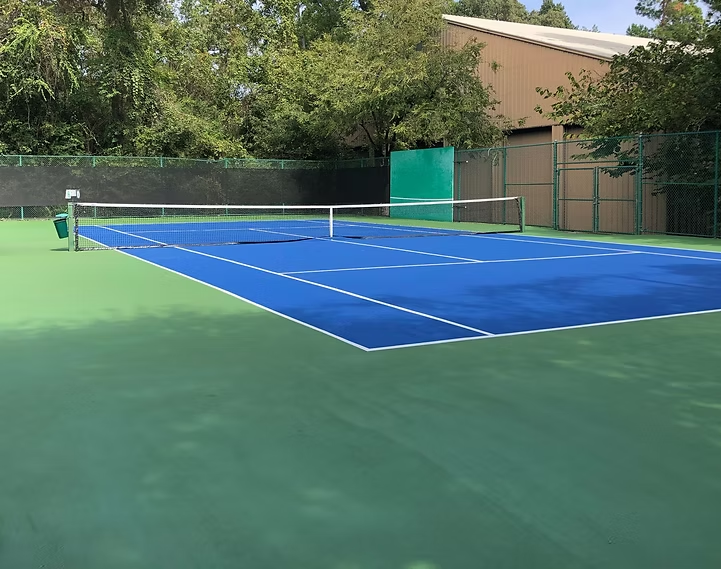
Resurfacing and Replacement Solve Different Problems
Resurfacing is sometimes described as giving a court a new coat of paint. That description leaves out most of the work.
A proper resurfacing project begins with cleaning and preparation. Cracks and damaged areas included in the scope are treated. Low spots may be patched. The surface is leveled where appropriate, then treated with acrylic resurfacer, color coatings, and accurately measured lines.
The USTA’s tennis facility guidance notes that resurfacing can include crack repair systems, overlay treatments, patching low areas, and leveling high spots in addition to acrylic coatings.
Replacement addresses conditions that resurfacing cannot reliably correct.
If the pavement has widespread structural movement, severe settlement, extensive drainage failure, or a badly deteriorated base, new coatings may only temporarily improve the appearance. A replacement project can remove failed materials and rebuild the court from a more dependable starting point.
The simplest distinction is this:
- Resurfacing renews a serviceable court: It works mainly on the playing surface while keeping a foundation that still performs well enough to support the new system.
- Replacement rebuilds a failed court: It addresses serious problems in the base, pavement, drainage, or overall construction that surface work alone can't fix.
The decision should come from the court’s condition, not its age or appearance alone.
Start With What the Court Is Showing You
Most owners do not call because a calendar says it is time. They call because something about the court has changed.
The ball may no longer bounce consistently. Players may avoid a particular crack. The surface may feel slick near the baselines. Puddles may remain long after the surrounding pavement has dried. Previous repairs may be opening again.
These clues help reveal whether the problem is limited to the surface or connected to something deeper.
Fading and Worn Texture
Color loss is common on outdoor tennis courts. Texas sunlight, heat, rain, cleaning, and regular play gradually wear the acrylic finish.
The court may fade unevenly if one section receives more shade or holds moisture longer. Busy areas near baselines and service boxes can also lose texture before the rest of the surface.
Fading alone usually does not mean the court needs replacement. If the pavement remains stable and drainage is working, resurfacing may restore the color, traction, texture, and lines.
Cracks That Keep Returning
A crack is evidence of movement. The important question is how much movement is occurring and where it begins.
A narrow, relatively stable crack may be suitable for treatment during resurfacing. A wide crack with vertical displacement is more concerning. So are cracks that return soon after repair, continue across large sections, or form a widespread pattern.
Surface repair can reduce the appearance of a crack and help limit water entry. It cannot guarantee that an active crack will never return.
If the base or soil continues moving, the movement can eventually travel through new coatings. Courts with severe or repeated structural cracking may require deeper rehabilitation or replacement.
Low Areas and Standing Water
A few damp patches immediately after rain are not necessarily a major problem. Water that remains in the same depression after nearby sections have dried deserves closer attention.
Small low areas can sometimes be patched during resurfacing. The repair must be blended carefully so it does not create an abrupt change in texture or ball response.
Large depressions, continuing settlement, or water arriving from outside the court may point to a larger issue. Replacing the surface without addressing the water source will not solve the problem.
Loose, Peeling, or Bubbling Coatings
Peeling may begin when new material loses its bond with the layer beneath it. Moisture, contamination, poor preparation, incompatible products, or age can all contribute.
A small isolated area may be repairable. Widespread delamination may require removal of multiple coating layers before a new system can be applied.
Bubbling can also suggest moisture pressure beneath the surface. The cause should be investigated before another coating is installed.
Resurfacing vs. Replacement Scope
Select an option below to compare when each service is appropriate:
When Tennis Court Resurfacing Is Usually the Better Choice
Resurfacing makes sense when the court’s foundation remains stable and the main problems are concentrated in the upper surface.
A court does not need to look good before it can be resurfaced. It can be heavily faded, dirty, worn, and marked by several repairable cracks. What matters is whether the underlying pavement can still provide suitable support.
Resurfacing may be appropriate when:
- The color has faded or become patchy
- Lines are worn or difficult to see
- The playing texture feels polished or inconsistent
- Cracks are limited and suitable for repair
- Low areas are localized and can be corrected
- Previous patches need to be prepared and covered
- The owner wants a new color combination
- Additional playing lines are being considered
- The base remains reasonably stable
- Drainage problems are minor and correctable
For many courts, resurfacing offers a practical way to improve appearance and play without removing a foundation that still has useful life.
Quality & Heritage Court Services provides tennis court resurfacing for existing surfaces that need repairs, renewed coatings, clearer markings, or a more consistent finish.
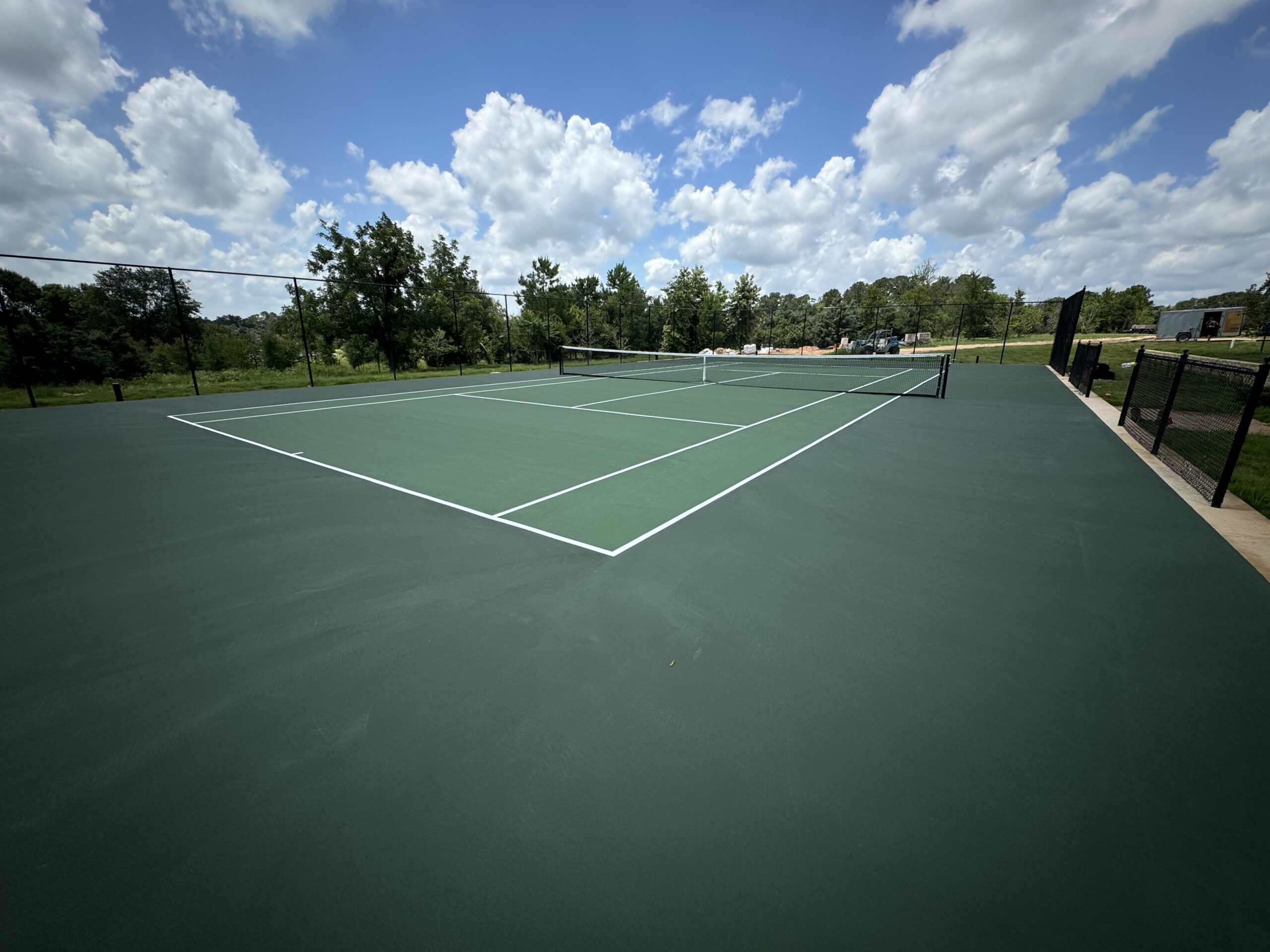
When Replacement Deserves Serious Consideration
Replacement becomes more likely when the court’s problems extend below the acrylic surface.
Owners sometimes continue repairing the same cracks because each individual repair costs less than rebuilding. Over time, that pattern can become expensive and frustrating. The court spends more time closed, patches become increasingly visible, and the underlying movement continues.
Replacement may be the more responsible option when the court has:
- Widespread structural cracking
- Significant differences in height across cracks
- Large settled or heaved sections
- A base that is breaking apart
- Extensive drainage failure
- Chronic water movement beneath the pavement
- Numerous failed repairs
- Widespread coating separation linked to deeper moisture
- Incorrect slopes that cannot be corrected at the surface
- Major layout or orientation problems
- A foundation that no longer provides predictable support
A court can also be replaced as part of a larger facility redesign. The owner may want to change the orientation, improve access, install new drainage, reconfigure fencing, add lighting, or create more usable space around the baselines.
In those situations, replacement is not only a response to damage. It is an opportunity to correct limitations that have affected the court from the beginning.
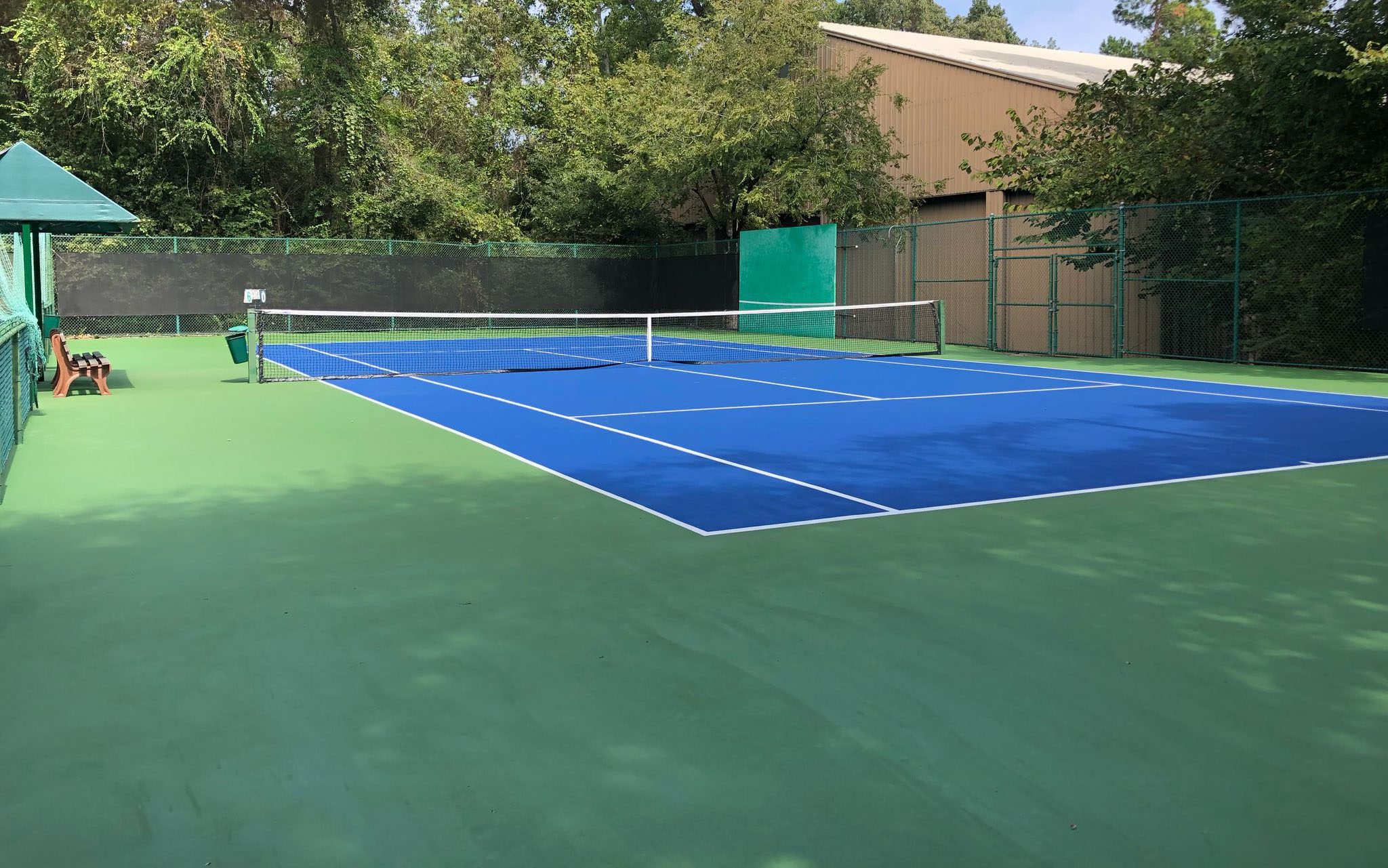
The Crack Pattern Often Tells the Story
Not every crack carries the same meaning.
A few isolated hairline cracks may reflect ordinary age. A long crack that repeatedly opens after repair may indicate movement in the pavement or soil. A network of interconnected cracks can suggest broader deterioration.
Texas soil adds another layer to the evaluation.
Expansive clay can shrink during dry weather and swell when moisture returns. That movement places stress on the pavement above it. Drainage, irrigation, nearby trees, and changes around the property can also affect moisture conditions beneath the court.
The location of the cracks matters too.
Cracking near an edge may be connected to poor support, erosion, or water entering beside the pavement. Cracks beside a drain or low area may relate to continuing moisture. Damage near large trees can sometimes be influenced by roots or changes in soil moisture.
A resurfacing estimate should not treat all cracks as identical lines to be filled. The pattern, width, displacement, repair history, and surrounding conditions should influence the recommendation.
Drainage Can Decide the Entire Project
A tennis court can have a correctly sloped playing surface and still suffer from poor drainage.
Water may flow onto the court from a roof, parking area, hill, landscape bed, or irrigation system. It may gather beside the pavement because the surrounding grade has changed. A blocked outlet can force water back toward the court.
Resurfacing may correct small surface depressions, but it cannot redirect a large volume of runoff arriving from outside the playing area.
Before deciding between resurfacing and replacement, the inspection should ask:
- Where does water come from?
- Where does it leave the property?
- How long do wet areas remain after rain?
- Is water collecting along the pavement edge?
- Are drains, swales, or channels working?
- Has soil eroded beneath any section?
- Is irrigation repeatedly wetting the court?
- Are nearby retaining walls affecting water movement?
The USTA’s guidance on repairing tennis courts identifies drainage as an important consideration during repair and reconstruction.
A new surface placed over an unresolved water problem may look complete, but the cause of the damage is still present.
What Happens During Tennis Court Resurfacing?
The exact process depends on the court, coating system, repairs, and weather. Most projects follow a connected sequence.
The Court Is Inspected and Cleaned
The work begins by reviewing cracks, low areas, worn coatings, stains, drainage, edges, fencing, and surrounding conditions.
The surface is then cleaned using methods appropriate for the existing acrylic system. Dirt, loose material, organic growth, and contaminants must be removed before repairs and coatings can bond properly.
Damaged Areas Are Prepared
Cracks are cleaned and treated according to their condition. Loose coatings may need to be removed. Low spots included in the scope are identified and patched.
This stage can take longer than owners expect because the quality of the finished surface depends heavily on preparation.
The Surface Is Leveled and Renewed
Acrylic resurfacer may be applied to help create a more uniform base for the color system. The number and type of layers depend on the selected product and existing surface.
If a cushioned system is being restored or added, the application requires additional materials and steps.
Colors and Lines Are Applied
The chosen color coatings are applied after preparation is complete. Once the surface is ready, the lines are measured and painted.
The court then remains closed until the system has cured sufficiently for play, equipment, and regular use.
Resurfacing can produce a dramatic visual change, but the most important work often happens before the color goes down.
What Happens During Tennis Court Replacement?
Replacement is a larger construction project.
The failed surface and base may be removed completely or processed according to the approved reconstruction plan. The exposed site can then be evaluated for conditions that were previously hidden.
Work may include:
- Removing deteriorated pavement
- Correcting unsuitable or unstable material
- Regrading the site
- Improving drainage
- Rebuilding pavement edges
- Installing or replacing underground services
- Constructing a new asphalt or concrete foundation
- Allowing the base to cure or settle as required
- Applying the selected playing surface
- Repainting the lines
- Replacing fencing, nets, lights, or accessories
Replacement creates more disruption, requires more equipment, and generally takes longer. It can also provide a much stronger opportunity to correct the cause of recurring damage.
If the court is being redesigned, the new plan may improve player clearances, gate locations, accessibility, lighting, fencing, seating, or maintenance access.
Resurfacing Costs Less, but Cost Is Not the Only Question
Resurfacing generally requires less demolition, material, equipment, and labor than replacement. That makes it the lower-cost option when the existing base is suitable.
The problem begins when resurfacing is chosen only because it costs less today.
If a badly deteriorated base causes cracks and settlement to return quickly, the owner may pay for repeated repairs without achieving a dependable playing surface. In that situation, the lower initial price does not necessarily create better value.
Replacement requires a larger investment because it deals with more of the court. Excavation, disposal, grading, drainage, foundation work, curing, coatings, fencing, and access can all influence the total.
A useful comparison should consider:
- The expected life of the proposed work
- Which problems are included in the scope
- Which defects may return
- The likelihood of additional repairs
- How long the court will be closed
- Whether drainage is being corrected
- Whether fencing or lighting also needs work
- How heavily the court is used
- The owner’s long-term plans for the property
The best value is the option that fits the actual condition of the court, not simply the smallest number on the first estimate.
How Long Will the Court Be Closed?
Resurfacing usually involves a shorter closure than replacement, but the schedule still depends on preparation and weather.
Cleaning, crack repair, low-area correction, coating application, line painting, and curing all take time. Outdoor acrylic products need suitable temperature and moisture conditions. Rain, high humidity, wind, and extreme heat can affect the schedule.
Replacement takes longer because the work begins below the surface. Demolition, excavation, drainage, base construction, curing, surfacing, and finishing must happen in the correct order.
Material availability, access, inspections, engineering, and other improvements can also affect the timeline.
A dependable schedule should be created after the inspection. Giving a fixed answer before seeing the court may sound convenient, but it ignores the conditions that determine how the work must proceed.
Appearance Alone Should Not Make the Decision
A deeply faded court can look much worse than it really is.
If the pavement is stable, the slope is working, and the cracks are manageable, resurfacing may restore it successfully.
The opposite can also happen. A court may look reasonably clean while the pavement is settling, moisture is moving beneath the surface, or repeated cracks are being hidden by patches.
That is why photographs are useful but not always enough.
An on-site inspection allows the contractor to walk the surface, look across it from a low angle, examine crack movement, identify low areas, review the edges, and understand how the surrounding land handles water.
The owner’s maintenance and repair history also matters. Knowing when cracks first appeared, how often they returned, and what work was previously completed can help explain what the court is doing now.
Can a Court Be Partially Replaced?
Sometimes damage is concentrated in one area.
A section may have settled because of erosion, a failed utility line, poor edge support, or a localized base problem. In the right circumstances, that area may be removed and rebuilt while the rest of the foundation remains.
Partial reconstruction requires careful planning. The repaired area must connect properly with the existing pavement. Differences in age, movement, texture, and material can affect how the finished court looks and performs.
The new section may also behave differently over time.
A localized repair can be sensible when the cause is understood and the surrounding court remains stable. It is less useful when the visible damage is only one part of widespread failure.
Think About How the Court Will Be Used Next
The decision should reflect the court’s future, not just its current condition.
A private court used occasionally may have different priorities from a school, club, HOA, or municipal facility that hosts players throughout the week.
A high-use property may place greater value on predictable performance, shorter maintenance interruptions, and a longer planning horizon. A homeowner may care more about appearance, comfort, and how the court fits with the rest of the property.
This is also the time to consider changes such as:
- A cushioned surface
- Updated colors
- Additional playing lines
- New fencing or windscreens
- Improved gate locations
- LED lighting
- New net posts or anchors
- Better maintenance access
- Seating or shaded areas
- Drainage improvements
If replacement is necessary, coordinating these changes during reconstruction may be more practical than adding them after the new surface is complete.
How Quality & Heritage Court Services Evaluates the Court
The first step is not choosing a coating color. It is understanding why the court needs work.
We Walk the Full Surface
We look at fading, texture, cracks, patches, low areas, coating adhesion, edges, lines, and changes in elevation.
One damaged corner should not distract from conditions elsewhere. The complete court needs to be considered.
We Review Water Movement
We look at surface drainage and the surrounding property. Roof runoff, slopes, irrigation, landscape beds, pavement edges, and existing drains may all influence the court.
We Consider Previous Repairs
Repeated cracks and failed patches can reveal how the pavement is moving. Understanding earlier work helps us avoid recommending the same short-lived approach again.
We Explain What Can Be Preserved
If the foundation remains useful, we do not assume it needs to be removed. If deeper failure is present, we explain why another surface application may not be enough.
We Keep the Scope Clear
The proposal should distinguish cleaning, crack treatment, low-area repair, resurfacing, line painting, drainage correction, reconstruction, and optional improvements.
Quality & Heritage Court Services also provides broader court maintenance services for properties that need cleaning, repair, repainting, or ongoing surface care.