Overview
A padel court commonly takes six to twelve weeks to build once the design, permits, materials, and site are ready. Projects involving several courts, extensive site preparation, new utilities, retaining walls, or an indoor facility may require several months.
The installation of the enclosure, glass, turf, lights, and net may take only a portion of the schedule. Site evaluation, engineering, approvals, excavation, drainage, foundation construction, concrete curing, material delivery, and final inspections often take longer.
Weather, soil conditions, access, and product lead times can also affect the timeline. A realistic schedule should account for the complete facility rather than only the assembly of the padel enclosure.
Quality & Heritage Court Services designs and installs residential and commercial padel courts throughout Texas.
Planning a padel facility? Contact Quality & Heritage Court Services to arrange an on-site evaluation and discuss the expected timeline.
What Is the Typical Padel Court Construction Timeline?
A straightforward outdoor padel court may be completed in approximately six to twelve weeks after planning and approvals are in place. Complex projects can take longer.
A typical schedule may include:
• Site evaluation and design: One to three weeks, depending on the property, layout, engineering, and number of revisions.
• Permits and approvals: Several weeks or longer, depending on local requirements, commercial use, electrical work, drainage, accessibility, and structural review.
• Site preparation and foundation: Two to four weeks, including excavation, grading, base preparation, drainage, reinforcement, concrete placement, and curing.
• Enclosure and glass installation: Several days to two weeks, depending on the court system, crew, access, and number of courts.
• Turf, lighting, and equipment: Several days to two weeks after the foundation and enclosure are ready.
• Testing and final inspection: A few days, depending on adjustments, cleanup, local inspections, and owner review.
These phases may overlap, but some cannot begin until earlier work has been completed and inspected.
Which Planning Decisions Affect the Schedule?
The timeline begins before construction equipment reaches the property.
The owner needs to decide how many courts are required, whether they will be indoors or outdoors, which court system will be used, and which supporting features belong in the project.
Commercial facilities may also need decisions about reception areas, restrooms, seating, storage, parking, shade, food service, accessibility, and player circulation.
Which Details Should Be Confirmed Early?
Several decisions can delay construction when they are left unresolved:
• Final court position and orientation
• Indoor or outdoor installation
• Number of courts
• Court manufacturer or enclosure system
• Turf type and color
• Glass and metal finishes
• Lighting system
• Gate positions
• Drainage approach
• Electrical service
• Seating and walkways
• Branding and custom features
Early decisions allow engineering, permits, materials, and site work to move forward with fewer interruptions.
How Long Does the Site Evaluation Take?
The initial site evaluation may take a few hours, but the planning that follows can take several days or weeks.
The builder needs to review the available dimensions, slope, soil conditions, drainage, access, utilities, nearby structures, property boundaries, and surrounding use.
An indoor project requires additional review of the slab, columns, roof beams, clear height, lighting, ventilation, fire systems, exits, and movement through the building.
Why Can a Site That Looks Ready Still Need More Work?
A flat paved area may contain low spots, cracks, moisture problems, or unsuitable dimensions. An open piece of land may require grading, soil correction, drainage, retaining walls, or new utility service.
A warehouse may appear tall enough until the lowest beam, light, duct, or pipe is measured. Padel involves high lobs, so clear height must be considered across the playing area.
The indoor and outdoor padel court comparison explains how building conditions and outdoor site requirements affect planning.
How Long Do Padel Court Permits Take?
Permit timelines vary by city, county, project type, and property.
A residential outdoor court may require zoning, drainage, electrical, fence, or structural approval. Commercial facilities may involve accessibility, parking, fire safety, occupancy, restroom, lighting, and emergency access requirements.
An indoor conversion can require a change of use or occupancy review, particularly when a warehouse or retail property becomes a recreation facility.
Which Approvals Can Affect the Start Date?
The project may need review for:
• Site development
• Building construction
• Structural engineering
• Concrete or foundations
• Electrical work
• Exterior lighting
• Fencing
• Drainage
• Accessibility
• Fire and life safety
• Commercial occupancy
• HOA requirements
The contractor should identify likely approvals early, but the responsible authority determines the final requirements and review time.
Permit applications should not be treated as an afterthought. Missing information or design changes can restart part of the review process.
How Does Site Preparation Affect the Timeline?
Site preparation can be one of the most unpredictable parts of an outdoor padel project.
The work may include clearing, excavation, grading, soil conditioning, compaction, base installation, drainage, utility trenches, and access preparation.
Texas properties may contain expansive clay, soft areas, buried construction debris, or inconsistent fill. These conditions may not become fully visible until excavation begins.
What Can Slow Down Site Preparation?
Common causes of delay include:
• Wet or unstable soil
• Unexpected underground utilities
• Limited equipment access
• Additional excavation
• Unsuitable fill material
• Retaining-wall requirements
• Drainage changes
• Tree or root removal
• Material delivery limitations
• Inspection scheduling
A thorough site evaluation reduces surprises, but it cannot reveal every condition below the ground.
How Long Does the Foundation Take to Build?
Foundation work may require two to four weeks when excavation, base preparation, reinforcement, concrete placement, curing, and inspection are included.
The concrete itself may be placed within a day or two, but that does not mean the foundation is immediately ready for the full enclosure.
The slab must achieve suitable strength before heavy glass and structural components are installed. Curing requirements depend on the concrete design, weather, engineering, and court system.
Why Is the Foundation So Important?
The padel enclosure depends on accurate dimensions, elevations, and anchor locations. Glass panels and metal frames have limited tolerance for an uneven or incorrectly shaped foundation.
The foundation also controls surface drainage. Low areas beneath the turf can continue holding water after every storm.
Rushing the foundation can create problems that are difficult to correct once the enclosure is installed.
How Long Does the Padel Enclosure Take to Install?
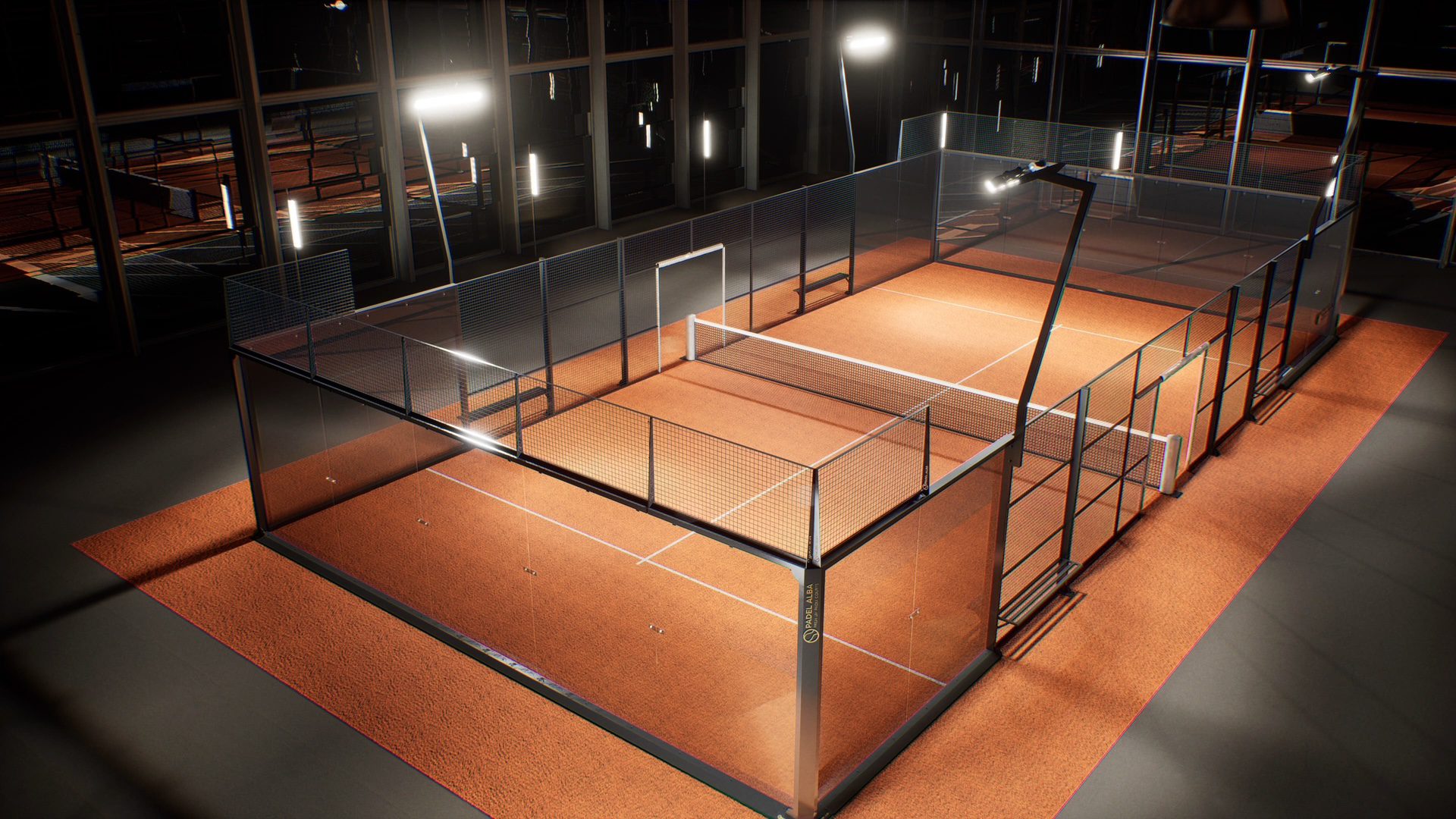
A single enclosure may be assembled within several days when the foundation is ready, all components are on site, and access is clear.
Multi-court installations take longer because each frame, glass panel, door, fastener, and connection needs to be placed and aligned correctly.
The enclosure usually includes steel framing, mesh sections, tempered glass, doors, structural fasteners, and lighting supports.
What Can Delay Enclosure Installation?
Installation may slow down when components arrive in separate shipments, site access is restricted, or the foundation measurements do not match the approved layout.
Wind can affect glass handling, particularly on exposed outdoor properties. Crews need suitable conditions and lifting methods to move large tempered-glass panels safely.
Missing hardware, damaged components, or unexpected alignment problems should be corrected before work continues.
The official padel rules provide the regulation court dimensions and enclosure requirements that influence the installation.
How Long Does Turf Installation Take?
Turf installation for one padel court may take several days after the enclosure and base are ready.
The installers need to prepare the surface, position the turf, complete seams, trim edges, and distribute the correct infill. The finished surface should remain even and securely fitted around posts, doors, and edges.
Turf should not be installed over a dirty, damp, uneven, or unsuitable base.
Does Turf Type Change the Schedule?
Different turf systems have different installation and infill requirements. Material availability can also affect the start date.
Color, fiber type, pile height, backing, seams, and infill should be approved before ordering. A custom turf color or branded design may have a longer lead time than a standard product.
The court should be brushed and checked before it opens so the infill is distributed properly and the fibers stand as intended.
How Long Does Padel Court Lighting Installation Take?
Lighting installation may take several days, but electrical preparation can require more time.
Outdoor courts may need trenches, conduit, poles, panels, controls, and utility coordination. Indoor courts may require new circuits, fixture supports, aiming adjustments, or relocation of existing lights.
The fixtures should provide even coverage while controlling glare. Their position must also remain outside the required clear playing area.
Electrical inspection and utility scheduling can influence when the lights become operational.
How Does Weather Affect the Construction Schedule?
Weather affects excavation, grading, concrete placement, curing, turf installation, coatings, glass handling, and electrical work.
Heavy rain can make soil unsuitable for compaction and prevent equipment from reaching the site. Water may need time to drain before work resumes.
High temperatures can influence concrete placement and outdoor working conditions. Strong wind can make glass installation unsafe.
A realistic schedule includes weather flexibility rather than assuming every phase will proceed without interruption.
Does an Indoor Padel Court Take Less Time to Build?
An indoor court may avoid weather delays, but the building can introduce different complications.
The existing slab may need grinding, leveling, repairs, or moisture treatment. Roof beams, columns, ducts, lights, pipes, and fire equipment may interfere with the layout.
Ventilation, cooling, exits, restrooms, accessibility, and occupancy requirements can also extend the schedule.
When Can Indoor Installation Move Faster?
Indoor installation may move faster when the building already has:
• Adequate clear height
• Suitable column spacing
• A level and stable slab
• Sufficient electrical capacity
• Required exits and fire systems
• Accessible routes and restrooms
• Wide access for materials
• Appropriate parking and occupancy approval
A building that already meets these conditions may require less site preparation than a new outdoor facility.
How Long Does a Multi-Court Padel Facility Take?
A multi-court facility may take several months from planning to opening.
The enclosures can sometimes be installed in sequence, but the supporting facility often controls the overall schedule. Parking, restrooms, reception areas, utilities, walkways, drainage, seating, landscaping, and fire-safety work may take longer than the courts themselves.
Commercial operators should also allow time for staff training, booking-system setup, maintenance planning, signage, equipment delivery, and final inspections.
The facility should not be scheduled around the enclosure installation alone.
Which Material Lead Times Can Delay a Padel Court?
Padel courts rely on specialized components that may be manufactured or shipped from outside the immediate area.
Glass panels, structural framing, turf, doors, lighting supports, nets, and custom finishes should be ordered early enough to match the construction schedule.
Which Items Should Be Confirmed Before Ordering?
The order should reflect:
• Final court dimensions
• Approved enclosure system
• Foundation and anchor details
• Door positions
• Glass specifications
• Frame color and finish
• Mesh configuration
• Turf selection
• Lighting supports
• Net and post system
• Branding or custom graphics
Changing these details after manufacturing begins can delay delivery and increase cost.
What Happens During the Final Inspection?
The final stage should confirm that the court is complete, safe, aligned, and ready for use.
The enclosure, glass, doors, turf, net, lights, anchors, drainage, and surrounding access should all be reviewed.
What Should the Final Review Include?
The team should check:
• Glass alignment and condition
• Frame and mesh connections
• Door operation
• Exposed or loose hardware
• Turf seams and edges
• Infill distribution
• Net height and tension
• Lighting operation
• Surface drainage
• Player access
• Cleanup and restoration
• Maintenance instructions
Commercial projects may also need final approval from local authorities before opening.
Can a Padel Construction Timeline Be Shortened?
Some phases can overlap, but the schedule should not be compressed at the expense of preparation, curing, alignment, or safety.
Early decisions and complete information are the most effective ways to reduce delays.
The owner can help by confirming the layout, materials, finishes, budget, and supporting features before ordering begins. Permit documents should be submitted promptly, and the site should remain accessible to crews and deliveries.
Foundation curing, inspections, and safe glass installation should not be rushed simply to meet an aggressive opening date.
What Are the Most Common Questions About Padel Court Construction Time?
The enclosure may be assembled within several days, but the complete project usually takes longer. Site preparation, foundation work, concrete curing, drainage, electrical work, turf, permits, and inspections must be completed before the court opens. A one-week schedule rarely represents the entire construction process.
The required curing period depends on the concrete design, weather, engineering, and enclosure system. Heavy glass and structural components should not be installed until the foundation has achieved suitable strength. The contractor and engineer should confirm the installation date.
Permits can affect the start date, particularly for commercial facilities, electrical work, drainage, fencing, or indoor changes of use. Review times vary by location and project scope. Submitting complete drawings early helps reduce avoidable delays.
It can when the building already has suitable height, slab condition, utilities, access, exits, and approvals. A building that needs major leveling, ventilation, electrical, fire-safety, or occupancy upgrades may take longer than an outdoor project.
Glass installation for one court may take several days when the frame is aligned, the foundation is accurate, and access is clear. Wind, missing components, restricted access, or alignment problems can extend the process. Every panel must be handled and secured carefully.
Permits, material lead times, weather, foundation conditions, and unresolved design decisions are common causes. Unexpected soil or access problems can also affect outdoor projects. Early evaluation and confirmed selections make the schedule more predictable.
Why Should You Choose Quality & Heritage Court Services?
Quality & Heritage Court Services plans the padel court and the surrounding facility as one coordinated project.
The Site or Building Is Evaluated First
Outdoor projects are reviewed for soil, drainage, grading, utilities, access, and weather exposure. Indoor projects are checked for clear height, columns, slab condition, ventilation, exits, and building systems.
The Foundation Matches the Court System
Dimensions, elevations, drainage, reinforcement, and anchor points are coordinated with the selected enclosure.
Installation Phases Are Connected
Foundation work, glass, framing, turf, lighting, doors, drainage, and player access are treated as parts of one schedule.
Texas Conditions Are Considered
Heat, heavy rain, wind, humidity, sunlight, and expansive soil influence construction planning and material recommendations.
Contact Quality & Heritage Court Services today to request a site evaluation and project timeline.