Overview
Maintaining an outdoor basketball court requires more than occasional sweeping. The surface, drainage, goals, fencing, lighting, and surrounding property all need regular attention. Small concerns such as clogged drainage paths, loose hardware, fading lines, and fine cracks are easier to manage when they are found early.
Texas courts face intense sunlight, high surface temperatures, sudden rain, dust, and changing soil moisture. These conditions gradually affect the acrylic coating, pavement, equipment, and surrounding construction.
Quality & Heritage Court Services provides basketball court inspections, maintenance, painting, resurfacing, and repair throughout Texas.
Need help evaluating an existing court? Contact Quality & Heritage Court Services to schedule an on-site assessment.
How Often Should an Outdoor Basketball Court Be Inspected?
A heavily used basketball court should receive a basic visual inspection every month. A private residential court with lighter use can usually be checked every few months and after severe weather.
The owner or facility manager should walk the entire court and look for changes in color, texture, drainage, cracking, equipment, fencing, and surrounding landscaping.
What Should Be Included in a Routine Inspection?
A basic inspection should cover the following areas:
• Playing surface: Look for fading, smooth sections, peeling coatings, stains, exposed pavement, and areas where the texture feels different.
• Cracks and repairs: Check whether existing cracks have widened, lengthened, developed raised edges, or returned through previous repairs.
• Drainage: Identify puddles, blocked drains, soil buildup, and areas where runoff enters from the surrounding property.
• Goals and hardware: Inspect posts, anchors, backboards, rims, nets, padding, bolts, and other connections.
• Fencing and gates: Look for loose mesh, leaning posts, damaged rails, corrosion, sharp wire, and gates that no longer close properly.
• Lighting: Check for failed fixtures, dark areas, exposed wiring, loose covers, and poles that show movement or corrosion.
A professional inspection may be appropriate once a year or whenever the court shows a noticeable change.
How Should an Outdoor Basketball Court Be Cleaned?
Begin with a soft-bristle broom or suitable blower to remove leaves, dust, pollen, and loose debris. Pay attention to corners, fence lines, goal foundations, drains, and shaded areas where organic material often collects.
For deeper cleaning, use water and a mild product compatible with the acrylic surface. Test unfamiliar cleaners on a small section before applying them across the court.
The surface should be rinsed thoroughly so soap or cleaning residue does not affect traction. Runoff should move toward an appropriate drainage area instead of collecting beside the slab.
The court maintenance services page explains how cleaning, inspections, repairs, and surface care can be coordinated as the court ages.
Which Cleaning Methods Can Damage the Surface?
Avoid harsh solvents, abrasive chemicals, metal brushes, sharp tools, and household floor products. These can soften, scratch, stain, or change the texture of the coating.
Pressure washing requires particular care. Excessive pressure or a nozzle held too close to the court can remove surface texture, expose underlying material, or force water beneath loose coatings.
Cleaning runoff should not carry chemicals, paint residue, or sediment into storm drains. The United States Environmental Protection Agency provides guidance on controlling pollutants carried by stormwater runoff.
Why Should Leaves and Organic Debris Be Removed Promptly?
Leaves trap moisture and release natural pigments as they break down. When left on the court, they can stain the surface and encourage mildew or algae in shaded areas.
Pollen, grass clippings, mulch, and soil can create similar problems. Players grind this material into the coating as they move across the court, gradually affecting texture and appearance.
Organic debris often collects along the bottom of fences. This buildup can block the path of water and make it harder to inspect the slab edge.
How Can Nearby Trees Affect the Court?
Trees can increase shade and make the court more comfortable, but they also introduce maintenance concerns.
Overhanging branches drop leaves, pollen, sap, seeds, and twigs. Roots may place pressure on nearby pavement, while falling limbs can damage fencing, lighting, goals, or the playing surface.
Trees near the court should be monitored and maintained without disturbing major roots unnecessarily.
Why Is Drainage Essential for Court Maintenance?
Water needs a controlled route off the court and away from the foundation. Standing water delays play, collects dirt, contributes to staining, and reveals low areas within the surface.
Water that remains beside the slab can change soil moisture and contribute to movement over time. The court slope, surrounding grades, drains, channels, curbs, and fence bottoms must work together.
The FIBA outdoor court guidance discusses outdoor facility planning and the area surrounding the playing surface.
What Should Be Checked After Heavy Rain?
After a storm, observe where water enters, where it collects, and how long the court takes to dry.
Important warning signs include:
• Puddles remaining after the rest of the court has dried
• Water collecting around goal foundations
• Soil or mulch washing onto the playing surface
• Blocked drains or channels
• Erosion beside the slab
• Water flowing toward nearby buildings
• New cracks appearing after extended rain
Photographs taken after several storms can help determine whether the problem is recurring or becoming more severe.
How Should Basketball Court Cracks Be Monitored?
Cracks should be checked for changes in width, length, elevation, and direction. A fine surface crack may remain stable, while one that widens or develops a height difference can indicate continuing movement.
Marking the end of a crack and recording the inspection date can help track growth. Photographs taken from the same position provide a useful record.
Water can enter damaged areas and contribute to further deterioration. Raised or separated pavement can also interfere with player movement.
Can Every Crack Be Repaired Permanently?
No. The result depends on the type of crack and whether the pavement beneath it continues to move.
Some cracks can be cleaned and treated during routine surface maintenance. Cracks caused by settlement, expansive soil, drainage problems, or root pressure may require broader correction.
Filling a moving crack may improve its appearance without preventing it from returning. The cause should be evaluated before a repair method is selected.
How Should the Acrylic Surface Be Maintained?
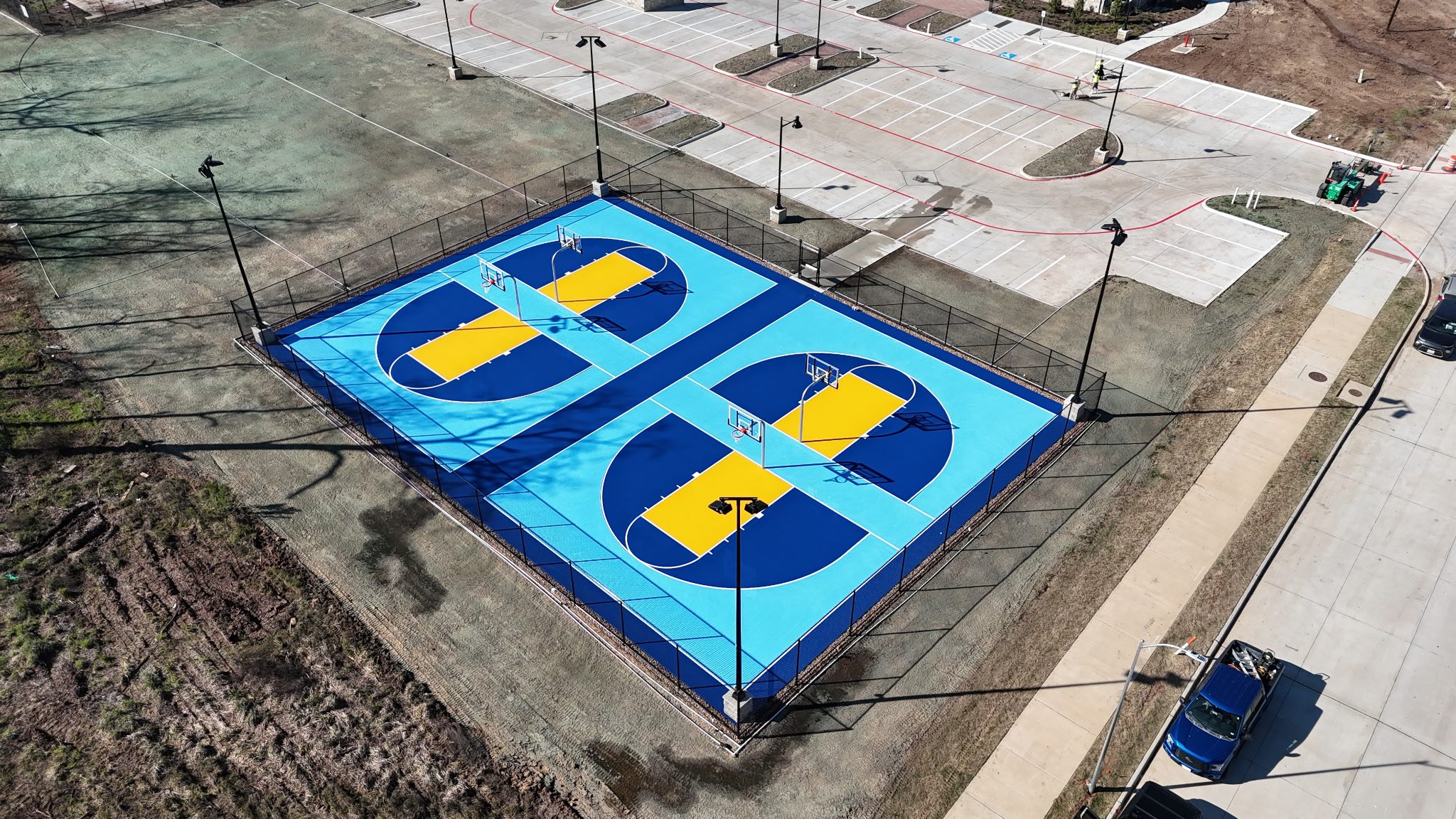
The acrylic coating provides color, texture, traction, and protection for the pavement below. It should be kept clean and inspected for fading, smoothness, peeling, exposed pavement, and inconsistent texture.
High-traffic locations usually wear first. These often include the key, free-throw line, three-point arc, center area, baselines, and primary shooting positions.
Minor fading may be cosmetic. Fading combined with texture loss or peeling can indicate that the coating is approaching the end of its usable life.
Do not apply wax, household sealers, or glossy floor products to the court. They may affect traction and may not be compatible with the existing acrylic system.
How Often Should Basketball Court Lines Be Repainted?
Playing lines commonly need attention every three to five years, although busy courts may need repainting sooner.
Line-only repainting may be suitable when the main surface remains stable, properly textured, and firmly bonded. If the full court is faded, peeling, or smooth, complete repainting or resurfacing may be more appropriate.
The court painting services page covers court colors, regulation markings, logos, and custom layouts.
Why Should Existing Lines Be Measured Again?
Old lines should not be traced automatically. Earlier markings may be inaccurate, or the owner may want to change the level of play or court layout.
The correct markings depend on whether the court is intended for recreational, high school, collegiate, professional, or custom use. The NCAA basketball playing rules provide current collegiate court diagrams and playing requirements.
On multi-use courts, line colors should remain distinct enough for players to follow each layout without confusion.
When Does an Outdoor Basketball Court Need Resurfacing?
Resurfacing is usually considered when cleaning, isolated repairs, and line repainting are no longer enough to restore consistent play.
A court may need resurfacing when large areas have faded, the texture has become smooth, coatings are peeling, cracks are widespread, or years of patching have created an uneven appearance.
What Happens During Resurfacing?
The exact process depends on the court, but a resurfacing project may include:
• Thorough surface cleaning
• Removal of loose material
• Treatment of eligible cracks
• Correction of suitable minor low areas
• Application of acrylic resurfacer
• New color-coating layers
• Accurate playing lines
• Logos or custom graphics
Resurfacing renews the playing surface, but it does not rebuild an unstable foundation. Severe settlement, structural cracking, drainage failure, or deteriorated pavement may require deeper work first.
How Should Basketball Goals Be Maintained?
Basketball goals should be inspected for movement, corrosion, loose bolts, damaged padding, rim condition, and backboard stability.
The post or anchor should remain secure. A goal that moves excessively during play needs prompt attention.
Rims should be checked for bending, rust, loose hardware, and damaged net attachments. Backboards should be examined for cracks, failed connections, loose frames, and damaged edges.
What Should Be Checked on Portable Goals?
Portable goals require additional attention because their weight and movement can affect the court.
Check the base, wheels, locking mechanisms, ballast, padding, frame, and adjustment system. Confirm that the unit remains stable during use.
Portable goals should be lifted or rolled according to the manufacturer’s instructions. Dragging metal components across the court can scratch or tear the coating.
How Should Fencing and Gates Be Maintained?
Loose mesh, leaning posts, damaged rails, rust, and sharp wire can create safety concerns around the court.
Gates should open and close smoothly without dragging across the playing surface. Hinges, latches, and frames should remain secure.
Debris often collects along the bottom of the fence. Keeping this area clear helps water leave the court and makes corrosion or damage easier to see.
How Should Windscreens Be Inspected?
Windscreens should be checked after storms and periods of strong wind.
Loose ties, torn fabric, and uneven tension can place additional stress on the fence. Damaged material should be secured or removed before it causes further problems.
The fence structure should also be reviewed to confirm that it can continue supporting the windscreen safely.
How Should Court Lighting Be Maintained?
Lighting should be checked for failed fixtures, inconsistent brightness, glare, damaged poles, loose covers, exposed wiring, and controls that no longer work correctly.
Trees and landscaping can gradually block light that previously reached the court. Changes in nearby buildings may also create new shadows.
Electrical repairs should be completed by a qualified professional. Fixtures, poles, wiring, controls, and grounding need to remain suitable for outdoor conditions.
Heavy lifts and maintenance vehicles should remain off the playing surface whenever possible. Their weight can damage the coating or pavement.
How Can Landscaping Affect Court Maintenance?
Landscaping influences shade, debris, drainage, root growth, and access around the court.
Plants should not block drains, gates, lights, or maintenance routes. Mulch and loose soil should remain far enough away that heavy rain does not wash them onto the playing surface.
Irrigation systems should not spray the court regularly. Repeated exposure can leave mineral deposits, create staining, and keep shaded areas damp.
A clear perimeter makes it easier to inspect the slab edge, fence posts, drainage, and equipment foundations.
What Should Be Done After Severe Weather?
After strong wind, hail, or heavy rain, remove loose debris and inspect the complete facility before reopening it.
Look for damaged fencing, loose windscreens, shifted equipment, broken branches, standing water, washed-out soil, blocked drains, and new surface damage.
A severe storm may reveal drainage problems that are not obvious during lighter rain. Document where water enters and how it moves across the property.
Cracks, settlement, damaged goals, or electrical concerns should be evaluated before cosmetic repairs begin.
How Can a Maintenance Schedule Extend the Court’s Life?
A written schedule helps ensure that routine work is completed before visible damage becomes severe.
What Should the Schedule Include?
• Weekly or as needed: Remove leaves, litter, dust, and loose debris. Check that gates and playing areas remain clear.
• Monthly: Review surface texture, lines, cracks, goals, fencing, and drainage on heavily used courts.
• After severe weather: Check for puddles, debris, drainage blockages, damaged fencing, equipment movement, and electrical concerns.
• Seasonally: Perform a more detailed review of coatings, repairs, landscaping, lighting, and surrounding grades.
• Annually: Consider a professional inspection, particularly for schools, communities, clubs, parks, and commercial facilities.
Maintenance records should include inspection dates, photographs, repairs, cleaning methods, and areas that require continued monitoring.
How Much Does Outdoor Basketball Court Maintenance Cost?
Maintenance cost depends on court size, age, condition, use, cleaning needs, drainage, equipment, fencing, lighting, and required repairs.
Routine sweeping and inspection cost less than crack treatment, repainting, or resurfacing. Courts neglected for long periods often require more preparation when professional service is finally scheduled.
A maintenance proposal should explain the observed condition, recommended work, materials, limitations, and areas that should continue to be monitored.
The goal is not to perform every possible service during every visit. It is to complete the work the court currently needs and identify developing concerns early.
What Are the Most Common Questions About Outdoor Basketball Court Maintenance?
Remove leaves and loose debris whenever they appear. Complete deeper cleaning based on court use, weather, surrounding trees, and visible buildup.
Yes, but the pressure, nozzle distance, and method must suit the surface. Excessive pressure can remove texture or damage older coatings.
Small cracks should be evaluated and monitored. Early treatment may limit further damage, but the correct repair depends on the underlying cause.
Keep drainage paths clear and control runoff from surrounding land. Recurring puddles may indicate settlement, low areas, blocked drainage, or an unsuitable slope.
Many courts need resurfacing every four to eight years. Use, weather, maintenance, drainage, coating quality, and pavement condition determine the actual schedule.
Yes. Line-only repainting may be appropriate when the main surface remains stable, firmly bonded, and properly textured.
Why Should You Choose Quality & Heritage Court Services?
Quality & Heritage Court Services evaluates the entire facility rather than looking only at the court color.
The Complete Facility Is Inspected
The review can include surface texture, cracks, low areas, drainage, goals, fencing, gates, lighting, access, and surrounding landscaping.
Maintenance Matches the Court’s Use
A private residential court needs a different maintenance schedule from a school, park, apartment community, club, or commercial facility.
Repairs and Surface Work Stay Connected
Cleaning, crack treatment, painting, resurfacing, drainage correction, and equipment work can be coordinated within one maintenance plan.
Texas Conditions Are Considered
Heat, ultraviolet exposure, heavy rain, dust, and soil movement influence how outdoor basketball courts age.
Contact Quality & Heritage Court Services to schedule an outdoor basketball court inspection.