Overview
Modular court tiles can be a practical surface for some pickleball courts, particularly when drainage, quick installation, color customization, and the replacement of individual damaged sections are important. They are not automatically the best choice for every player or property.
A tile system can feel and play differently from a traditional acrylic hard court. Ball response, traction, sound, joint comfort, movement, and maintenance depend on the tile design, underlying foundation, installation quality, and environmental conditions.
Competitive players may prefer the consistent bounce and familiar movement of an acrylic surface. Residential owners, schools, and recreational facilities may value the drainage and modular repair options offered by tiles.
Quality & Heritage Court Services helps property owners compare pickleball surface systems based on how the court will be used, maintained, and expected to perform.
Planning a new pickleball court or surface replacement? Contact Quality & Heritage Court Services to discuss the property and playing requirements.
What Are Modular Pickleball Court Tiles?
Modular court tiles are interlocking panels installed over a stable concrete, asphalt, or other approved base. The individual tiles connect to create a continuous playing surface.
Most outdoor systems use durable plastic materials designed to tolerate sunlight, rain, temperature changes, and regular foot traffic. Open-grid designs allow water to move through the surface rather than remaining on top.
The tiles are manufactured in set sizes and assembled across the court. Different colors can define the playing area, non-volley zones, borders, or surrounding space.
What Is Beneath a Modular Tile Surface?
Tiles do not replace the need for a properly designed foundation.
The base needs to be stable, suitably level, and capable of draining water. Concrete and asphalt are common foundations, but the approved base depends on the tile manufacturer and project.
A cracked, uneven, or moving foundation can create visible changes in the tile surface. Water still needs a controlled route beneath the tiles and away from the court.
The quality of the completed court depends on both the tile system and the structure supporting it.
How Do Modular Tiles Affect Pickleball Bounce?
Ball response varies between tile systems.
The pattern, rigidity, texture, joint design, and support structure of the tile influence how the ball rebounds. Some systems are designed specifically for pickleball and attempt to provide a more consistent bounce across individual panels and seams.
Other products may create a noticeably different sound or response compared with an acrylic court.
Are Tile Seams Noticeable During Play?
A well-designed and correctly installed system should create a connected surface without large gaps or raised edges. Players may still notice a slight difference when the ball contacts certain joints or textured areas.
Product selection matters. A general recreational tile is not necessarily suitable for pickleball simply because it can be installed outdoors.
Before selecting a system, ask to play on a completed court or review a representative installed sample. A small loose tile does not demonstrate how the full court will feel under active play.
Do Modular Court Tiles Provide Good Traction?
Modular tiles can provide dependable traction when they are designed for athletic use, installed correctly, and kept clean.
The surface texture should support quick starts, lateral movement, and controlled stops without feeling excessively aggressive. Traction can vary with dust, pollen, moisture, worn texture, and shoe type.
A tile that performs well when dry may feel different after rain or in a shaded area that dries slowly.
Can Tiles Become Slippery?
Yes. Any playing surface can become slippery when dirt, algae, organic debris, or unsuitable cleaning products collect on it.
Leaves and pollen may settle within the tile pattern. Moisture beneath the surface can also support organic growth when drainage and airflow are poor.
Regular cleaning and open drainage paths are essential. Waxes, glossy treatments, and household floor products should not be applied unless the manufacturer specifically approves them.
Are Modular Tiles More Comfortable Than Acrylic Courts?
Some players find modular tiles more forgiving than a standard acrylic hard court because the panels can provide a small amount of flex.
The level of comfort varies by tile design, base, installation, player movement, and footwear. A modular system should not be assumed to provide the same cushioning as a purpose-built cushioned acrylic court.
Players with joint sensitivity may appreciate a surface with a softer feel, but comfort should be evaluated alongside traction and ball response.
Is a Softer Surface Always Better?
No. Excessive movement or flex can make a surface feel less stable during quick changes of direction.
The ideal surface should balance comfort, consistent footing, predictable ball response, and long-term durability. Different players may value these qualities differently.
A private recreational court can prioritize comfort differently from a competitive club facility.
How Do Modular Tiles Handle Rain?
Open-grid modular tiles allow water to pass through the playing surface. This can reduce the amount of standing water players see after rain.
The court may become usable sooner than a surface where water must travel entirely across the top coating. Actual drying time still depends on rainfall, slope, shade, humidity, debris, and the condition of the drainage system.
Tiles do not eliminate drainage requirements.
Where Does the Water Go?
Water passes through the openings and reaches the foundation below. That foundation still needs an accurate slope and a clear discharge route.
If the base contains low areas, water can remain trapped beneath the tiles. Sediment, leaves, and other debris may also block the intended flow.
The surrounding property should direct runoff away from the court. Water should not collect beside the foundation or move toward buildings and neighboring land.
The USA Pickleball court construction manual provides guidance on court orientation, dimensions, surfaces, drainage, and supporting features.
Can Modular Tiles Be Installed Over a Cracked Court?
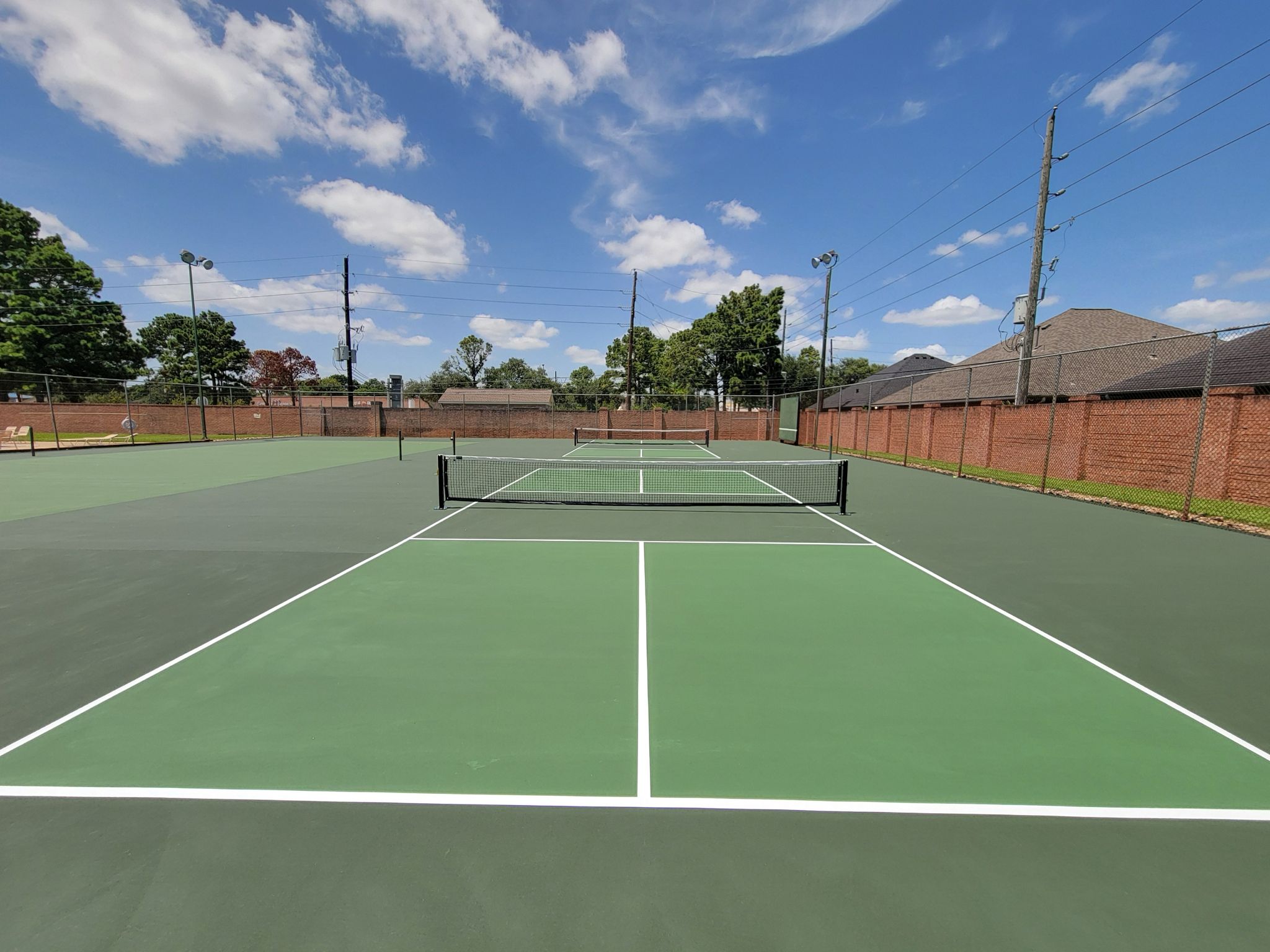
Tiles may be installed over some existing courts, but they should not be used to ignore structural problems.
The pavement needs to be inspected for cracks, height differences, settlement, low areas, drainage failure, and loose material. A tile surface may make some cosmetic imperfections less visible, but it does not stabilize the foundation.
Movement beneath the tiles can create uneven areas, separation, noise, or stress within the connections.
Which Repairs Should Be Completed First?
Before installation, the contractor should evaluate:
• Raised cracks: A height difference can affect the tile surface and create movement underfoot.
• Low areas: Water may collect beneath the tiles and contribute to staining, debris buildup, or organic growth.
• Loose coatings: Flaking or unstable surface material should be removed so it does not collect beneath the system.
• Edge deterioration: Damaged pavement around the court may weaken perimeter attachments or create unsafe transitions.
• Drainage problems: Runoff and standing water should be addressed before they become hidden beneath the new surface.
A professional inspection should determine whether the base is suitable or requires broader correction.
How Are Modular Pickleball Tiles Installed?
Installation begins with evaluation and preparation of the foundation. The surface should be clean, stable, properly drained, and within the tolerances required by the tile system.
The tiles are assembled in the planned color pattern and connected across the court. Openings for posts, anchors, drains, or equipment need accurate placement.
Edges and transitions require particular attention. The court should not end with loose or raised sections that can shift or create a trip point.
How Are Pickleball Lines Added?
Some systems use painted lines applied to the installed tile surface. Others may incorporate line colors into the tile layout or use specialised line components.
Paint and preparation must be compatible with the tile material. Poor adhesion can cause the markings to peel or wear quickly.
The playing area should be measured after the surface is installed. The USA Pickleball Official Rulebook defines the regulation dimensions, non-volley zones, and line requirements.
Can Individual Tiles Be Replaced?
Yes. One advantage of a modular system is the ability to remove and replace individual damaged sections.
Replacement can be useful when a tile breaks, warps, loses a connection, or becomes permanently stained. The repair may be more contained than restoring a damaged section of a continuous coating.
Matching the original tile can become difficult when a product, color, or pattern is discontinued.
Will New Tiles Match an Older Court?
Not always. Existing tiles may fade or wear over time, while replacement pieces retain their original color and texture.
The difference may become less noticeable as the new pieces age, but an exact visual match cannot always be guaranteed.
Owners should keep product information and consider storing a small number of matching replacement tiles when the court is installed.
How Should a Modular Tile Court Be Cleaned?
Loose debris should be removed with a soft broom or suitable blower. Leaves, soil, pollen, food, and litter should not remain within the grid.
Cleaning methods must follow the tile manufacturer’s instructions. A mild compatible cleaner and controlled water pressure may be appropriate for deeper cleaning.
The area beneath the tiles may also need attention when debris or organic material collects through the openings.
Do Tiles Need to Be Removed for Cleaning?
Routine cleaning usually does not require removal of the entire surface.
Individual sections may need to be lifted when debris has collected underneath, drainage is blocked, or the foundation needs inspection. The connections should be handled carefully so they are not damaged during removal and reinstallation.
A court that repeatedly collects material beneath the tiles may have a drainage, landscaping, or perimeter problem that needs correction.
How Do Texas Heat and Sunlight Affect Modular Tiles?
Outdoor tiles expand and contract as temperatures change. The installation needs to allow for the movement specified by the manufacturer.
Improper perimeter spacing or attachment can contribute to buckling, lifting, separation, or pressure against surrounding structures.
Strong sunlight also affects color and material over time. Products intended for outdoor use should include suitable ultraviolet resistance.
Can Dark Tiles Become Hot?
Yes. Dark surfaces absorb heat and may become uncomfortable during summer afternoons.
The court color, surrounding pavement, shade, airflow, and time of day all influence surface temperature. Lighter colors may reduce heat absorption but will not keep the court cool during extreme conditions.
Players should consider scheduling, shade, hydration, and footwear during hot weather regardless of the selected surface.
Are Modular Tiles Noisy?
Tiles can produce a different sound from acrylic surfaces when players move or the ball bounces.
The volume and tone depend on tile design, foundation, installation, surrounding structures, and whether parts of the system move against the base.
Some players do not mind the sound, while others prefer the quieter and more familiar response of an acrylic court.
Noise should be considered for residential properties and facilities close to neighboring buildings. Pickleball itself produces a distinct sound, and the surface can change how that sound carries.
How Do Modular Tiles Compare With Acrylic Pickleball Surfaces?
Acrylic coatings create a continuous playing surface over concrete or asphalt. Modular tiles create an assembled surface with joints and openings.
Acrylic is widely used for competitive and recreational pickleball because it provides familiar traction, clear lines, and predictable ball response.
Modular tiles can offer improved surface drainage, faster installation, individual panel replacement, and extensive color customization.
Which Surface Is Better for Competitive Play?
Many competitive players prefer acrylic because it delivers the response they expect from tournament and club courts.
A high-quality tile designed for pickleball may still support strong recreational play. The decision should reflect the players, level of competition, programming, and maintenance expectations.
The pickleball court construction service covers surface selection, foundations, drainage, equipment, fencing, and lighting.
Do Modular Tiles Cost Less Than Acrylic Surfacing?
Not automatically.
The cost depends on the tile system, court size, foundation condition, preparation, shipping, colors, lines, edge details, equipment, and installation.
Tiles may reduce certain coating and curing steps, but the court still needs a suitable foundation. Extensive repairs or drainage corrections can increase the project cost.
Acrylic surfacing costs depend on preparation, repair needs, resurfacing layers, color coatings, cushioning, and line work.
What Should Be Included in a Tile Estimate?
The proposal should identify:
• Tile product and warranty
• Foundation requirements
• Surface preparation
• Crack and low-area treatment
• Court colors and layout
• Line-marking system
• Perimeter and transition details
• Post and equipment openings
• Drainage requirements
• Replacement-tile availability
• Cleaning and maintenance instructions
Comparing only the material price can hide important differences in preparation and installation.
How Long Do Modular Court Tiles Last?
Service life depends on product quality, ultraviolet exposure, temperature changes, use, cleaning, drainage, installation, and foundation condition.
A well-maintained outdoor system can perform for many years, but individual tiles may need replacement sooner in high-traffic or damaged areas.
Warranty length does not guarantee that every part of the court will remain unchanged throughout that period. Review what the warranty covers, excludes, and requires from the owner.
The availability of replacement panels should also be considered when selecting the system.
Who Should Consider Modular Pickleball Tiles?
Modular tiles may suit homeowners, schools, recreation facilities, and communities that value drainage, color options, and replaceable surface sections.
They can also be considered when a compatible existing foundation is available and the owner wants to avoid some of the curing time associated with new acrylic coatings.
When Might Acrylic Be the Better Choice?
Acrylic may be preferable when:
• Competitive ball response is the highest priority
• Players want a familiar hard-court feel
• Seamless movement is important
• The court will host leagues or tournaments
• The owner prefers traditional resurfacing
• Custom texture and cushioning are required
The decision should follow an evaluation of the property and intended use, not a general assumption that one system is always better.
What Are the Most Common Questions About Modular Pickleball Tiles?
A tile designed specifically for pickleball can provide dependable recreational play, but the bounce may feel different from acrylic. Tile texture, seams, rigidity, and installation affect the response. Competitive players should test a completed court before selecting a system.
They may be installed over some existing foundations, but active cracks, height differences, settlement, and drainage problems should be evaluated first. Tiles can cover the appearance of a crack without stabilising the pavement below. Necessary repairs should be completed before installation.
Any court can become slippery when wet or contaminated by dirt, pollen, algae, or cleaning residue. Open-grid tiles allow water to pass through, but the surface still needs time to become safe. Regular cleaning and functioning drainage remain essential.
Some players find the slight flex of modular tiles more comfortable than a standard hard court. The amount of cushioning varies by product and foundation. A tile system should not be assumed to feel the same as a purpose-built cushioned acrylic surface.
Yes. Individual panels can often be removed and replaced without rebuilding the full court. Matching an older surface may be difficult if the original color has faded or the product has been discontinued. Keeping spare tiles can simplify future repairs.
Neither option is best for every project. Acrylic generally provides a familiar competitive response, while tiles can offer drainage, faster installation, and replaceable sections. The right choice depends on the players, property, maintenance, and budget.
Why Should You Choose Quality & Heritage Court Services?
Quality & Heritage Court Services evaluates the foundation, drainage, players, and maintenance expectations before recommending a pickleball surface.
The Base Is Inspected First
Cracks, settlement, low areas, slope, drainage, coatings, and edge conditions are reviewed before tiles are considered.
Surface Options Are Compared Honestly
Ball response, traction, comfort, sound, maintenance, drainage, and replacement options are considered together.
Texas Conditions Are Included in the Plan
Heat, ultraviolet exposure, heavy rain, dust, and changing soil moisture influence product and installation decisions.
The Complete Court Is Coordinated
Foundation, surface, net systems, fencing, lights, access, drainage, and maintenance are planned as connected parts of the facility.
Contact Quality & Heritage Court Services today to compare modular tiles with acrylic pickleball surfaces for your property.