Overview
Most tennis courts do not wake up one morning looking old.
The change happens slowly. The color loses some of its depth. White lines stop looking crisp. Small worn patches appear behind the baseline. Water begins to sit in one area longer than it used to. Because owners see the court regularly, those changes can be surprisingly easy to overlook.
As a broad planning range, many acrylic courts may need professional tennis court painting or resurfacing every four to eight years. A busy club, school, HOA, or public facility may need work sooner. A private residential court with lighter use, good drainage, and consistent maintenance may go longer.
The calendar is only a starting point.
Texas sun, surface age, player traffic, drainage, nearby trees, cleaning practices, foundation movement, and the quality of the previous coating all affect how long a finish performs. Two courts completed in the same year can age very differently.
It is also important to distinguish between repainting game lines, renewing the color coats, and resurfacing the complete court. They are related services, but they solve different problems.
Quality & Heritage Court Services inspects, maintains, paints, and resurfaces tennis courts throughout Texas. If your surface is fading, wearing unevenly, or becoming difficult to play on, contact Quality & Heritage Court Services today to schedule an on-site evaluation.
Is Tennis Court Paint Really Paint?
People commonly call it tennis court paint, but an acrylic playing surface is more than ordinary exterior paint.
A professional acrylic system creates color, texture, traction, and playing speed over a prepared concrete or asphalt base. Sand or other approved texture components may be incorporated into the coating system to influence grip and ball response.
The surface has to perform under running, sliding, stopping, serving, heat, sunlight, and rain. House paint or generic concrete paint is not designed for those demands.
A complete acrylic surface may include:
• Resurfacer or filler coats: These help prepare the existing base, improve minor surface texture, and create a more uniform foundation for the color system.
• Acrylic color coats: These establish the finished court colors and playing texture. The materials and application need to remain consistent across the surface.
• Textured line paint: Game lines require a coating that remains visible without becoming unusually slick compared with the surrounding court.
The layers must be compatible with the existing surface. Applying a new product without understanding what is already on the court can lead to bonding or performance problems.
What Is the Typical Tennis Court Repainting Schedule?
For planning purposes, many outdoor acrylic courts fall within a four-to-eight-year range between major coating renewals.
That is not a warranty or fixed service interval. It is a broad range used to begin the maintenance conversation.
A private court that receives a few hours of play each week may age gradually. A school or commercial facility can see players throughout the day, rolling equipment, repeated lessons, events, and heavier cleaning.
The environment matters just as much as traffic. An exposed court in strong Texas sun may fade faster than one that receives some shade. A shaded court may hold color longer but collect more moisture, pollen, leaves, and organic growth. A court with recurring drainage problems can deteriorate far sooner than one that dries evenly after rain.
The most practical approach is to inspect the court annually and make the repainting decision based on its condition. Do not wait until the entire surface is peeling or the lines have nearly disappeared. Earlier attention may prevent a manageable maintenance project from turning into a more involved repair.
Residential Courts and Commercial Courts Age Differently
One family and a few guests may use a residential court. A commercial facility may host lessons, leagues, tournaments, and daily reservations.
That difference appears first in the busiest playing zones. Behind the baselines, repeated serving and recovery wear the texture. Near the service line and net, players stop, pivot, and change direction. Entry gates may also show concentrated dirt and surface wear.
On a private court, those areas may remain in good condition for years. At a club or school, they can begin looking tired well before the rest of the surface.
Commercial owners should use court records rather than relying only on appearance. Booking hours, programs, maintenance reports, player complaints, drainage issues, and previous coating dates help reveal whether the facility is aging faster than expected.
Residential owners should still inspect annually. Light use does not protect a court from UV exposure, soil movement, irrigation overspray, tree roots, or standing water.
What Makes Tennis Court Paint Fade Faster?
Fading is not caused by one thing. The finished color is exposed to weather every day, even when no one is playing.
Strong Texas Sun
Ultraviolet exposure gradually changes the appearance of outdoor coatings. Dark and intense colors may show fading differently from lighter shades. A professionally designed acrylic system uses products intended for outdoor court use, but no exterior color remains untouched by years of sun.
Frequent Play
Shoes repeatedly contact the same areas during serves, returns, and changes of direction. High-use zones can become smoother or lighter than the rest of the court. A facility may look acceptable from the parking lot while the baseline texture has already changed noticeably underfoot.
Standing Water
Water remaining in low areas collects dirt, leaves, pollen, and other material. Repeated puddling can stain the finish and reveal deeper grading or drainage concerns. A coating renewal should not be used to hide a recurring birdbath without understanding why it forms.
Poor Cleaning Practices
Harsh chemicals, aggressive pressure washing, stiff equipment, and unsuitable cleaning methods can damage the finish. At the other extreme, neglect allows dirt and organic growth to settle into the texture. Cleaning needs to be gentle, compatible, and regular.
Previous Surface Preparation
A new coating bonds to the surface beneath it. If the old court was dirty, unstable, peeling, contaminated, or poorly prepared, the fresh color may not perform as expected. Good tennis court painting begins with cleaning and repair, not the first bucket of coating.
How Can You Tell That a Court Needs Repainting?
A faded surface does not always mean the court is unsafe, but appearance is only one part of the decision. Look for changes in color, line visibility, texture, and consistency.
The Color Looks Uneven: Uniform fading is mostly cosmetic. Patchy areas can suggest different levels of wear, standing water, previous repairs, or inconsistent coating. If one section has become much lighter than the rest, inspect how that area is used and whether water remains there after rain.
Game Lines Are Harder to Read:
Tennis lines should contrast clearly with the court. The USTA Friend at Court specifies white lines for a regulation 78-foot court. Additional youth or blended lines may use another contrasting treatment under applicable rules. When lines become thin, dirty, broken, or faded, players have more difficulty judging close balls.
The Surface Has Lost Texture: A court can retain its color while the playing texture wears down. Smooth areas may feel different underfoot and respond differently when wet. Uneven texture across the court can be more disruptive than uniform fading.
Repairs No Longer Blend In: Older crack or patch repairs may become more visible over time. A new color system can improve the appearance, but recurring movement should be evaluated before the area is covered again.
Players Notice a Difference: Comments about slipping, inconsistent grip, unclear lines, or unusual ball response deserve attention. A player may identify a worn zone before the owner sees a dramatic visual problem.
Is Repainting the Same as Tennis Court Resurfacing?
Not always. The words are often used interchangeably, but the scope can differ considerably.
Line Repainting: Line repainting renews the court markings without necessarily recoating the entire playing surface. This may be appropriate when the color coats remain in good condition, but the white lines have become worn, dirty, or difficult to see.
Color-Coat Renewal: A color renewal applies new acrylic color coats after the existing surface has been cleaned, prepared, and repaired as needed. This can restore appearance and texture when the foundation remains stable and significant leveling work is unnecessary.
Full Resurfacing:
Tennis court resurfacing generally includes more preparation and repair before the new color system is applied. The USTA National Advocacy Handbook notes that resurfacing may include acrylic resurfacing, crack repair systems, patching low areas or birdbaths, and leveling high areas. A court with peeling coatings, recurring puddles, widespread cracking, uneven areas, or substantial wear may need this broader approach.
Reconstruction: A moving or severely damaged foundation cannot be repaired with coating alone. When structural cracking, settlement, drainage failure, or base deterioration is extensive, the court may need partial or complete reconstruction. Painting over the symptoms can improve appearance temporarily while leaving the cause untouched.
Can You Repaint Only the Tennis Court Lines?
Yes, when the surrounding surface remains sound.
Line-only work can be useful when markings have worn faster than the color coats. This may happen at busy facilities, on multi-use courts, or after repeated cleaning.
The old lines should be cleaned and prepared so the new material bonds properly. Simply painting over dirt, peeling material, or thick uneven layers can leave rough edges and an inconsistent finish.
The new lines should match regulation measurements and remain straight, crisp, and clearly visible. Too many layers of line paint can eventually create raised areas. The contractor should inspect the existing build-up before deciding how to proceed.
If the court color is also faded or the texture has changed, renewing only the lines may make the rest of the surface look more worn by comparison.
Should Cracks Be Repaired Before Repainting?
Yes. Cracks should be inspected and addressed before new color is applied. Not all cracks behave the same way.
A small stable surface crack may respond well to an appropriate repair. A recurring crack that opens and closes with ground movement is more difficult. Wide displacement, settlement, or repeated cracking in the same location can point to movement beneath the coating.
The repair approach depends on:
• Width and depth of the crack
• Whether it is active
• Movement in the slab or asphalt
• Drainage and moisture
• Previous repair materials
• Court foundation
• Surrounding soil
• Owner expectations
No surface coating can guarantee that an active structural crack will never return. That does not make repair pointless. It means the owner should understand whether the work is cosmetic, restorative, or part of a larger foundation solution.
Texas expansive soil can change as moisture levels rise and fall. Drainage around the court and consistent moisture management may be as important as the material placed inside the crack.
What Should Be Done About Low Areas and Puddles?
Low areas should be evaluated before the court is repainted.
After rain, some water may remain briefly because of surface tension. A recurring puddle that sits in the same location points to a depression or drainage issue. These low spots are commonly called birdbaths.
A contractor may use appropriate patching and leveling materials when the depression is suitable for repair. The area must blend into the surrounding slope without creating a ridge that affects play or redirects water somewhere worse.
The underlying cause matters. If the low area developed because the foundation is settling, a surface patch may not remain effective indefinitely. If water is entering from surrounding land, exterior drainage may also need correction.
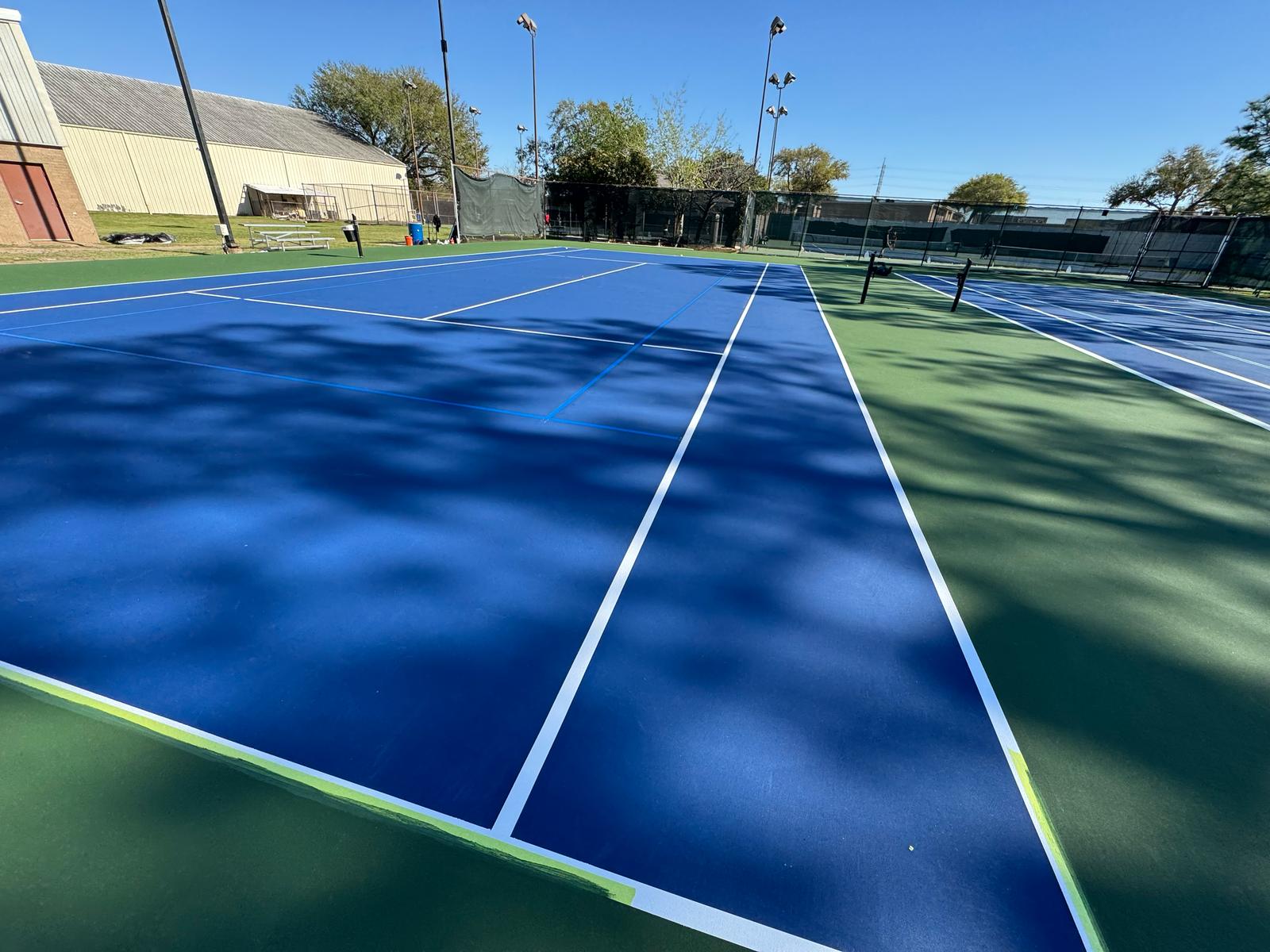
Flood testing can help reveal depressions before coating work begins. A dry court may look level while still holding water after the next storm. Fresh color should be the final part of the repair, not the method used to hide it.
Can You Paint Over Peeling Tennis Court Coating?
Loose or peeling material should not be coated over.
A new layer only bonds as well as the surface beneath it. If the old coating is detached, contaminated, or failing, the new material may lift with it.
Peeling can result from several conditions:
• Poor previous preparation
• Moisture pressure
• Incompatible materials
• Application during unsuitable weather
• Contamination
• Weak or deteriorated base layers
• Excessive coating build-up
• Water entering through cracks
The failed material needs to be removed or stabilized according to the selected system. The cause should be investigated before the new acrylic surface is applied. Applying more product without solving the adhesion problem can leave the court looking worse after a short period.
How Does Texas Weather Affect the Repainting Schedule?
Texas courts face intense sun, high surface temperatures, sudden rain, humidity, and changing soil moisture.
Heat and UV Exposure: Strong sunlight fades color and stresses exterior materials. The hottest surface temperatures can also limit when coating work may be performed. Application should follow the product requirements for air temperature, surface temperature, humidity, and curing.
Sudden Rain: A coat of paint needs enough dry weather to cure properly. Rain arriving before the material is ready can mark, dilute, wash, or disrupt the finish. Weather planning needs to continue through the entire application and curing period.
Humidity: High humidity can slow drying. A surface that feels dry on top may not be ready for the next coat or for play. Rushing the process can trap moisture or weaken the finished system.
Soil Movement: Expansive soil changes as moisture conditions shift. Cracks caused by movement below the foundation may return even after careful surface repair. Maintaining drainage around the court is therefore part of protecting the paint.
What Is the Best Time of Year to Paint a Tennis Court in Texas?
The best time is a stable weather window that meets the coating manufacturer’s application requirements.
Moderate temperatures, dry conditions, and low rain risk make planning easier. Extremely hot surfaces, cool nights, high humidity, or unpredictable storms can interfere with application and curing.
Spring and fall may offer more comfortable working conditions in many Texas locations, but neither season guarantees suitable weather.
Summer work is possible when surface temperatures and daily timing are managed correctly. Crews may need to begin early and avoid applying material when the court becomes excessively hot.
The forecast should be reviewed for the entire project, not only the first coat. The court also needs time to dry after cleaning or rain. Trapped moisture beneath a new coating can create preventable problems.
How Long Does Tennis Court Painting Take?
A straightforward color-coat renewal may take several days, but the complete schedule depends on the court and weather.
Time may be needed for:
1. Cleaning and surface preparation
2. Crack repair and curing
3. Patching low areas
4. Resurfacer or base coats
5. Acrylic color coats
6. Game-line layout and painting
7. Final curing before play
A court with extensive repairs takes longer than one with a stable foundation and sound existing coating. Temperature, humidity, shade, wind, and rain affect dry time. Applying the next layer too soon can damage the system, even when the surface looks dry.
Owners should ask when the court can safely return to play and follow that recommendation. Using it early can mark the finish or disturb the texture.
Does Pressure Washing Damage Tennis Court Paint?
It can.
Pressure washing is sometimes used during professional preparation, but excessive pressure, a narrow nozzle, or holding the wand too close can cut into acrylic coatings. Routine cleaning does not always require aggressive equipment.
For ordinary care, remove leaves, dirt, pollen, and loose material with methods suited to the surface. Mild cleaners and controlled low-pressure rinsing may be appropriate when used according to the coating system’s recommendations. Avoid harsh solvents, abrasive brushes, and chemicals not intended for acrylic courts.
If organic growth has become established, identify why the area remains damp or shaded. Cleaning removes the visible material, but the conditions encouraging it may remain.
How Can You Make Tennis Court Paint Last Longer?
Owners cannot stop sun, rain, or normal wear. They can reduce avoidable damage.
• Keep the Court Clean: Remove leaves, dirt, pollen, and debris before they settle into the texture or stain the surface. Pay attention to corners, fence lines, drains, and shaded sections where material tends to collect.
• Maintain Drainage: Keep drains, channels, and surrounding grades clear. Watch where water remains after storms and address recurring puddles before they begin affecting larger areas.
• Use Appropriate Footwear: Court shoes are designed for movement on athletic surfaces. Cleats, sharp heels, and unsuitable equipment can mark or damage the coating.
• Avoid Dragging Heavy Objects: Benches, goals, storage boxes, chairs, and maintenance equipment should not be dragged across the court. Use appropriate wheels, protective methods, and planned routes when equipment must cross the surface.
• Address Small Damage Early: Open cracks, peeling, exposed base material, and loose patches allow moisture and wear to spread. An early repair may be smaller and less disruptive than waiting until the next full resurfacing cycle.
• Schedule Annual Inspections: A short yearly review helps owners track fading, cracks, low areas, drainage, lines, fencing, nets, and lighting. Photographs taken from the same locations can make gradual changes easier to see.
Should You Change Court Colors During Repainting?
Repainting is a good time to update the color scheme, provided the new colors suit the players, property, and coating system.
A two-tone design can make the inbounds area easier to read. Contrasting colors help the white game lines remain visible.
Dark colors may absorb more heat under direct sun, while very light or reflective choices can affect glare. Surrounding landscape, fencing, buildings, and lighting also influence how the finished court appears.
Schools and clubs may want brand colors or logos. Residential owners may prefer tones that complement the home and landscape. Custom design should not interfere with play. Large graphics, excessive contrast, or too many line colors can become distracting. The main court should remain easy to understand at a glance.
Can Pickleball Lines Be Added During Repainting?
Yes. Many owners add pickleball lines when an existing tennis court is resurfaced.
The layout needs careful planning so both games remain easy to understand. Pickleball markings should use a distinct color that contrasts with the surface but does not compete with the primary tennis lines.
The number of pickleball courts that fit depends on the tennis facility, available space, net systems, access, fencing, and player circulation. Adding lines is easier than creating a functional multi-use facility. Portable nets, storage, entry routes, spacing between games, and potential schedule conflicts should all be considered.
If pickleball will become a major use, Pickleball Court Services can help owners evaluate a more complete layout.
How Much Does It Cost to Repaint a Tennis Court?
There is no single price for every court. The cost depends on whether the project involves only lines, new color coats, crack repair, leveling, resurfacing, or structural work.
Pricing can be affected by:
• Number and size of courts
• Existing surface condition
• Cleaning and preparation
• Peeling or failed coatings
• Crack quantity and type
• Low areas
• Number of color coats
• Color changes
• Game-line layouts
• Logos or custom graphics
• Site access
• Material selection
• Weather-related scheduling
• Surrounding repairs
A private court with a stable base and worn color is different from a school facility with several courts, recurring cracks, puddles, and multiple game layouts.
When comparing quotes, ask what repairs and coats are included. A low estimate may cover new color while excluding the preparation the existing court needs.
Request a quote for an on-site assessment and project-specific recommendation.
Frequently Asked Questions About Tennis Court Painting
Many acrylic courts may need professional coating renewal or resurfacing within approximately four to eight years. Busy commercial courts may require attention sooner, while lightly used residential courts can sometimes go longer. Condition, drainage, climate, maintenance, and coating quality matter more than age alone.
Yes, when the existing surface is stable and needs mainly a color or texture renewal. Cracks, low areas, loose material, and peeling should still be repaired first. A court with more extensive damage may need complete resurfacing rather than color coats alone.
The required curing time depends on the coating system, weather, number of layers, and site conditions. Follow the contractor’s release-to-play recommendation. High humidity, shade, or cool temperatures can extend drying even when the top feels dry.
Fading alone may be cosmetic, but it often appears alongside worn texture or unclear lines. If the court has become smoother in high-use areas, inconsistent underfoot, or difficult to read, performance may be affected.
Acrylic systems offer many colors and custom combinations. The chosen design should provide clear contrast for game lines, avoid excessive glare, suit local requirements, and remain practical in Texas heat. Some competitive facilities may have additional color expectations.
Fresh color can make repaired cracks less visible, but it does not prevent active structural movement. Cracks should be evaluated and repaired before coating. If the foundation continues to move, the crack may return through the new surface.
Why Choose Quality & Heritage Court Services?
A good repainting project should improve the way the court feels, not only make it photograph well.
Quality & Heritage Court Services looks at the complete surface before recommending a new color.
• Condition-Based Recommendations: The team evaluates fading, texture, lines, cracks, low areas, peeling, drainage, and foundation movement before defining the scope.
• Painting and Resurfacing Options: Some courts need line painting. Others need color renewal, repairs, or complete court maintenance and resurfacing.
• Texas Court Experience: Outdoor surfaces are assessed with local heat, UV exposure, rain, humidity, soil movement, and drainage in mind.
• Complete Tennis Court Services: Quality & Heritage Court Services provides tennis court construction services along with painting, crack repair, resurfacing, fencing, lighting, and ongoing maintenance.
Not sure whether your court needs repainting or resurfacing? Contact our team to schedule an inspection.