Overview
Most outdoor basketball courts need repainting every three to five years, but the right schedule depends on surface condition, court use, coating quality, drainage, maintenance, and exposure to sunlight and weather.
A lightly used residential court may retain its color and texture longer than a busy school, community, or commercial court. Texas heat, ultraviolet exposure, heavy rain, dust, and soil movement can also shorten the useful life of an outdoor coating.
Repainting should not be based on age alone. Fading, slippery areas, worn lines, peeling coatings, recurring puddles, and visible surface damage can all indicate that the court needs professional attention.
Quality & Heritage Court Services provides basketball court painting, resurfacing, repair, and maintenance throughout Texas.
Is your basketball court beginning to look faded or worn? Contact Quality & Heritage Court Services to schedule a surface evaluation.
What Is the Typical Basketball Court Repainting Schedule?
An outdoor basketball court commonly needs repainting every three to five years. Some courts need attention sooner, while well-built and properly maintained surfaces may perform longer.
The schedule depends on how quickly the coating loses its texture, color, adhesion, and ability to protect the pavement below.
A residential court used several times a week will age differently from a school or community court that receives continuous daily play. Commercial facilities may also clean their courts more frequently and place heavier demands on painted areas.
Indoor basketball courts follow a different maintenance schedule. Hardwood floors may require periodic screening, recoating, line repainting, or refinishing based on use and the flooring system. Synthetic indoor surfaces should be maintained according to the manufacturer’s recommendations.
Why Shouldn’t Repainting Be Based Only on Age?
Two courts installed in the same year may need repainting at different times.
One may receive full afternoon sun, collect runoff from nearby landscaping, and host daily games. The other may have partial shade, better drainage, and occasional residential use.
Regular inspections provide a more reliable basis for deciding when to repaint than a fixed calendar alone.
Which Warning Signs Show That a Basketball Court Needs Repainting?
The most visible sign is fading. Court colors may lose their depth, while lines become harder to follow during play.
Fading alone may be mainly cosmetic at first. Once it is accompanied by smooth areas, exposed pavement, peeling, or loss of texture, the surface may no longer provide consistent traction or protection.
Important warning signs include:
• Faded court colors
• Worn or difficult-to-see lines
• Smooth or polished playing areas
• Peeling or flaking coatings
• Exposed concrete or asphalt
• Uneven color and patchy repairs
• Stains that no longer respond to cleaning
• Surface texture that feels inconsistent
• Water taking longer to leave the court
• Cracks appearing through the coating
The court painting services page explains how preparation, color coatings, custom layouts, and line application come together.
Where Does Basketball Court Paint Usually Wear First?
High-traffic areas often show wear before the rest of the court.
The paint around the key, free-throw line, three-point arc, center area, and primary shooting positions may become smooth or faded. Players repeatedly stop, turn, jump, and change direction in these locations.
The baselines and entrances may also collect dirt and show early wear. If players enter from one gate, that path can receive considerably more traffic than other parts of the court.
How Does Texas Weather Affect Basketball Court Paint?
Outdoor basketball courts in Texas face prolonged sunlight, high surface temperatures, sudden storms, humidity, windblown dust, and changing moisture levels.
Ultraviolet exposure gradually breaks down color and coating materials. Dark surfaces can become especially hot during summer afternoons, increasing the stress placed on the surface system.
Heavy rain can leave dirt, leaves, and organic material across the court. If water remains in low areas, repeated wetting and drying can contribute to staining, coating deterioration, and surface wear.
Does Sunlight Fade Some Court Colors Faster?
All exterior colors experience weathering, but darker or more saturated colors may show visible changes differently from lighter shades.
The quality of the coating, surface preparation, number of applied layers, daily exposure, and maintenance practices influence how the finished color ages.
A suitable exterior acrylic system should be selected for the court rather than using ordinary pavement or decorative paint.
Can Shade Protect the Court Surface?
Partial shade may reduce direct sunlight during part of the day, but it can create other maintenance concerns.
Shaded areas may dry more slowly after rain and can collect mildew, pollen, or organic debris. Tree roots may also affect nearby pavement, while falling leaves can block drainage paths.
Shade can influence the maintenance schedule, but it does not remove the need for proper surface preparation and exterior-grade coatings.
Does Heavy Court Use Lead to More Frequent Repainting?
Yes. Frequent play accelerates wear in areas where players stop, pivot, and land.
Schools, clubs, apartment communities, parks, and commercial facilities often need more frequent inspections than private residential courts. A court used for lessons, leagues, camps, and daily open play may show texture loss sooner than expected.
Equipment can also affect the coating. Portable goals, benches, maintenance tools, and other objects should not be dragged across the surface.
How Should Busy Courts Be Inspected?
High-use courts should be reviewed several times throughout the year.
The inspection should include:
• Painted lines and markings
• Surface texture
• Peeling or loose coatings
• Cracks and repaired areas
• Low spots and puddles
• Goal foundations and hardware
• Fence and gate condition
• Drainage paths
• Surface cleanliness
• Signs of improper equipment movement
Early attention can prevent a small worn area from becoming a broader coating failure.
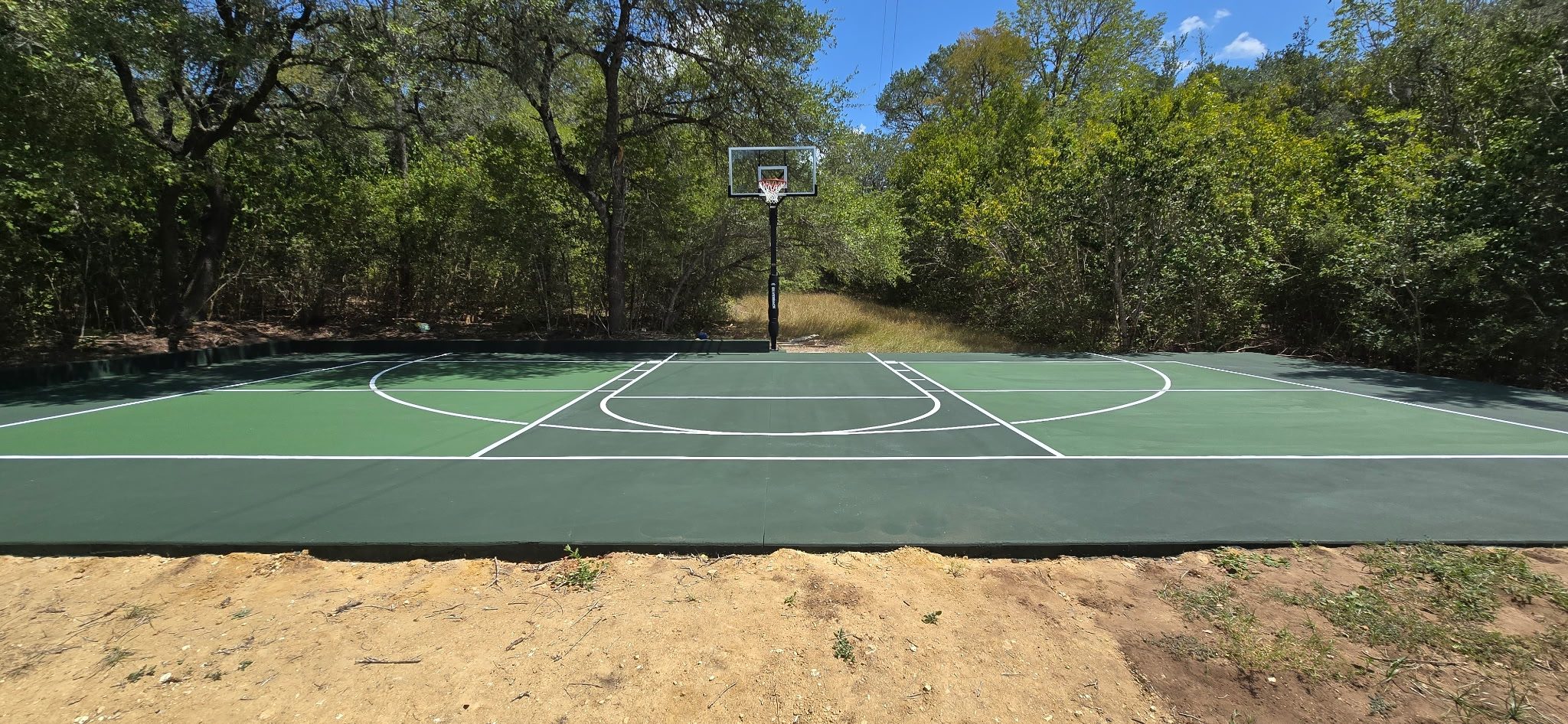
Is Repainting Different From Basketball Court Resurfacing?
Yes. Repainting and resurfacing are related, but they do not describe the same scope of work.
Repainting generally focuses on renewing court colors, game lines, logos, or custom graphics. It may be appropriate when the existing surface remains stable and properly textured.
Resurfacing involves broader preparation and restoration. It may include cleaning, eligible crack repairs, treatment of minor low areas, application of acrylic resurfacer, new color coatings, and complete line installation.
A court with peeling coatings, extensive wear, widespread cracking, or uneven texture may need resurfacing rather than a simple repaint.
When Is Repainting Enough?
Repainting may be appropriate when:
• The existing coating is firmly bonded
• The surface remains properly textured
• Cracks are limited and repairable
• Drainage is functioning correctly
• The pavement is stable
• The main concern is faded color or worn lines
The court still needs cleaning and preparation before new material is applied.
When Is Full Resurfacing the Better Option?
Resurfacing may be more suitable when:
• Large areas have lost texture
• The coating is peeling or separating
• Multiple patches are visible
• Lines have been repainted many times
• Cracks require broader treatment
• Minor low areas need correction
• The owner wants a complete color redesign
• The existing surface has reached the end of its service life
A professional evaluation can determine whether the coating can be renewed or whether the court needs deeper work.
Can New Paint Hide Basketball Court Cracks?
Paint may cover the appearance of a fine crack briefly, but it will not stabilize movement below the surface.
Cracks should be evaluated before repainting. The correct repair depends on their width, depth, pattern, location, and underlying cause.
Some cracks result from normal surface aging. Others may indicate settlement, drainage problems, soil movement, tree-root pressure, or weakness within the pavement.
Applying new color over untreated cracks often allows them to return through the finished coating.
Can Every Crack Be Permanently Repaired?
No repair method can guarantee that every crack will never return.
If the pavement or foundation continues moving, the repaired area may reopen. The goal is to identify the likely cause, choose an appropriate repair method, and explain realistic expectations before new coatings are installed.
Widespread structural movement may require more extensive correction than repainting or routine resurfacing can provide.
Should Low Areas Be Corrected Before Repainting?
Yes. Low areas that retain water should be reviewed before new coatings are applied.
Standing water can delay play, collect dirt, encourage staining, and increase wear. A puddle located near the key, free-throw line, or baseline may interfere with some of the most heavily used parts of the court.
Minor low spots may be eligible for surface correction. Larger settlement or an unsuitable overall slope may require deeper work.
Repainting without addressing drainage leaves the original problem beneath the new finish.
How Should a Basketball Court Be Prepared for Repainting?
Preparation affects how well the new coating bonds and how long the finished surface performs.
The court should be cleaned thoroughly to remove dirt, dust, leaves, mildew, loose material, oil, and other contaminants. Peeling coatings should be removed, and eligible cracks or minor surface defects should be treated.
Previously repaired areas must be checked for compatibility with the proposed coating system.
What Does the Preparation Process Include?
Depending on the condition of the court, preparation may involve:
1. Inspecting the pavement and existing coating
2. Checking drainage and identifying low areas
3. Cleaning the surface
4. Removing loose or peeling material
5. Repairing eligible cracks
6. Treating suitable low spots
7. Preparing patched or exposed areas
8. Applying resurfacing material when needed
9. Installing new color coats
10. Measuring and painting the final layout
Skipping preparation may lead to uneven color, poor adhesion, early peeling, or visible repair marks.
Which Type of Paint Should Be Used on an Outdoor Basketball Court?
Outdoor basketball courts generally use acrylic coating systems designed for recreational pavement.
Ordinary exterior paint is not a substitute for a court-specific surface system. The coating must provide suitable traction, withstand regular foot traffic, and remain compatible with the underlying surface.
The finished texture should support predictable movement without feeling excessively smooth or rough.
How Many Coating Layers Does a Court Need?
The required number of layers depends on the product system, court condition, existing colors, desired finish, and surface preparation.
Changing from a dark color to a much lighter one may require additional material for consistent coverage. Patched or exposed areas may also need preparation before the final color coats are applied.
The proposal should specify the materials and approximate number of applications included.
Can Basketball Court Lines Be Repainted Without Changing the Main Color?
Yes. Line-only repainting may be appropriate when the main playing surface remains in good condition but the markings have faded or become difficult to follow.
The existing court should still be cleaned and inspected before new lines are applied. Painting bright lines over a worn, slippery, or peeling surface does not correct broader coating problems.
Measurements should be confirmed rather than tracing an inaccurate existing layout.
The basketball court construction service covers new court planning, surface options, layouts, and related construction features.
Can the Court Design Be Changed During Repainting?
Repainting provides an opportunity to update colors, markings, logos, and the overall appearance of the court.
The owner may choose:
• New primary and secondary colors
• Contrasting keys or lane areas
• Updated boundary lines
• Custom logos
• School or community branding
• Sponsor graphics
• Half-court layouts
• Multi-use markings
• Decorative perimeter details
The design should remain easy to read during play. Too many similar lines or competing graphics can make the surface confusing.
Should Old Lines Be Covered Before a New Layout Is Added?
If the layout is changing, old lines may need to be covered as part of resurfacing or color-coating work.
Simply painting the new layout over the old one can leave visible shadows or create confusion. The surface condition and color change determine how much preparation is required.
How Long Does Basketball Court Paint Need to Dry?
Drying and curing times depend on the coating system, temperature, humidity, shade, surface temperature, airflow, and the number of applied layers.
Each layer needs adequate time before the next material is installed. The finished court also needs time before it is opened for play.
Rushing the process can leave marks, affect adhesion, or damage the new surface.
The contractor should provide clear instructions about when players, equipment, and maintenance crews can return to the court.
How Much Does It Cost to Repaint a Basketball Court?
Cost depends on the court size, surface condition, repair needs, number of colors, coating system, line layout, logos, access, and whether resurfacing is required.
A basic line refresh costs less than a complete project involving crack treatment, surface preparation, new color coats, custom graphics, and equipment work.
What Should the Estimate Include?
A complete estimate should explain:
• Cleaning and preparation
• Crack and low-area treatment
• Removal of loose coatings
• Resurfacing materials
• Number of color applications
• Court colors
• Line markings
• Logos or custom graphics
• Equipment protection or removal
• Cleanup
• Weather requirements
• Estimated schedule
• Warranty information
• Excluded work
Comparing the total price without comparing the scope can lead to misleading conclusions.
How Can Regular Maintenance Extend the Life of the Paint?
Routine cleaning and inspection can help the coating perform longer.
Leaves, soil, dust, food, drinks, and organic debris should not remain on the surface. Drainage paths and fence edges should be kept clear so water can leave the court.
Harsh chemicals, aggressive pressure washing, metal tools, and unsuitable cleaning equipment can damage acrylic coatings.
The court maintenance services page explains how inspections, cleaning, surface care, and repairs can support long-term court performance.
What Should Owners Avoid?
Avoid:
• Dragging benches or portable goals
• Parking vehicles on the court
• Using metal shovels or scrapers
• Applying harsh solvents
• Pressure washing too aggressively
• Allowing leaves to block drainage
• Ignoring small peeling areas
• Painting over untreated cracks
• Using household paint on the playing surface
A consistent maintenance routine usually costs less than waiting for widespread deterioration.
What Are the Most Common Questions About Basketball Court Repainting?
Most outdoor basketball courts need repainting every three to five years. The correct schedule depends on use, weather exposure, drainage, maintenance, coating quality, and surface condition.
Yes. Line-only repainting may be suitable when the main surface remains stable, properly textured, and firmly bonded. The existing measurements should be verified before new lines are applied.
Yes. Fading may be accompanied by texture loss, especially in high-traffic areas. A professional inspection can determine whether repainting or full resurfacing is appropriate.
Yes. Cracks should be evaluated and treated with an appropriate repair method before new coatings are applied. Paint alone cannot stabilize movement within the pavement.
Yes. Repainting can introduce new court colors, lane areas, markings, logos, and branding. The design should maintain clear contrast between the surface and playing lines.
The waiting period depends on the coating system, weather, humidity, surface temperature, and number of applied layers. Follow the contractor’s curing instructions before reopening the court.
Why Should You Choose Quality & Heritage Court Services?
Quality & Heritage Court Services evaluates the complete surface before recommending repainting or resurfacing.
The Existing Condition Is Reviewed First
Cracks, low areas, drainage, coating adhesion, texture, line condition, and exposed pavement are examined before the scope is finalized.
Preparation Matches the Surface
The cleaning, repairs, patching, and resurfacing work are based on what the court needs rather than applying new color over unresolved problems.
Colors and Lines Are Planned Together
Court colors, line visibility, logos, and multi-use markings are coordinated to create a clear and finished appearance.
Texas Conditions Are Considered
Heat, ultraviolet exposure, heavy rain, dust, and soil movement influence how outdoor basketball surfaces age and how repainting should be planned.
Maintenance Can Continue After Repainting
Inspections, cleaning, crack treatment, repainting, and resurfacing can be coordinated as the court continues to age.
Contact Quality & Heritage Court Services to schedule an evaluation and determine whether your basketball court needs line repainting, complete color renewal, or resurfacing.