Overview
That is often when Cushion X resurfacing becomes worth discussing.
A Cushion X court is built to provide a more forgiving playing experience through multiple cushioned layers beneath an acrylic finish. Those upper layers still live with sunlight, rain, dirt, shoes, balls, equipment, and regular play. They wear gradually, just as the finish on any well-used court does.
Quality & Heritage Court Services resurfaces Cushion X courts for homeowners, schools, clubs, HOAs, municipalities, hotels, and commercial properties across Texas. We inspect the existing system, address surface damage included in the project, restore the acrylic finish, repaint the lines, and bring back the court’s clean, consistent appearance.
Does your cushioned court feel or look different than it used to? Contact our team to arrange an inspection and find out what kind of resurfacing it needs.
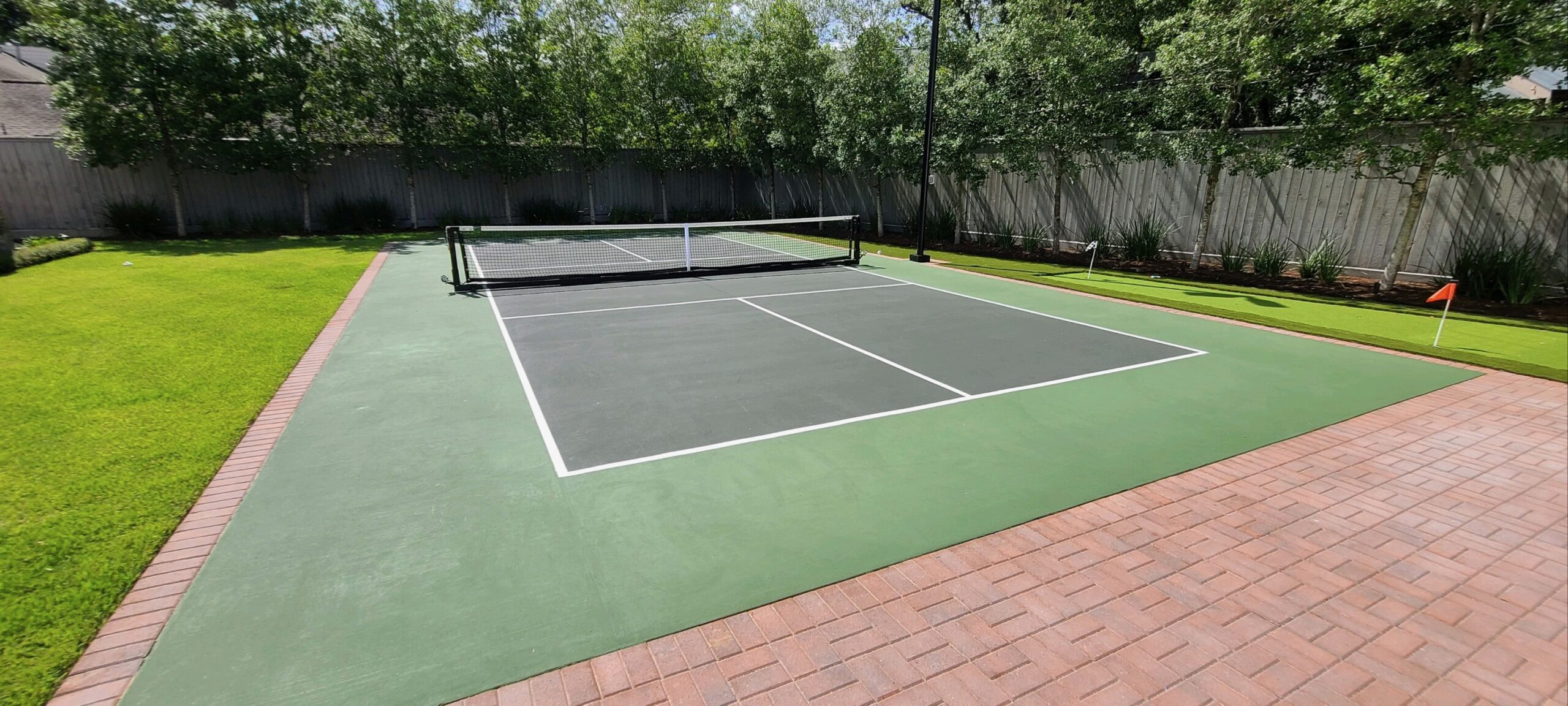
Resurfacing Is More Than Changing the Color
Fresh color may be the first thing people notice, but it is not the whole purpose of resurfacing.
The work can restore worn texture, improve line visibility, cover properly prepared repairs, and create a more consistent finish across the playing area. On a Cushion X court, it can also renew the upper portion of the system while preserving cushion layers that remain in serviceable condition.
What resurfacing cannot do is equally important.
Acrylic coatings cannot stabilize moving pavement. They cannot lift a settled section of the base or correct a drainage problem on their own. They also cannot restore badly damaged cushion layers simply by hiding them beneath a new color coat.
That is why the inspection comes before the estimate.
We need to know whether the issue sits in the finish, within the cushioned system, or deeper in the asphalt or concrete base.
When Does a Cushion X Court Need Resurfacing?
There is no single date printed on the court.
A private surface used on weekends may age differently from a club court booked every evening. One court may sit in the open sun. Another may be shaded by trees and spend more time holding moisture and organic debris.
The need for Cushion X resurfacing is usually based on what the court is showing rather than its age alone.
Fading is one sign. Color may become uneven, especially where one side receives stronger sunlight. Lines may lose their sharpness, making close calls harder to judge. High-traffic areas can become smoother as the upper texture wears.
Small cracks, depressions, stains, and worn patches also deserve attention. If players begin commenting on inconsistent grip or bounce, the surface should be inspected even if it still looks acceptable from outside the fence.
A court may be ready for professional resurfacing when:
- The color has faded or become noticeably patchy
- Lines are worn, dull, or difficult to follow
- High-use areas feel smoother than the rest of the court
- Previous repairs are visible through the finish
- Small cracks have begun appearing
- Water remains in particular areas after nearby sections dry
- The owner wants new colors, markings, or a cleaner overall design
- Routine cleaning no longer restores the appearance
None of these signs automatically means the whole cushioned system has failed. In many cases, the upper surface can be renewed while usable layers remain in place.
What Happens to the Cushion Over Time?
Cushion X uses resilient layers beneath the acrylic playing surface. These layers help soften some of the impact created by running, stopping, jumping, and changing direction.
They do not make the court feel spongy. Players should still receive a predictable bounce and stable footing.
Over time, the system may wear differently in different places. The playing surface receives the most direct exposure, so fading and texture loss usually appear there first. Underlying cushion layers may remain serviceable well beyond the life of the color coating.
Other courts develop localized damage. A crack in the pavement may travel through the system above it. Standing water may affect one area repeatedly. Heavy objects or unsuitable maintenance equipment can leave marks or indentations.
Resurfacing begins with finding out how much of the existing system can be retained.
If the cushion remains well bonded and consistent, the work may focus on repairs and the acrylic finish. If sections have separated, broken down, or become uneven, those areas may need more involved restoration.
Quality & Heritage Court Services installs and maintains Cushion X court systems, allowing the resurfacing plan to account for the way the layered surface is intended to work.
Cleaning Comes Before Repair
A worn court often carries more than ordinary dirt.
Leaves may have broken down in the corners. Shade can encourage mildew or algae. Irrigation may leave mineral deposits. Dust settles into the surface texture, while gum, oil, rust, and other stains create their own problems.
These materials need to be removed before repairs and coatings are applied.
Cleaning methods should suit the existing surface. Excessive pressure and stiff equipment can damage acrylic coatings or disturb worn areas. USA Pickleball’s court construction and maintenance guidance cautions against using more water pressure than necessary when cleaning acrylic surfaces.
The goal is to create a clean, sound surface without turning preparation into another source of damage.
Once the court is clean, cracks, low areas, loose coatings, and worn sections become easier to see. That allows the repair plan to address what is actually present rather than what was visible beneath dirt.
Cracks Need an Honest Assessment
Court cracks are frustrating because they do not all behave in the same way.
A small, stable crack near the surface is different from one driven by ongoing movement in the pavement. A crack caused by a construction joint behaves differently from widespread cracking across a weak base.
No coating can guarantee that a moving crack will never return.
USA Pickleball notes that coatings alone do not fill cracks and that no crack-repair method works successfully in every situation. Repair systems can help maintain the court and extend its useful life, but the cause and movement still matter.
During a Cushion X resurfacing project, cracks may be cleaned, prepared, and treated using a method suited to their condition. The repair then needs to work with the surrounding cushioned layers and acrylic finish.
If the base continues moving, a repaired crack may become visible again. Owners deserve to understand that possibility before work begins.
A proposal that promises every crack will disappear forever is not more reassuring. It is simply less realistic.
Low Areas Are Not Paint Problems
After rain or cleaning, most of the court should dry at a similar pace. If one area continues holding water, the surface may have a depression.
Players often call these areas birdbaths. They may be shallow enough to escape notice on a dry day but obvious once water collects.
Applying color coating over a low area will not correct its depth. The depression may need patching or leveling before the final surface is restored.
The cause matters here too. A localized construction imperfection may be suitable for correction. Settlement or movement beneath the base can indicate a larger problem.
The USTA’s facility resurfacing guidance recognizes that resurfacing may include crack repair, low-area patching, overlay treatment, and correction of high areas. That wider view is useful for any acrylic court because resurfacing often involves more than applying new color.
Drainage around the court should also be checked. If runoff repeatedly crosses the surface or gathers along an edge, correcting the low spot alone may not solve the whole issue.
Restoring the Feel of the Surface
Players should be able to move from one end of the court to the other without finding a noticeably slick or rough patch.
Acrylic surface texture comes partly from the aggregate within the coating. As the court wears, high-traffic areas may lose some of that original consistency.
Resurfacing restores the upper texture across the prepared playing area. The finish should support dependable traction without feeling excessively coarse.
This balance is important on tennis, pickleball, and basketball surfaces. Each involves quick changes of direction, though the traffic patterns differ.
Tennis players repeatedly work near the baseline and service areas. Pickleball players crowd the kitchen and make short, sudden movements. Basketball creates concentrated wear around the key, three-point line, and basket.
A good resurfacing plan considers the activity rather than treating every Cushion X court as an identical colored rectangle.
Can Resurfacing Bring Back the Original Comfort?
It depends on which part of the system has worn.
If the existing cushion layers remain well bonded and consistent, renewing the surface can restore traction, color, line clarity, and a more uniform playing feel while preserving the comfort already built into the court.
If the cushioned layers themselves are damaged, compressed unevenly, loose, or missing in places, the work may need to go deeper.
Localized areas may be repairable. More widespread deterioration may require additional cushion applications or replacement of larger sections. The base condition must also be considered because a cushioned coating cannot compensate for unstable pavement.
Resurfacing should not be sold as a magical reset. It is a restoration process shaped around the condition of the existing system.
That is why we walk the full court, not just the most faded section.
New Colors Can Change the Entire Property
A court occupies a large visual area. Changing its colors can make the surrounding property feel different too.
Some owners want to restore the original palette. Others use resurfacing as an opportunity to choose a combination that suits updated landscaping, buildings, fencing, or branding.
Homes often benefit from restrained colors that settle into the yard. Schools and clubs may want brighter contrast or organizational colors. Municipalities may prefer a familiar, easy-to-maintain design across several courts.
Color selection should consider:
- The ball colors most often used
- Visibility of the lines
- Sun exposure and glare
- Heat absorption
- Nearby buildings and landscaping
- Logos or facility branding
- Whether several activities share the surface
Dark shades may become hotter in direct sunlight. Very light colors may show dirt sooner or create glare. A palette that looks perfect on a small sample may feel much stronger when spread across the whole court.
Quality & Heritage Court Services can help owners compare colors in relation to the setting rather than choosing them in isolation.
Repainting the Lines
Worn lines can make an otherwise usable court feel neglected.
The line layout is checked before repainting. Old markings may have faded unevenly, been repaired several times, or been measured incorrectly during an earlier project.
Resurfacing creates an opportunity to correct those issues.
Lines should remain accurate, clean, and easy to follow against the new surface colors. Their texture should not feel drastically different from the surrounding area.
If the court is changing use, new markings can be discussed during planning. A tennis court may add blended pickleball lines. A basketball area may receive an updated three-point layout. A shared facility may need a clearer hierarchy between several activities.
Too many bold colors can make a multi-use surface difficult to read. Primary and secondary layouts should be chosen with the players in mind.
Our professional court painting services can include new colors, accurate lines, and approved custom graphics as part of the resurfacing project.
How Cushion X Resurfacing Is Completed
The project begins with an inspection.
Initial Inspection
We walk the court and look for fading, worn texture, cracks, low areas, loose coatings, drainage issues, stains, edge damage, and changes in the cushioned surface. We also ask how the court is used and whether the owner wants to change the colors or line layout.
Cleaning and Preparation
The court is then cleaned and prepared. Loose material and contaminants need to be removed before repairs can begin.
Repairs
Cracks, patches, and low areas included in the scope are treated according to their condition. Damaged cushioned sections may require additional work so the repair does not leave an abrupt hard or soft spot.
Surfacing Applications
Once the surface is ready, the appropriate resurfacing layers and acrylic color coats are applied. Each layer requires suitable weather and drying conditions.
Line Striping and Graphics
Lines and approved graphics follow after the color surface has cured enough for layout work.
Final Inspection
The finished court is inspected for color consistency, texture, line placement, repairs, and general appearance. It remains closed until the coating has had enough time to cure.
Ready to restore a worn Cushion X court? Request an inspection and resurfacing estimate from Quality & Heritage Court Services.
Texas Weather Has a Say in the Schedule
Outdoor resurfacing cannot be separated from the weather.
The pavement needs to be dry. Rain should not be approaching. Temperature and humidity must fall within acceptable conditions for the products being used.
A sudden Texas shower can interrupt cleaning or coating. Strong wind may carry leaves, pollen, insects, and dust onto a wet surface. Extreme heat can cause coatings to dry too quickly during application.
A weather delay is inconvenient. Trapping moisture or debris beneath a new finish is worse.
The court’s exposure also influences how it ages after resurfacing. Open sites receive more direct sun. Shaded courts may hold moisture and organic material longer. Irrigation and drainage around the perimeter can affect the edges.
These conditions are considered during preparation and discussed as part of future maintenance.
What Affects Cushion X Resurfacing Cost?
Court size is only one part of the estimate.
Two courts with the same dimensions may require very different preparation. One may need cleaning and a straightforward surface renewal. Another may have failed repairs, loose coatings, low areas, damaged cushion layers, and several line layouts to cover.
Cost can be influenced by the condition of the base, number and type of cracks, low-area correction, cushion repair, surface preparation, number of coats, color changes, custom graphics, and court accessibility.
The number of courts matters too. A multi-court club can offer certain efficiencies, but each surface still needs to be inspected individually. One court may require more repair than the others.
A detailed proposal should explain the difference between surface preparation, repairs, cushion restoration, color coating, and line work. That makes it clear which problems are being addressed and which are outside the project scope.
How Long Will the Court Be Closed?
Closure time depends on the condition of the surface and the work required.
Cleaning and minor preparation may move quickly. Crack repairs, low-area correction, or cushion restoration need additional time. Each coating must dry before the next one is applied.
Weather may extend the schedule outdoors. Indoor courts avoid rain but still require suitable temperature, ventilation, and curing time.
Players should not return simply because the surface looks dry. Coatings may need longer to cure before they can tolerate shoes, rolling nets, benches, or other equipment.
The reopening date is confirmed around the selected system and actual site conditions.
Caring for a Resurfaced Cushion X Court
A newly resurfaced court does not need complicated care.
Keep leaves, soil, and loose debris from collecting. Clear drains and pavement edges. Clean spills early using products appropriate for acrylic surfaces.
Avoid dragging heavy benches, portable goals, net bases, or metal equipment across the finish. Hard wheels and sharp furniture legs can leave marks.
Pressure washing should be approached carefully. Excessive pressure or a wand held too close may damage the coating.
After severe weather, check for branches, loose fencing, windscreen damage, standing water, and new cracks. Small problems are usually easier to manage when found early.
Schools, clubs, and commercial facilities may benefit from a simple inspection record. Notes about cracks, drainage, cleaning, and repairs can help staff recognize changes before they affect play.
Quality & Heritage Court Services provides court maintenance and repair court maintenance and repair for properties that want support between resurfacing cycles.
Why Quality & Heritage Court Services?
A cushioned surface needs more than a fresh coat applied over everything already there.
We Begin With the Existing System
The base, cushion layers, acrylic finish, repairs, and drainage are reviewed before the scope is recommended.
We Explain What Resurfacing Can Fix
Fading, worn texture, lines, and many surface defects can be addressed. Structural movement and major base failure require a different conversation. We make that distinction clear.
Player Comfort Remains Part of the Work
The purpose of Cushion X is not just appearance. Repairs and resurfacing should preserve or restore a consistent, more forgiving playing experience wherever the existing system allows.
Texas Conditions Are Considered
Heat, UV exposure, humidity, rain, wind, soil movement, and irrigation can all affect the surface. They influence preparation, scheduling, and maintenance recommendations.
We Can Continue Caring for the Court
Once the resurfacing is complete, Quality & Heritage Court Services remains available for cleaning, repairs, line restoration, and future maintenance.